Do you find yourself lying awake at night? You’re not alone. Sleep medicine specialist Nancy Foldvary-Schaefer, DO, MS, says, “Sleep deficiency is an epidemic. About 40% of Americans aren’t getting enough sleep.” This big problem affects your health and mood.
Shift work, travel, stress, or irregular sleep can mess up your body clock. This can make you feel tired, moody, and weak. It can even cause serious health problems over time.
The good news is you can get back to healthy sleep with the right strategies. This guide has tips to help you adjust your sleep cycle, whether you’re dealing with occasional sleep issues or a complete reversal of day and night.
Having a regular bedtime is more than just feeling tired. It’s about letting your brain and body rest. Every cell in your body needs good sleep to work right. By using the expert tips in this article, you can change your sleep routine and enjoy better rest.
Key Takeaways
- Sleep deficiency affects about 40% of Americans, impacting health and brain function
- Consistent bedtime routines help regulate your body’s internal clock
- Morning light exposure promotes wakefulness and helps reset your circadian rhythm
- Regular physical activity improves sleep quality when timed appropriately
- Creating a sleep-friendly environment significantly enhances rest quality
- Limiting screen time before bed helps your brain prepare for sleep
- Nutrition and meal timing play important roles in sleep regulation
Understanding Your Sleep-Wake Cycle
Learning about your sleep-wake cycle is key to fixing sleep problems. Your body doesn’t pick when to be tired or awake randomly. It follows a natural pattern that has been around for thousands of years.
Your sleep-wake cycle is about 24 hours long. It helps your body know when to be awake and when to sleep. This cycle affects your body temperature, hormone release, and more.
The Science of Circadian Rhythms
Your circadian rhythm is like an internal clock. It controls when you feel awake and when you feel sleepy. It mainly listens to light and dark to tell your body when to work or rest.
In your brain, a part called the suprachiasmatic nucleus (SCN) is your master clock. When light hits your eyes, it sends signals to the SCN. Then, the SCN helps control your body’s processes.
Melatonin, or the “sleep hormone,” is very important for sleep. When it gets dark, your pineal gland makes more melatonin. This makes you feel sleepy.
Light in the morning stops melatonin production. This helps you feel awake. That’s why morning light is good for your sleep-wake cycle.
Common Causes of Sleep Schedule Disruption
Many things can mess up your sleep-wake cycle:
- Working shifts that keep you awake at night
- Traveling across time zones and getting jet lag
- Going to bed and waking up at different times
- Looking at screens too much before bed, which lowers melatonin
- Stress and anxiety that make it hard to sleep
When these things happen, your biological clock gets out of sync. This can cause sleep issues and tiredness during the day. Knowing what disrupts your sleep is the first step to fixing it.
Signs Your Sleep Schedule Needs Fixing
Your body sends clear signals when your sleep schedule needs attention. Many people ignore these important warning signs. Recognizing these indicators early can help you take action before sleep disruption affects your health more seriously. Learning to identify these signs is the first step toward restoring healthy sleep patterns.
Physical Symptoms of Disrupted Sleep
When your sleep schedule is off track, your body responds with various physical sleep disruption signs. These symptoms often develop gradually, making them easy to dismiss or attribute to other causes.
Persistent headaches, even in the morning, can signal poor sleep quality or insufficient rest. Your immune system may weaken, leading to frequent colds or infections that linger longer than usual.
Many people notice changes in appetite and cravings, often for high-carbohydrate or sugary foods. This happens because sleep deprivation affects hormones that regulate hunger and satiety.
Daytime Fatigue and Energy Fluctuations
One of the most common sleep deprivation symptoms is excessive daytime fatigue despite what seems like adequate sleep. This persistent tiredness doesn’t resolve with a single good night’s rest.
Energy crashes at specific times of day—typically mid-afternoon—signal your body’s natural rhythm is misaligned. As one sleep expert notes, “If you really need the caffeine to wake you up, it’s probably a sign that you’re not getting enough sleep.”
This reliance on caffeine or energy drinks to function through the day is a red flag. Your body shouldn’t require stimulants to maintain basic alertness.
Mental and Emotional Indicators
Sleep disruption affects your brain function in noticeable ways. Many people underestimate how deeply sleep influences mental clarity and emotional stability.
You might experience brain fog or difficulty recalling information that should be readily accessible. Decision-making becomes more challenging, even for simple choices like what to eat for lunch.
Over time, these cognitive effects compound. Research shows that chronic sleep disruption can contribute to brain dysfunction, which affects nearly every aspect of your mental performance.
Concentration Problems and Mood Changes
Difficulty focusing on tasks that normally come easily to you suggests your sleep schedule needs fixing. You might find yourself reading the same paragraph multiple times or losing track of conversations.
Perhaps the most telling signs are mood changes that others notice before you do. Irritability, impatience, and emotional volatility often stem from poor sleep quality or timing.
Anxiety and depression symptoms can worsen with sleep disruption, creating a challenging cycle. Poor sleep affects mood, and mood problems make it harder to sleep well.
Over the long term, a poor sleep schedule can affect multiple body systems. These problems can contribute to heart disease, weakened immune response, increased accident risk, and even weight gain.
Recognizing these warning signs allows you to address sleep issues before they evolve into more serious health concerns. View them as your body’s request for better sleep habits.
The Impact of Poor Sleep Schedules on Health
Your body reacts badly to poor sleep timing. It’s not just about feeling tired. It can affect your daily life and even how long you live. Sleep experts say that regular sleep is as important as eating right and exercising.
When your sleep is off, your body can’t do its important jobs.
Short-term Effects on Performance
Just one bad night’s sleep can mess up your next day. You might feel slower, less focused, and have trouble controlling your feelings. Simple tasks can seem too hard.
Not getting enough sleep can make you less productive at work. It’s like your brain is drunk. Driving after 18 hours without sleep is as bad as being drunk in many places.
Cognitive Function and Decision Making
Bad sleep hurts your brain’s thinking part. This part helps you make decisions and solve problems. Without enough sleep, you can’t think as well.
- You might have trouble focusing and paying attention.
- Your memory might not work as well.
- You could make poor choices and have trouble solving problems.
- Being creative and thinking outside the box gets harder.
People who don’t sleep well make decisions slower and take more risks. Your brain needs sleep to work right.
Long-term Health Consequences
Long-term, bad sleep habits can really hurt your health. Your body needs regular sleep to stay healthy.
Long studies show that bad sleep habits can lead to serious diseases. Even when you control other lifestyle factors.
Chronic Disease Risks and Immune Function
Bad sleep habits can lead to many health problems:
- Cardiovascular issues: Higher risk of heart disease and stroke
- Metabolic disorders: More chance of diabetes
- Compromised immune function: Get sick more often and take longer to get better
- Mental health concerns: More likely to feel anxious or depressed
Your immune system is very sensitive to sleep. Sleeping less than six hours a night makes you four times more likely to get a cold.
Knowing these risks shows that fixing your sleep is key. It’s not just about feeling awake. It’s about keeping you healthy for a long time.
Expert Methods to Fix Sleep Schedule Effectively
Fixing a broken sleep schedule is possible with these expert-recommended adjustment methods. Sleep specialists have developed strategies that work with your body’s natural rhythms to reset your internal clock. While the process requires commitment, the benefits of restored sleep quality make the effort worthwhile.
The Gradual Adjustment Technique
The gradual adjustment technique is a good choice for most people. It makes small changes to your sleep schedule. These changes help your body adjust without shocking it.
“When you start setting some changes in motion, those first few days might feel like a struggle because you’re acclimating. But after that, I think most people are going to start to feel that their sleep quality improves pretty quickly,” explains sleep researcher Dr. Matthew Walker.
15-Minute Incremental Changes
Being patient and consistent is key to successful gradual adjustment. Here’s how to do it:
- Shift your bedtime and wake time by just 15 minutes earlier (or later) every 1-2 days
- Maintain the new schedule for at least two nights before making another adjustment
- Continue until you reach your target sleep and wake times
- Use a sleep journal to track your progress and any challenges
This method is great if you need to adjust your sleep timing without disrupting your daily responsibilities. The gradual nature helps minimize daytime fatigue during the transition period.
The One-Day Reset Approach
For those needing a more rapid sleep schedule adjustment, the one-day reset can be effective. This method involves a more dramatic intervention but can yield faster results when properly executed.
Staying Awake for Extended Periods Safely
This technique requires staying awake for an extended period (typically 24+ hours) before sleeping at your new desired bedtime. While effective, this approach requires careful planning:
- Choose a day when you don’t have important commitments or need to drive
- Stay hydrated and avoid caffeine after noon
- Engage in light physical activity to stay alert
- When you sleep, aim for at least 7-9 hours
This method should be used sparingly and is not recommended for those with certain medical conditions or sleep disorders. Always consult a healthcare provider before attempting this approach.
Maintaining Consistency After Reset
Successfully resetting your circadian rhythm is only the first step. Maintaining your new schedule requires ongoing commitment. “Set a wake-up time that’s the same every day, including work days and non-work days. That’ll drive your brain to feel sleepy around the same time every evening,” advises sleep medicine specialist Dr. Rachel Salas.
Weekend consistency is very important. Many people undermine their progress by staying up late and sleeping in on weekends. This creates “social jet lag.” It confuses your body’s internal clock and can undo your reset efforts.
Creating accountability systems can help maintain your new schedule. Consider using sleep tracking apps, setting consistent alarms, or finding a sleep schedule buddy who shares similar goals. Remember that each disruption requires another adjustment period, so prioritizing your sleep timing is essential for long-term success.
Creating the Optimal Sleep Environment
Your sleep space can really affect how well you sleep. Even if you go to bed at the right time, a bad bedroom can mess things up. Making your sleep environment better means fixing a few key things.
Temperature and Lighting Optimization
Your body gets cooler when you sleep. Making your bedroom cooler can help you sleep better.
Ideal Bedroom Temperature Range
Studies say a cooler room is best for sleep. The perfect sleep temperature is between 60-67°F (15-19°C). This helps your body cool down while you sleep.
In hot weather, use light, cool bedding like cotton or bamboo. In cold weather, use blankets you can take off if you get too hot. Don’t just turn up the heat.
Noise Management Strategies
Even when you’re asleep, your brain hears sounds. This can mess up your sleep. Good noise management means having a quiet place to sleep.
White Noise and Sound Masking Options
White noise machines make a steady sound that covers up other noises. You can also use:
- Air purifiers that make a sound
- Smartphone apps with sounds
- Box fans for cooling and quiet
- Sound machines with sounds like rain or waves
Bedroom Setup for Quality Sleep
The things in your bedroom can affect how comfortable you are at night.
Mattress and Pillow Considerations
Choose a mattress based on how you sleep. Side sleepers need soft mattresses for their shoulders and hips. Back and stomach sleepers need firmer ones.
Your pillow should keep your spine straight. Your neck should be in a straight line. Memory foam pillows fit your head and neck well. Adjustable pillows let you change how they feel.
Establishing a Bedtime Routine That Works

Creating a good bedtime routine is key to fixing sleep problems. Your body likes routine, and sleep is no exception. A bedtime routine tells your brain and body it’s time to sleep.
Doing the same relaxing things every night helps your body get ready for sleep. This makes you fall asleep faster and sleep better.
Relaxation Activities for Your Wind-Down Ritual
Relaxing activities are the heart of a good sleep ritual. They lower stress hormones like cortisol. High cortisol levels keep you awake.
Studies show relaxing before bed lowers stress hormones and gets your body ready for sleep. Pick activities that calm you down.
- Reading physical books (not e-readers) – They’re calming because of the touch and no blue light. Fiction is good for calming your mind.
- Meditation – Just 5-10 minutes can calm your mind. Apps like Calm or Headspace have sleep sessions.
- Gentle yoga or stretching – It releases muscle tension. Do slow movements and focus on breathing.
- Journaling – Writing down tomorrow’s tasks or today’s worries clears your mind.
- Aromatherapy – Scents like lavender help you sleep when used in diffusers or sprays.
Combining activities makes them even better. For example, stretching then reading with lavender diffusing works well.
Timing Your Routine for Maximum Effectiveness
When you start your wind-down activities is key. Starting too late means you might not relax fully.
Experts say start your sleep prep about three hours before bed. Start with calming activities, not intense ones.
The 30-60 Minute Pre-Sleep Window
The 30-60 minutes before bed are critical for relaxation. Your body can lower stress hormones and increase sleep hormones like melatonin. But only if you’re doing calming activities.
A sample evening timeline might look like this:
- 3 hours before bed: Finish work and exercise; eat your last meal
- 2 hours before bed: Dim lights throughout your home; switch to non-work activities
- 1 hour before bed: Begin your formal bedtime routine with a warm shower or bath
- 30-45 minutes before bed: Engage in reading, meditation, or gentle stretching
- 15 minutes before bed: Final bathroom visit, set out clothes for tomorrow
- Bedtime: Lights out in a cool, dark room
Consistency: The Key to Routine Success
Repeating your sleep ritual makes it powerful. Your brain learns to associate these activities with sleep. This makes you sleepy when you start your routine.
This routine creates “sleep onset associations” – cues that help your body get ready for sleep. Keep your routine the same, even on weekends or when traveling.
If you’re hard to convince, start small. Pick one relaxing activity and do it at the same time each night for a week. Then add another activity. Over time, you’ll have a full routine that signals sleep time.
Your ideal routine should be fun, not stressful. The best bedtime routine is one you look forward to. It’s a personal retreat that helps you relax and sleep well.
Nutrition and Hydration for Better Sleep
Eating right is key to fixing a broken sleep schedule. What and when you eat affects your sleep. It can help or hurt your sleep goals.
Sleep-Promoting Foods and Nutrients
Certain foods help you sleep better by supporting your body’s sleep needs. Making small diet changes can make a big difference. You’ll fall asleep faster and sleep better.
Tryptophan, Magnesium, and Melatonin-Rich Options
Foods with tryptophan help make serotonin and melatonin, the sleep hormone. Turkey, chicken, eggs, and dairy are good sources.
Magnesium in foods like leafy greens, nuts, and seeds relaxes muscles and calms the nervous system. Almonds or pumpkin seeds are great snacks before bed.
Natural melatonin sources include tart cherries, walnuts, and berries. A small glass of tart cherry juice before bed boosts melatonin.
What to Avoid Before Bedtime
Caffeine, Alcohol, and Heavy Meals
Caffeine stays in your system for 5-6 hours. Avoid coffee, tea, and energy drinks after midafternoon to sleep better.
Alcohol might make you sleepy at first but disrupts sleep later. This leads to feeling tired in the morning.
Heavy, fatty, or spicy meals can cause stomach problems when lying down. This makes it hard to fall asleep and can wake you up.
Optimal Timing for Meals and Drinks
Eat your last big meal 2-3 hours before bed for better digestion. This helps your body get ready for sleep.
Having meals at the same time every day helps your body’s clock. It supports your natural sleep rhythm.
Drink enough water during the day but not too much at night. This keeps you hydrated without waking up for the bathroom.
Exercise and Physical Activity’s Role in Sleep Regulation
Exercise and sleep are closely linked. It’s a natural way to fix sleep problems. Studies show that regular exercise helps your body’s clock work better.
Exercise makes your muscles talk to your clock. It also makes melatonin, the sleep hormone. Just 30 minutes of moderate activity can help you sleep better that night.
To see lasting benefits, do at least 150 minutes of moderate exercise a week. Spread it over five days for the best results.
Best Types of Exercise for Sleep Improvement
Not all workouts are the same for sleep. The type of exercise you choose matters.
Walking, swimming, and cycling are best for sleep. They help you fall asleep faster and sleep deeper.
Strength training is good too. It helps your body’s stress hormones work right. This is key for good sleep.
| Exercise Type | Sleep Benefits | Recommended Frequency | Best For |
|---|---|---|---|
| Moderate Aerobic | Reduces sleep onset time, increases deep sleep | 5 days/week, 30 minutes | Overall sleep quality improvement |
| Strength Training | Regulates cortisol, improves sleep efficiency | 2-3 days/week | Stress reduction, hormone balance |
| Yoga/Stretching | Reduces anxiety, promotes relaxation | Daily, 10-15 minutes | Bedtime routine integration |
| High-Intensity Interval | Increases sleep pressure, deepens sleep | 2-3 days/week | Efficient exercise for busy schedules |
Timing Your Workouts for Sleep Benefits
When you exercise is as important as what you do. The timing affects your body temperature and sleep.
Morning vs. Evening Exercise Considerations
Morning workouts are great for sleep. They help your body’s clock and make you feel awake.
Evening workouts need careful timing. They can make you feel awake and delay sleep. Finish vigorous exercise 1-2 hours before bed.
Everyone reacts differently to workout timing. Some can exercise at night without sleep issues. Others need a 3-4 hour gap. Find what works best for you.
Any exercise is better than none for sleep. Even if it’s not at the best time, it helps your sleep over time.
Managing Light Exposure to Fix Sleep Schedule
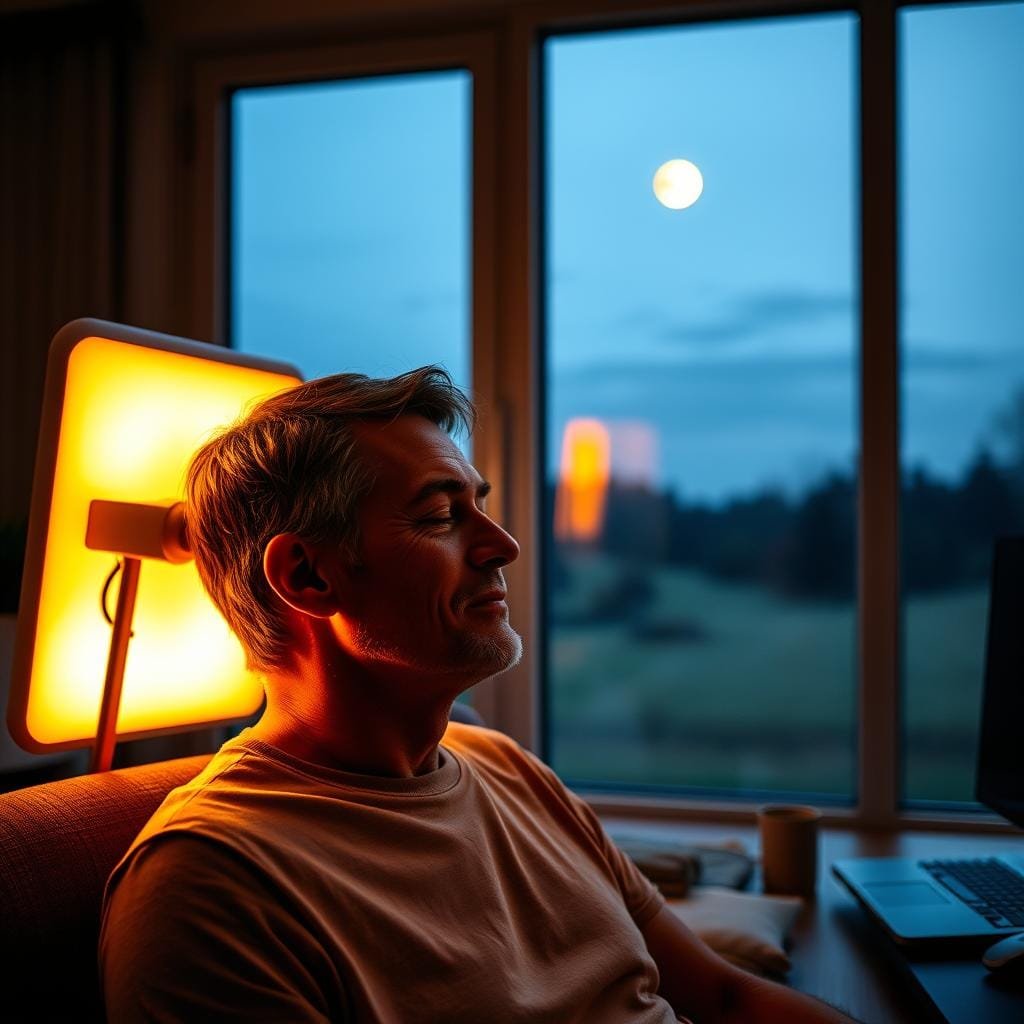
Your body loves light, and it helps you sleep. Light tells your brain when it’s time to rest. By controlling light, you can fix your sleep schedule.
Morning Light Strategies
Get bright light early to wake up. This helps you feel alert and ready for the day.
Natural Sunlight vs. Light Therapy Boxes
Natural light is best in the morning. Try walking outside or eating by a window. It’s much stronger than indoor lights.
If it’s cloudy outside, use light therapy boxes. They give 10,000 lux of light. Use them for 20-30 minutes, 16-24 inches away.
Evening Blue Light Management
At night, avoid blue light to sleep well. Digital screens and LED lights have too much blue light.
Screen Filters and Blue-Blocking Glasses
Use apps or night mode on devices to cut down blue light. Wear amber-tinted glasses 2-3 hours before bed. They block up to 90% of blue light.
Use warm-toned lamps in the evening. Red or amber bulbs are best because they don’t mess with your sleep.
Using Light Therapy Effectively
Light therapy helps with sleep issues. Dawn simulators wake you up like the sun. It’s great for shift workers and travelers.
Be consistent with your light routine. It works best if you do it every day, even on weekends.
Technology and Sleep: Finding Balance
We need to set limits and use sleep apps wisely. Our phones and computers are part of our lives. But they can mess up our sleep. We can use tech to help us sleep better if we use it right.
Digital Curfews and Their Benefits
A digital curfew means no screens before bed. Studies show it helps you fall asleep faster and sleep better. It’s like a break for your brain before sleep.
Blue light from screens stops melatonin, the sleep hormone. Also, screens keep our brains busy when they should relax.
People with digital curfews sleep faster and wake up less. It helps your brain get ready for sleep.
Setting Up Device-Free Zones and Times
We need to plan tech-free times and places. Here’s how:
- Make your bedroom tech-free (except for sleep apps)
- Have a spot outside your room for devices
- Use a real alarm clock
- Turn on “do not disturb” mode before bed
- Agree on no tech in the evening with your family
Your bedroom should be tech-free. Devices in bed make it hard to relax. Research shows a tech-free bedroom improves sleep.
Many use phones as alarms. A real alarm clock helps avoid checking phones at night.
Sleep-Promoting Apps and Devices
Some tech helps us sleep, while others hurt it. We need to choose wisely.
Apps offer sleep tips, reminders, and insights. The best ones help you sleep better without making you anxious.
Smart homes can also help sleep. They can adjust lights and temperature for you. This makes sleeping easier without effort.
Sleep Trackers and White Noise Generators
Sleep trackers have gotten better. They track sleep, cycles, and more. This info helps you sleep better over time.
White noise machines block out noise. They help you sleep in noisy places. Many find it helps them sleep faster and longer.
| Technology Type | Benefits | Best For | Usage Tips |
|---|---|---|---|
| Sleep Tracking Apps | Pattern recognition, habit formation | Data-driven individuals | Review weekly trends |
| White Noise Machines | Noise masking, consistent sound environment | Light sleepers, noisy environments | Place 3-6 feet from bed, moderate volume |
| Sleep Meditation Apps | Mental relaxation, reduced anxiety | Racing thoughts, stress-related insomnia | Use with headphones during wind-down routine |
| Smart Home Sleep Systems | Environmental optimization, automation | Tech-savvy users seeking convenience | Program gradual transitions in light and temperature |
Using tech wisely is key. Set limits and use sleep apps to help. This way, tech supports your sleep, not hurts it.
Technology isn’t bad for sleep. It’s how we use it that matters. With smart choices, tech can help you sleep better.
Addressing Special Circumstances
Some situations like shift work, travel, and seasonal changes need special sleep tips. These can mess up your sleep rhythm. But, there are ways to keep your sleep healthy even when things get tough.
Shift Work Sleep Solutions
About 20% of workers have trouble sleeping because of their jobs. Shift workers are 40% more likely to have sleep problems than day workers. It’s very important to stick to a sleep routine when you work odd hours.
Managing sleep is different for fixed and rotating shifts. Each type needs special ways to keep your body’s clock in sync.
| Strategy Type | Fixed Shift Approach | Rotating Shift Approach | Expected Benefits |
|---|---|---|---|
| Sleep Environment | Create permanent blackout sleeping space | Portable blackout solutions (masks, curtains) | Deeper sleep regardless of time |
| Light Management | Consistent light/dark schedule aligned to shift | Strategic light exposure based on current shift | Helps reset circadian rhythm |
| Supplementation | Rarely needed once adapted | Temporary melatonin under healthcare guidance | Assists with sleep timing adjustment |
| Meal Timing | Fixed meal schedule aligned with shift | Gradual meal time shifts between rotations | Supports metabolic alignment |
Jet Lag Recovery Techniques
Traveling across time zones messes up your body clock. This makes you feel tired and confused, known as jet lag. Traveling east is usually harder than traveling west.
Pre-Travel Adjustment Methods
Start adjusting your sleep before you travel. Change your bedtime by 1 hour each day towards your destination’s time. This can cut down your recovery time by half when you arrive.
For westward trips, get evening light and go to bed later. For eastward trips, get morning light and go to bed earlier. These light tips help your body adjust to your new time zone.
Seasonal Changes and Sleep Adjustments
Daylight changes throughout the year affect your sleep. Winter’s short days make you sleepier. Summer’s long days make it harder to fall asleep.
Dealing with Daylight Saving Time
Time changes twice a year mess up your sleep. Adjust your bedtime by 15 minutes each day for four days before the change.
After the fall back, get morning light to sleep in. After the spring forward, manage evening light to adjust to the new time. These small changes can help your sleep a lot.
Moving Forward with Your Improved Sleep Habits
Fixing your sleep schedule is just the start. The real challenge is keeping up these good habits. Studies show that keeping a regular sleep pattern is key to good sleep.
Choose sleep and wake times that fit your life. Try to stick to them, even on weekends. Your body likes knowing when it’s time to rest.
Life can mess with your sleep plan. Late nights, work, and travel can upset your schedule. Make simple rules for yourself, like not staying up late too often.
Check how well you’re sleeping often. Notice if you’re tired during the day or can’t sleep. These signs help you make small changes before things get worse.
As you get older, your sleep needs might change. What works now might not later. Be ready to adjust your sleep plan as needed, but always keep consistency.
Working on your sleep schedule improves your life in many ways. It boosts your health, mind, and mood. It also gives you more energy every day.
FAQ
How long does it take to fix a disrupted sleep schedule?
Fixing a sleep schedule takes time. It depends on how disrupted it is and the method used. The gradual method, shifting by 15 minutes every 1-2 days, takes 1-2 weeks. The one-day reset can work in 24-48 hours but might make you tired.
For most, it takes 21 days to form a sleep habit. Being consistent is key, no matter the method.
Can melatonin supplements help fix my sleep schedule?
Melatonin can help short-term, like for jet lag or shift work. A low dose (0.5-3mg) 30-60 minutes before bed signals sleep. But, it’s not for long-term use.
Always talk to a doctor before starting melatonin. It can interact with some medicines and isn’t for everyone.
Why do I feel more tired after fixing my sleep schedule?
Feeling tired after adjusting your sleep is normal. It’s called “sleep inertia” or “adjustment fatigue.” Your body is adjusting to a new rhythm.
This adjustment period usually lasts 7-10 days. Your body is also paying back sleep debt from before. Stay consistent, and the tiredness will go away.
Is it better to fix my sleep schedule gradually or all at once?
The gradual approach is usually better. It’s less disruptive and more sustainable. Shifting bedtime by 15 minutes every 1-2 days works well for small adjustments.
The all-at-once method can be faster but causes sleep deprivation. It’s not good if you need to stay alert. Choose based on your needs and schedule.
How does caffeine affect my sleep schedule reset efforts?
Caffeine affects sleep reset efforts a lot. It stays in your system for 5-6 hours. For some, its effects last up to 12 hours.
Try to limit caffeine to before noon. Avoid it 8-10 hours before bed. It can delay sleep and reduce quality. Reducing caffeine intake can help avoid headaches.
Can I catch up on sleep on weekends without disrupting my schedule?
Catching up on weekends can disrupt your schedule. Sleeping in more than 60-90 minutes past your wake time confuses your body. It makes Mondays harder.
Instead, keep a consistent sleep-wake schedule every day. A short 20-30 minute nap before 3 PM is better than sleeping in. Consistency is key for long-term sleep health.
What’s the ideal bedroom temperature for quality sleep?
The ideal bedroom temperature is 60-67°F (15-19°C). This cooler environment helps your body naturally cool down during sleep. It promotes deeper sleep.
If you get cold, add blankets. Don’t raise the room temperature. Find your optimal sleeping temperature within this range.
How does screen time before bed affect my sleep schedule?
Screen time before bed disrupts your sleep. It suppresses melatonin production due to blue light. Using devices 1-2 hours before bed delays sleep and reduces REM sleep quality.
Replace screens with relaxing activities. Use blue light filters or glasses if needed. This helps reset your sleep schedule.
Can certain foods help me sleep better when fixing my sleep schedule?
Yes, some foods can help. Foods rich in tryptophan, like turkey and nuts, promote sleep. Magnesium-rich foods relax muscles and calm the nervous system.
Natural melatonin sources include tart cherries and walnuts. A light snack before bed can help maintain blood sugar. Finish eating 2-3 hours before bed for better digestion.
How do I fix my sleep schedule if I work night shifts?
Fixing your sleep schedule with night shifts needs special strategies. Keep your sleep timing consistent, even on days off. Create a dark, quiet bedroom with blackout curtains and white noise.
Use bright light during work and blue light blocking glasses at home. Consider a two-block sleep schedule if one long sleep isn’t possible. Time meals to fit your work schedule, not traditional times. Talk to family and friends about your sleep needs.
How does exercise timing affect my sleep schedule?
Exercise timing impacts your sleep reset. Morning exercise helps set your circadian rhythm with natural light. It makes you more alert.
Evening exercise can delay sleep with its endorphins. Aim to exercise 3-4 hours before bed. Some people sleep well after evening exercise, but it varies. Gentle yoga or stretching can relax you without raising your body temperature too much.
What should I do if I wake up in the middle of the night?
If you wake up, don’t check the time or use devices. The light and stress can make it hard to fall back asleep. If you can’t sleep, get out of bed and do something quiet and relaxing.
Keep the lights low and avoid screens. Stick to your wake-up time the next morning. Consistent wake times are more important than bedtimes for a new schedule.
Can napping help or hurt my sleep schedule reset efforts?
Napping can help if done right. Keep naps short (20-30 minutes) to avoid deep sleep and grogginess. Nap before 3 PM to avoid affecting nighttime sleep.
A short nap can improve alertness without disrupting your rhythm. But, long naps or napping late can reduce sleep drive at night. Gradually adjust your schedule instead of relying on naps.
How do seasonal changes affect sleep schedules?
Seasonal changes impact sleep through daylight and temperature changes. In winter, less daylight delays melatonin production. Use morning light therapy and consistent wake times.
Summer’s early sun and long evenings make sleep hard. Use blackout curtains and reduce evening light. Cooler temperatures promote better sleep. Adjust your bedroom environment for the season. Pay extra attention to daylight saving time changes.
Is it normal to have vivid dreams when fixing my sleep schedule?
Yes, vivid dreams are normal when fixing your sleep schedule. You’re likely getting more REM sleep, where most dreaming happens. This is a sign your sleep is improving.
These dreams usually normalize after a few weeks as your body adjusts. It’s a positive sign of better sleep.