
Tossing and turning at night with a sore back is tough. If you’re like many Americans with lower back pain at bedtime, you feel this struggle. Finding relief at night is key for your health and healing.
Many people of all ages and lifestyles face sleeping with back pain. It could be from injury, bad posture, or chronic issues. The right sleep position and support can greatly improve how you feel.
This guide will show you how to get back pain relief at night. We’ll look at tips from doctors, like the best sleep positions, pillow use, and mattress choices. These can change how you sleep.
We’ll also talk about routines and things around you that help heal and comfort. Our aim is to give you tips that really work, no matter your pain’s cause or how bad it is.
Key Takeaways
- Proper sleeping positions can significantly reduce lower back pain and improve sleep quality
- Strategic pillow placement provides vital support for spinal alignment
- Mattress selection is key in managing back pain at night
- Pre-sleep routines can prepare your body for better rest
- Simple environmental changes can help with pain relief at night
- Consistent sleep habits help manage back pain over time
Understanding Lower Back Pain and Sleep
It’s important to know how lower back pain and sleep are connected. When your back hurts, it’s hard to find a comfy sleeping spot. Yet, good sleep is key for feeling better.
About 80% of adults will get lower back pain at some point. This pain can be mild or very bad, affecting how you sleep and live your day.
Common Causes of Lower Back Pain
Finding out why your back hurts is the first step to better sleep. Back pain usually comes from muscles or bones, or both.
Muscular vs. Structural Issues
Muscular back pain happens when muscles around your spine get strained or inflamed. This can happen from too much activity, sudden moves, or bad posture. Rest, gentle stretches, and the right support while sleeping can help.
Structural back problems affect the spine itself. This includes things like herniated discs, which can irritate nerves.
Many daily habits can make back pain worse. Sitting too much weakens muscles that support your spine. Bad posture also puts extra strain on your back.
Carrying heavy bags on one shoulder, wearing bad shoes, and stress can also hurt your back. Stress makes muscles tight, which can make pain worse.
The Connection Between Sleep Quality and Pain Intensity
Sleep and pain have a cycle that’s hard to break. Bad sleep makes pain feel worse, and pain makes it hard to sleep well.
Studies show sleep and pain are closely tied. Not sleeping well means your body makes more pain-causing stuff and less stuff that helps with pain. This makes your back pain feel worse the next day.
Pain can also stop you from sleeping deeply. This makes it hard to recover and feel better. It’s a pain-sleep cycle that’s hard to get out of.
To break this cycle, you need to tackle both pain and sleep. Find comfy sleeping spots and make sleep better. Knowing this helps see why good sleep is key to managing pain.
The Best Way to Sleep with Lower Back Pain
Choosing the right sleeping position can help with lower back pain. It reduces pressure and keeps your spine aligned. This makes waking up easier and less painful.
Side Sleeping Techniques
Health experts say side sleeping is best for back pain. It keeps your spine’s natural curve and eases pressure on sensitive spots.
Fetal Position Benefits
The fetal position means lying on your side with knees to chest. It opens up space between vertebrae, easing nerve and disc pressure.
This is great for herniated discs. It helps keep your spine curved and reduces pressure points.
- Reduces pressure on disc material
- Creates more space between vertebrae
- Especially beneficial for sciatica and herniated discs
- Helps maintain natural spinal alignment
Proper Hip and Shoulder Alignment
For side sleeping to work, you need to align right. Your shoulders and hips should line up to avoid spine twisting.
Use a thin pillow between your knees to keep hips aligned. Your mattress should support your waist and let shoulders and hips sink a bit.
Back Sleeping Positions
Back sleeping spreads your weight evenly, which can ease pressure points. With the right support, it’s good for lower back pain.
Using the 90-90 Rule
The 90-90 position means hips and knees are bent at 90 degrees. It’s great for keeping your spine aligned and easing lower back pressure.
This relaxes your psoas and hip flexor muscles. It reduces lower back pulling. Use pillows or a leg elevation product to get into this position.
The 90-90 position also boosts circulation and lymphatic drainage. It’s good for spinal stenosis and facet joint problems too.
Supporting the Natural Spine Curve
Back sleeping needs support for your lower spine’s natural curve. Without it, your lower back may flatten, causing strain.
Use a small, rolled towel or lumbar pillow under your lower back. Your head pillow should keep your neck in line with your spine.
Try placing a pillow under your knees for more relief. This reduces spine pressure by up to 50% by slightly bending your hips and flattening your back.
Positions to Avoid for Lower Back Pain
Some sleeping positions can make back pain worse. Knowing which to avoid is as important as knowing which to use.
Why Stomach Sleeping Worsens Pain
Stomach sleeping is bad for lower back pain. It arches your spine as your midsection sinks into the mattress.
This stress is on your spinal facet joints and can compress nerve roots. It also strains your lower back from turning your head.
Problematic Asymmetrical Positions
Asymmetrical sleeping positions, like one bent leg and the other straight, can put uneven pressure on your spine. They can cause muscle imbalances and worsen alignment issues.
Sleeping with arms overhead can strain your shoulders and neck. This tension can spread to your lower back. Use body pillows to keep your body symmetrical.
Optimal Pillow Placement for Pain Relief
Choosing the right mattress is important, but so is where you put your pillows. The right pillows can help keep your spine straight and reduce pain. This can make your sleep much better.
Many people focus on mattresses but forget about pillows. Pillows can help with back pain by supporting the right spots. This can make a big difference in how you sleep.
Knee Pillow Positioning Techniques
Putting pillows between or under your knees helps your hips and spine line up. This can lessen back pain by keeping your spine straight all night.
Side Sleeping Pillow Placement
Side sleepers need a firm pillow between their knees. This pillow should go from your mid-thigh to mid-calf. It helps keep your legs and hips in line.
The pillow’s thickness is key. It should match your hip width. If it’s too thin or too thick, it can cause problems.
For side sleepers, keep the pillow in place all night. Special knee pillows with straps can help stay put.
Back Sleeping Pillow Support
Back sleepers should use a small, firm pillow under their knees. This lifts their legs a bit, which helps their back.
The pillow should be firm enough to keep your legs up. A cylindrical pillow works well because it keeps your legs straight.
Lumbar Support Pillows and Rolls
Keeping your lower back curved is key to avoiding pain. Lumbar support pillows and rolls help with this.
Proper Positioning for Maximum Relief
Place your lumbar roll just above your belt line. This keeps your spine from flattening against the mattress.
Your lower back support pillow should feel right. For back sleepers, it should be thin to keep your back curved.
To check if your lumbar support is right, slide your hand between your back and the mattress. You should feel some resistance, but not too much.
DIY Lumbar Support Options
You don’t need special gear for positioning lumbar support. A small towel rolled up can work great. Start with a thickness of about 2 inches.
For something firmer, try a towel wrapped around a foam noodle. This gives you adjustable support.
Head and Neck Pillow Selection
How you align your head and neck affects your back. Misaligned necks can lead to back pain.
Ideal Pillow Height and Firmness
The right pillow height for back pain depends on how you sleep. Side sleepers need thicker pillows, while back sleepers need thinner ones.
Neck support pillow firmness should match the height. Side sleepers need firmer pillows, and back sleepers need medium-firm ones.
To check if your head is aligned, see if your nose is in line with your chest. Imagine a straight line from your nose to your feet.
Specialized Orthopedic Pillows
Cervical contour pillows are good for back and side sleepers. They help keep your neck in the right shape.
Water pillows let you adjust the support by changing the water level. They’re great for finding the right support.
Choosing the Right Mattress for Back Pain
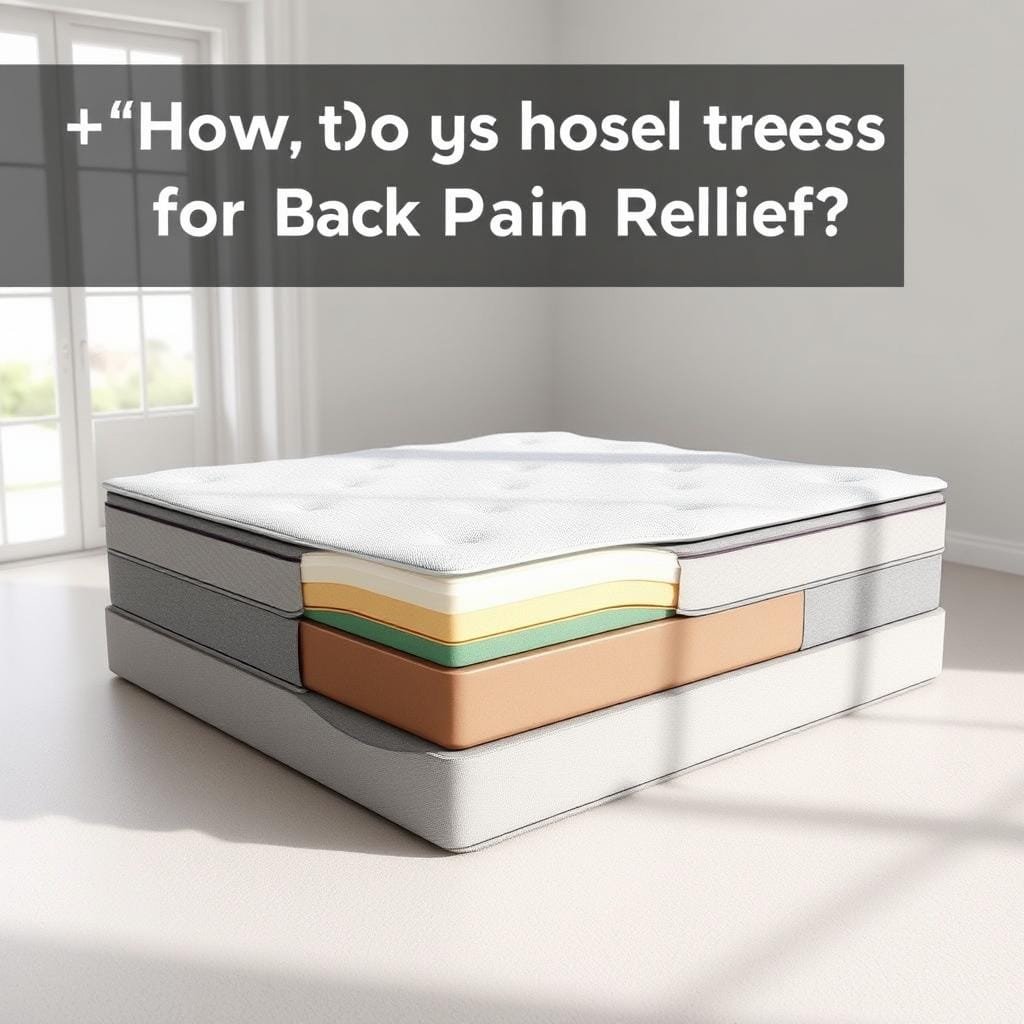
Finding the right mattress is key to better sleep with back pain. A good mattress can help reduce pain and improve sleep. But a bad one can make things worse.
Your body type, how you sleep, and what you like affect the best mattress for you. No one mattress works for everyone with back pain. But knowing what to look for can help you choose wisely.
Optimal Firmness Levels for Different Body Types
Firmer isn’t always better for mattress firmness for back pain. The right firmness depends on your body, weight, and what feels comfortable to you.
Medium-Firm vs. Firm Support Benefits
A study in The Lancet showed that medium-firm mattresses help with back pain. They are not too hard or too soft. This lets your body sink a bit while keeping your spine straight.
Medium-firm mattresses are good because they ease pressure on your shoulders and hips. They also keep your spine in line. This helps spread out your weight and eases back pain.
Weight Considerations for Mattress Selection
Your weight affects how a mattress feels. Lighter people (under 130 pounds) might like a medium mattress. It’s not too hard or too soft.
People who weigh more (over 230 pounds) might need a firmer mattress. This helps keep your spine straight while you sleep. It’s important for those who carry more weight.
Mattress Materials and Technologies
Different materials in mattresses offer different benefits for back pain. Knowing what each material does can help you choose the best one for you.
Memory Foam Benefits and Drawbacks
Memory foam for back pain is popular because it molds to your body. It helps keep your spine straight by letting your shoulders and hips sink a bit. But, it can get hot, which might make some people’s pain worse. Newer memory foams try to fix this by staying cooler.
Latex and Hybrid Options
Natural latex mattresses are great for pressure relief mattress needs. They’re more responsive than memory foam and sleep cooler. They also last longer, up to 15 years.
Hybrid mattresses mix foam layers with innerspring support. They offer the best of both worlds. They’re comfortable but also support your body well.
Innerspring Support Systems
Innerspring mattresses with pocketed coils are good for back pain. They have coils that move separately to support your body where it needs it most.
Modern innerspring mattresses have zoned support. The middle is firmer to support your torso. The edges are softer for your shoulders and legs.
Signs It’s Time to Replace Your Mattress
Even the best mattress will eventually wear out. Knowing when to replace it can help avoid more pain and bad sleep.
Look for signs like sagging, lumps, or uneven surfaces. If you find yourself rolling to the center or waking up stiff, it might be time for a new one.
The life of a mattress varies by type. Innerspring lasts 5-7 years, memory foam 8-10 years, latex 12-15 years, and hybrid 6-8 years. But, how long it lasts also depends on how you use it, your weight, and its quality.
A simple test: if a firm board under your mattress helps with old mattress back pain, it’s time for a new one. Remember, a good mattress is an investment in your health.
Pre-Sleep Stretches and Exercises
Before sleep, it’s a great time to ease back pain with stretches and exercises. These movements help release tension and prepare your body for rest. Just 5-10 minutes can make a big difference in how your back feels.
5-Minute Gentle Stretching Routine
Doing a short stretching routine before bed can help relax tight muscles. These pre-sleep back stretches are gentle and help release tension in your lower back.
Knee-to-Chest Stretches
The knee to chest stretch for back pain is very effective. Lie on your back with knees bent and feet flat. Bring one knee toward your chest and hold it for 15-30 seconds.
Then, switch legs. For a deeper stretch, bring both knees to your chest. Keep your back flat and avoid pulling too hard.
Pelvic Tilts and Rotations
Pelvic tilts help align your spine before sleep. Lie on your back with knees bent and feet flat. Tilt your pelvis upward by engaging your abdominal muscles.
Hold for 5 seconds, then release. For pelvic rotations, keep the same position and slowly drop your knees to one side, then the other. These movements help reduce nighttime discomfort.
These yoga-inspired movements gently flex and extend your spine. For cat-cow, start on your hands and knees. Move slowly with your breath for 5-10 repetitions.
Finish with child’s pose. Sit back on your heels and extend your arms forward. This pose stretches your back and promotes relaxation before sleep.
Core-Strengthening Exercises for Long-Term Relief
Strengthening your core muscles offers long-term protection for your lower back. A stronger core supports your spine during daily activities and sleep. These exercises are gentle enough to perform before bed without causing excessive stimulation.
Gentle Bridges and Planks
The gentle bridge exercise targets the gluteal muscles and lower core. Lie on your back with knees bent and feet flat. Slowly lift your hips toward the ceiling by engaging your glutes and core muscles.
Hold for 5-10 seconds initially, gradually building to longer holds as you get stronger. Perform 5-8 repetitions before bed. For a modified plank for back pain, support your weight on forearms and knees.
Bird Dog and Modified Curl-Ups
The bird dog exercise enhances spinal stability through cross-body coordination. Start on hands and knees, then extend one arm forward and the opposite leg backward while maintaining a neutral spine. Hold briefly, then return to the starting position and repeat on the opposite side.
For modified curl-ups, lie on your back with knees bent and hands supporting your lower back. Lift your head and shoulders slightly off the floor without pulling on your neck. These exercises provide core strengthening for sleep without overtaxing your muscles before bedtime.
Incorporating these stretches and gentle exercises into your nightly routine can significantly improve how your back feels during sleep. Start with just a few minutes each night, focusing on proper form. Over time, you’ll likely notice improved flexibility, reduced pain, and better sleep quality.
Creating a Pain-Minimizing Bedtime Routine

A good bedtime routine can help you sleep better. It tells your body it’s time to relax. Using the right methods can make you feel better and sleep well.
Start your routine 30-45 minutes before you want to sleep. This lets your body get ready to relax and sleep fast.
Heat and Cold Therapy Techniques
Using heat or cold before bed can help with back pain. But, you need to pick the right one to avoid making it worse.
When to Use Heat vs. Cold
Heat therapy for back pain is good for long-term pain. It makes blood flow better and relaxes muscles. Use heat when:
- Your pain is ongoing or recurring
- Muscles feel tight or stiff
- Pain worsens with inactivity or cold weather
- You’re dealing with an older injury (more than 48 hours)
Cold treatment is best for new injuries or swelling. An ice pack for inflammation reduces swelling and numbs pain. Use cold when:
- The injury is recent (less than 48 hours old)
- The area shows visible swelling
- The pain feels hot or burning
- You’re experiencing a flare-up of intense pain
Remember, use heat for stiffness and cold for swelling and new injuries.
For heat, use a heating pad or warm towel for 15-20 minutes. Make sure it’s warm, not too hot. A warm bath can also help.
For cold, wrap an ice pack in a towel and use for 10-15 minutes. Wait at least an hour before using it again.
For some, using both heat and cold can help. Try 10 minutes of heat, then 5 minutes of cold, repeat 2-3 times. Always end with the therapy that feels best for you.
Relaxation Techniques for Muscle Tension
Physical pain and stress can make it hard to sleep. Relaxation techniques can help. They release muscle tension that comes with chronic pain.
Progressive Muscle Relaxation
The progressive muscle relaxation technique (PMR) is great for back pain. It involves tensing and then relaxing different muscle groups. This helps you feel the difference between tense and relaxed muscles.
To practice PMR for back pain:
- Lie comfortably on your bed with pillows for support
- Start with your feet and move up to your face
- Arch your lower back to tense it slightly
- Hold for 5-7 seconds
- Release and relax for 20-30 seconds
- Notice the difference in feeling
- Move to the next muscle group
Regular practice helps you release tension. On tired nights, try a 5-minute version focusing on your back.
Breathing Exercises for Pain Management
Deep breathing exercises help your body relax. They calm your nervous system and reduce pain.
Try this simple breathing technique before sleep:
- Lie in your comfortable sleep position with proper pillow support
- Place one hand on your chest and one on your abdomen
- Inhale slowly through your nose for a count of 4, feeling your abdomen rise
- Hold briefly
- Exhale slowly through your mouth for a count of 6, feeling your abdomen fall
- Repeat for 5 minutes, focusing on your breath
Adding gentle stretches before bed can help too. Stretches, heat or cold, and relaxation can reduce pain and tension.
Lifestyle Modifications to Reduce Nighttime Back Pain
How you move and sit during the day affects your back at night. Making smart changes can help you feel better when you sleep. By fixing your daytime habits, you can improve your back health all day.
Daytime Posture and Movement Awareness
Sitting and Standing Ergonomics
It’s important to sit right to avoid back pain. Make sure your feet are flat on the floor and knees at 90 degrees. Use a back support and keep your monitor at eye level to avoid neck pain.
When standing, put your weight on both feet with knees slightly bent. This keeps your back straight. Always try to keep your back’s natural curves, not too straight or slouchy.
Check your posture every 30 minutes. Stand up, stretch, and walk for two minutes each hour. These breaks help prevent muscle pain and reduce strain at night.
Link these posture checks to activities like phone calls. This helps make it a habit.
Weight Management Strategies
Keeping a healthy weight is key to less spine pressure, which is worse at night. Extra pounds, like belly fat, put more pressure on your lower back.
Eat foods that fight inflammation like fatty fish and berries. Avoid processed foods and added sugars. Drinking enough water also helps keep your discs healthy and prevents pain.
Stress Reduction for Muscle Relaxation
Mind-Body Techniques
Try mindfulness for back pain with simple exercises. A five-minute meditation before bed can help relax your back muscles. Regular mindfulness reduces pain worries.
Stress-Pain Connection
Stress makes your muscles tense, often in the lower back. This can make pain worse. Use deep breathing, muscle relaxation, and yoga to relax. Even a few minutes before bed can help.
Supportive Sleep Products and Accessories
Getting the right sleep products can really help with lower back pain. A good mattress and pillow are key. But, other items can give extra support where you need it most.
These items can make your bed feel better without changing everything. You don’t need a whole new bedroom to feel better.
Mattress Toppers and Pads for Added Support
A good mattress topper can make your bed better without buying a new one. It adds support to old mattresses or makes firm ones softer. This helps your back feel just right.
Memory Foam vs. Latex Options
Memory foam toppers are great for back pain. They mold to your body, giving it the support it needs. This is because they get softer when warm.
Memory foam keeps your body in line all night. It’s best for people with disc problems who don’t move much.
Latex toppers are different. They give support right away and are firmer. This makes it easier to move around at night. It’s good for muscle pain.
Latex toppers also stay cooler than memory foam. This is good if you get back pain from being too hot. But, latex is usually more expensive.
Thickness and Density Considerations
The thickness of a topper is important for back pain. A 2-3 inch topper is usually just right. Thicker toppers are better for heavier people.
The density of the topper affects how well it supports you. Memory foam should be 4-5 pounds for the best support. Latex should be medium-firm for back pain.
Adjustable Bed Frames Benefits
Adjustable bed frames are a big help for back pain. They let you adjust different parts of your body. This reduces pressure on your spine and lets you sleep in a way that’s best for you.
Zero-Gravity Position Benefits
The zero-gravity sleep position is inspired by astronauts. It helps with lower back pain. It lifts your head and feet, making your hips and knees slightly bent.
This position spreads out your weight evenly. It reduces pressure points and helps your spine. It also helps your spinal discs by making more space between them.
This position is great for spinal stenosis and degenerative disc disease. It takes a few nights to get used to, but it really helps with pain.
Customizing Settings for Pain Relief
Adjustable beds offer many positions for back pain relief. Small changes can make a big difference. You can even save your favorite position.
Some beds even have massage features. These can help relax your back muscles before sleep.
When using an adjustable bed, adjust your pillow too. You’ll need a thinner pillow for the right neck alignment.
Specialized Back Support Products
There are special products for back pain. They target specific areas during sleep. These range from simple wedges to full body supports.
Back Braces and Support Belts
Back braces can help with certain conditions. But, they’re usually for short-term use. Nighttime belts are softer and less restrictive.
Lumbar braces are great for spondylolisthesis or recent injuries. They prevent bad sleeping positions that can make your condition worse. Always talk to your doctor before using them.
Wedge Pillows and Body Pillows
Wedge pillows help keep your spine aligned. They can be placed under your upper body or legs. This reduces pressure on your lower back.
Body pillows support your whole body, which is great for side sleepers. They keep your spine straight and prevent twisting. U-shaped pillows are good for people who move a lot during sleep.
When to Seek Medical Help for Back Pain
Knowing when to get medical help for back pain is very important. Some back pain can be serious and even life-threatening. It’s key to know the warning signs to decide when to see a doctor.
Warning Signs That Require Medical Attention
Not all back pain is the same. Some serious back pain symptoms need quick medical help. Knowing these signs can save your life or prevent serious nerve damage.
Red Flag Symptoms
Watch out for these back pain emergency signs that need fast medical care:
- Severe pain that wakes you from sleep or doesn’t improve with rest
- Pain with a fever (over 101°F), which may mean infection
- Unexplained weight loss with back pain
- Numbness in the groin area (saddle anesthesia) or loss of bladder/bowel control
- Leg weakness or numbness that gets worse fast
- Back pain after a fall or injury
If you see any of these signs, go to the emergency room right away. They could mean serious problems like spinal infections, fractures, or cauda equina syndrome that need quick treatment.
Knowing the difference between chronic and acute pain helps decide when to see a doctor. Acute pain starts suddenly and lasts less than six weeks. It usually gets better with self-care.
Chronic pain lasts more than three months and might need a doctor’s help. If your pain doesn’t get better after two weeks of trying to fix it yourself, or if it keeps coming back, see a doctor.
Pain that gets worse, with symptoms like tingling or weakness, should also get a doctor’s check-up, no matter how long it lasts.
Professional Treatment Options
When home care isn’t enough, there are professional ways to manage back pain. Your doctor might suggest one or more of these options based on your situation.
Physical Therapy Approaches
Physical therapy (PT) for back pain offers more than just home exercises. A trained physical therapist will:
- Check how you move and what you can’t do
- Make exercises just for you to fix your problems
- Use hands-on methods to help you move better and feel less pain
- Teach you how to move right to avoid future injuries
Most people start to feel better in 6-12 sessions. But, how long it takes depends on your situation. Physical therapy includes special exercises to strengthen your back’s support muscles.
Pain Management Specialists
When pain keeps coming back, pain management specialists can help. These doctors are experts in treating complex pain problems.
They might use:
- Medicines stronger than what you can buy over the counter
- Therapeutic injections to target pain sources
- Nerve blocks to stop pain signals
- Radiofrequency ablation to turn off painful nerves
Surgical Interventions
Surgery is usually a last resort. But, modern surgery for back pain includes:
- Microdiscectomy to remove herniated disc material pressing on nerves
- Laminectomy to relieve pressure on the spinal cord
- Spinal fusion to stabilize painful spine segments
- Artificial disc replacement to keep motion while easing pain
Your surgeon will talk about the good and bad of surgery, and how long you might need to recover. Most back surgeries today are less invasive, which means less time recovering and fewer complications.
Putting It All Together: Your Personalized Back Pain Sleep Plan
Relieving lower back pain starts with a sleep plan made just for you. First, figure out when your pain is the worst. Is it when you wake up, after lying down, or when you change positions? Knowing this helps create your back pain relief plan.
Choose the best sleeping position for your back pain. Side sleeping with a pillow between your knees might help. Or, back sleeping with a lumbar support could be better for you. Listen to what your body prefers.
Then, think about your mattress. A mattress that’s too soft or too firm can hurt your back. You might need a new mattress, a supportive topper, or better pillows to feel better.
Start a pre-sleep routine with gentle stretches and relaxation. These can help your specific pain areas. Even just five minutes of stretching can help a lot.
Keep a sleep journal for two weeks before changing your plan. Write down what helps and what doesn’t. Then, make the needed changes to your plan.
Quality sleep and pain management go hand in hand. Better sleep means less pain, which leads to more energy during the day. Your plan is not just for sleep. It’s for a better life every day.
FAQ
What’s the difference between muscular and structural lower back pain?
Muscular back pain comes from overusing muscles or poor posture. It can get better with rest. Structural back pain is about the spine, like herniated discs. It needs more treatment.
How does poor sleep affect back pain?
Bad sleep makes back pain worse. It lowers how much pain you can handle. Pain can also stop you from sleeping well.
Good sleep helps manage pain better. It’s important for feeling better during the day.
Why is the fetal position recommended for lower back pain?
The fetal position helps lower back pain. It keeps the spine in a good shape. This can reduce pressure on nerves.
It’s good for people with herniated discs. It keeps the spine curved right.
What is the 90-90 rule for back sleeping?
The 90-90 rule means hips and knees at 90 degrees. It helps the spine stay straight. This reduces pressure on the back.
It’s good for people with spinal stenosis. It makes the spine a bit more open.
Why is stomach sleeping bad for lower back pain?
Stomach sleeping puts too much pressure on the spine. It can hurt nerves. It’s not good for the back.
It also makes breathing harder. This can make back pain worse.
How should I position a pillow between my knees when side sleeping?
Use a firm pillow to keep your knees in line. It should go from mid-thigh to calf. This keeps your pelvis straight.
Don’t use a pillow that’s too soft. It should fit your hip width.
How do I properly use a lumbar support pillow?
Place the pillow above your belt line. It should feel natural. Not too hard.
For back sleepers, it should be thin. About 1-2 inches.
How does my pillow height affect my lower back?
The right pillow height is key. Side sleepers need thicker pillows. Back sleepers need thinner ones.
Good neck support is important. It helps your back feel better.
Is a firm or medium-firm mattress better for back pain?
Most people do better on medium-firm mattresses. They’re not too hard. Not too soft.
They support your spine well. Studies show they help with back pain.
Are memory foam mattresses good for back pain?
Memory foam can help with back pain. It molds to your body. This can support your spine.
But, it can get too hot. This can make pain worse. Newer memory foams try to fix this.
How do I know if my mattress is causing my back pain?
Look for signs like sagging or lumps. If you feel better on other beds, it might be your mattress.
Try a board under your mattress. If it helps, it’s time for a new one.
What’s the best pre-sleep stretch for lower back pain?
Knee-to-chest stretches are great. Lie on your back and bring one knee to your chest. Hold for 15-30 seconds.
Repeat with the other leg. This stretch helps your back feel better.
What core exercises can help with lower back pain?
Bridges and modified planks are good. Bridges lift your hips. Modified planks support your body.
Start with short holds. This helps your core without making you tired.
Should I use heat or ice for my back pain before bed?
Use heat for stiffness and muscle tension. Cold is better for swelling and new injuries.
Try contrast therapy for some conditions. Alternate between heat and cold.
How can I relax my back muscles before sleep?
Try progressive muscle relaxation. Tense and then relax different muscle groups.
This helps your back relax. It’s good for back pain.
What’s better for back pain: memory foam or latex mattress toppers?
Memory foam fits your body well. Latex is cooler and easier to move on.
Latex lasts longer but costs more. Choose based on your needs.
What is the “zero-gravity” sleep position?
It’s inspired by astronauts. It keeps your body straight. This reduces pressure on your back.
It’s good for some back problems. It helps your spine stay in a good position.
Should I wear a back brace while sleeping?
Daytime braces are common. But, nighttime ones need to be soft. They should support your back without being too tight.
They’re good for some back problems. But, use them only when needed. They can make your back muscles weak.
When should I seek medical help for my back pain?
Get help if you have fever with pain. Or if you’re losing weight and have back pain.
Seek help for numbness or trouble with your bowels. Or if your pain is very bad. Or if you’re over 50 or under 20 with new pain.
How is professional physical therapy different from self-directed exercises?
Physical therapy looks at how you move. It finds the real cause of your pain. It uses special techniques and exercises.
It teaches you how to move better. It helps you manage your pain. Most people see big improvements in 6-12 sessions.
Can my sleeping position make my sciatica worse?
Yes, some sleeping positions can make sciatica worse. Stomach sleeping is bad for the spine. It can hurt the sciatic nerve.
Side sleeping with a pillow between your knees is better. It keeps the nerve from getting hurt.
How long should I try a new sleeping position before deciding if it helps?
Try a new position for at least two weeks. Your body needs time to adjust. It helps your muscles relax.
Keep a sleep journal. Note your pain and how well you sleep. This helps you see if it’s working.