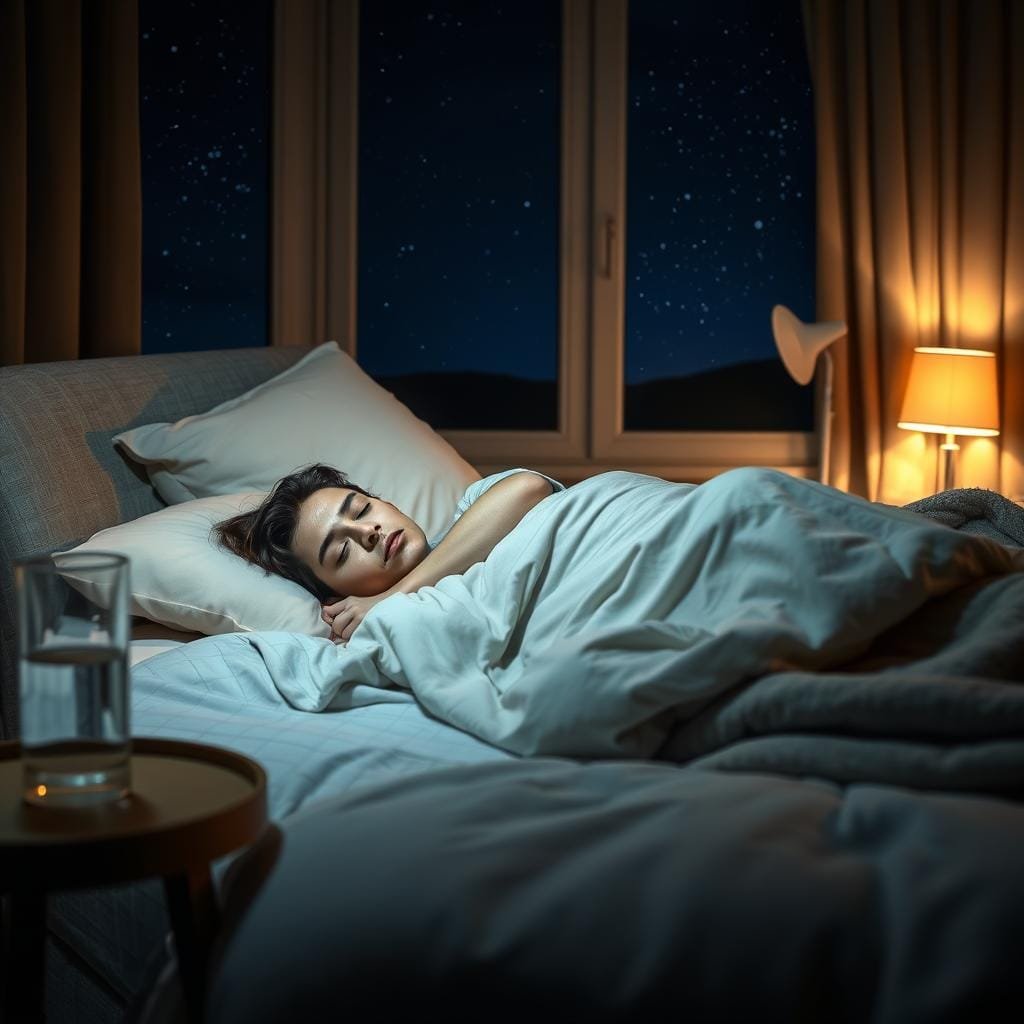
Tossing and turning at night is common for many Americans. Studies show about one in three people in the U.S. don’t get enough sleep. Doctors say adults need at least seven hours of good sleep each night.
Bedtime can be hard. The more you try to sleep, the more awake you feel. This makes it hard to relax and sleep.
This guide shows science-backed sleep techniques to help you sleep better. We have tips from quick breathing exercises to longer relaxation methods. These can help if you have trouble sleeping or need insomnia solutions.
We’ve picked quick sleep methods that work. These include changing your environment, thinking differently, and relaxing your body. Each method is backed by science and works for many people. Find what works best for you.
Key Takeaways
- One-third of Americans experience sleep deprivation regularly
- Adults typically need at least seven hours of quality sleep each night
- Anxiety about not sleeping often worsens sleep difficulties
- Science-backed techniques can help you fall asleep fast without medication
- Different methods work for different people—experiment to find your best solution
- Consistent sleep routines strengthen your body’s natural sleep-wake cycle
Why Millions of Americans Struggle with Sleep
Across America, a big sleep crisis is happening. Millions of people fight insomnia and sleep deprivation every night. This problem affects everyone, making it hard to work, stay healthy, and enjoy life.
Many things cause America’s sleep problems. Too much screen time, weird work hours, stress, and health issues are some reasons. We need to understand this to find ways to help.
The Prevalence of Insomnia in the United States
Studies show a big problem with sleep in America. About 30-35% of adults have brief insomnia symptoms. But, 10% have chronic insomnia that really hurts their daily life.
Women often have sleep issues more than men. This gap gets bigger after 40. Almost 50% of people over 65 have sleep problems.Insomnia doesn’t affect all Americans equally. People with less money and those in cities have more sleep issues.
| Sleep Disorder | Prevalence (%) | Most Affected Age Group | Common Symptoms |
|---|---|---|---|
| Insomnia | 30-35% | 45-64 years | Difficulty falling/staying asleep |
| Sleep Apnea | 9-24% | 50-70 years | Breathing interruptions, snoring |
| Restless Legs Syndrome | 7-10% | 45+ years | Uncomfortable leg sensations |
| Shift Work Disorder | 10-40% of shift workers | 25-45 years | Excessive sleepiness, insomnia |
How Sleep Deprivation Affects Your Daily Life
Poor sleep has many bad effects. It makes you tired and affects your life in many ways.
Not enough sleep hurts your brain. It makes you less focused and bad at making decisions. Your brain also can’t remember things well without sleep.
Feeling moody and stressed is common without enough sleep. It can also make you more likely to get anxious or depressed.
Your body also suffers. It can’t fix itself without sleep. This makes you more likely to get sick.
Not sleeping well can also mess with your body’s hunger hormones. This can lead to obesity, diabetes, and heart disease. Losing just one hour of sleep can make you 9% more likely to become obese.
These problems show why we need to fix our sleep issues. It’s not just about feeling tired. It’s about staying healthy and happy.
The Science Behind Falling Asleep
Every night, your body goes through amazing changes to help you sleep. Learning about sleep science can help you work with your body. Your body has its own patterns each night, guided by internal clocks and brain changes.
Understanding Your Sleep Cycle
Your sleep happens in different stages each night. These stages are calledsleep cycles. Each cycle lasts 90-110 minutes and happens 4-6 times a night.
Your body’s internal clock, or circadian rhythm, controls your sleep. It tells you when to be awake or sleepy. This clock affects hormone levels, like melatonin, which helps you sleep.
The sleep cycle has four main stages:
| Sleep Stage | Brain Wave Pattern | Characteristics | Duration |
|---|---|---|---|
| N1 (Light Sleep) | Theta waves | Drowsiness, hypnic jerks possible | 1-5 minutes |
| N2 (Deeper Sleep) | Sleep spindles & K-complexes | Body temperature drops, harder to wake | 10-60 minutes |
| N3 (Deep Sleep) | Delta waves | Tissue repair, immune strengthening | 20-40 minutes |
| REM Sleep | Similar to wakefulness | Dreaming, memory consolidation | 10-60 minutes |
How Your Brain Transitions to Sleep
When you start to relax, your brain waves slow down. They go from busy beta waves to calm alpha waves.
A chemical called adenosine builds up in your brain during the day. It makes you feel sleepy, like a battery needing to recharge.
Your brain stem stops your muscles from moving during deep sleep. This keeps you from acting out your dreams. Your thalamus also blocks signals that could wake you up.
Your body temperature drops as you sleep. It reaches its lowest point about two hours after you fall asleep. This drop helps you stay asleep all night.
Knowing how your brain changes to sleep can help you know when it’s time to sleep. It’s about finding the perfect moment when your body is ready.
Creating the Optimal Sleep Environment
Make your bedroom a sleep haven to fight insomnia and boost sleep quality. Your surroundings help your body get ready for sleep. To signal your brain it’s time to rest, focus on a few key elements.
Temperature and Comfort Settings
Your body gets cooler as you sleep. Keeping your room cool helps you fall asleep faster. Research shows cooler rooms lead to quicker sleep and deeper rest.
Studies say keep your room between 60°F and 67°F. This helps your body cool down as you sleep.
A 2019 study found warm baths before bed help cool down faster. This makes it easier to fall asleep and sleep well. Learn more about falling asleep faster and sleeping better
Finding Your Ideal Sleep Temperature
While science gives a range, what feels right to you is key. Try temperatures between 60-67°F to find your perfect spot. If you share a bed, use separate blankets for different temperatures.
Track your sleep at different temperatures for a week. Most people find their ideal temperature is cooler than their daytime comfort.
Bedding Materials That Promote Sleep
The materials you touch affect your temperature. Natural fibers are better for sleep than synthetic ones.
| Bedding Material | Temperature Regulation | Moisture Wicking | Durability | Best For |
|---|---|---|---|---|
| Cotton | Good | Moderate | High | Year-round use |
| Linen | Excellent | High | Very High | Hot sleepers |
| Bamboo | Excellent | High | Moderate | Sensitive skin |
| Wool | Excellent | Very High | High | Variable climates |
| Synthetic Blends | Poor to Moderate | Variable | Moderate | Budget options |
Light and Sound Management
Light affects your sleep-wake cycle. Even a little light can stop melatonin production. A dark room is key for good sleep.
Blackout curtains block outside light, great for city dwellers or night shift workers. If you can’t use curtains, a sleep mask works well.
Sound can wake you up or stop you from falling asleep. To sleep well, block out bad sounds and add good ones:
– Earplugs or noise-canceling earbuds block sound
– White noise machines cover up bad sounds
– Nature sounds like rain or waves help you sleep
– Smart speakers with sleep sounds offer options
Bedroom Organization for Better Sleep
A messy room can keep you awake. It makes your mind stressed and alert. A clean, calm space helps you relax.
Here’s how to organize for better sleep:
– Keep work stuff out of your bedroom
– Put exercise gear elsewhere
– Avoid dusty decorations
– Use soft, calm colors for walls and bedding
Think about “feng shui” when setting up your room. Place your bed so you see the door but aren’t right in line with it. This makes you feel safe and relaxed.
Make your bedroom just for sleep and love. When it’s only for rest, you’ll feel sleepy when you go in.
Breathing Techniques to Fall Asleep Fast
Using your breath to fall asleep might be the easiest and most effective trick tonight. Your breathing affects your nervous system, which helps you relax and sleep. By changing how you breathe, you can calm your body and mind.
Let’s look at three breathing exercises for insomnia that can help you sleep quickly and naturally.
The 4-7-8 Method
The 4-7-8 breathing method was created by Dr. Andrew Weil. It comes from ancient yoga, which helps you relax and reduce stress.Here’s how to do the 4-7-8 breathing technique:
- Put your tongue on the roof of your mouth, just behind your teeth
- Breathe out completely through your mouth, making a sound
- Close your mouth and breathe in quietly through your nose for 4 seconds
- Hold your breath for 7 seconds
- Breathe out completely through your mouth for 8 seconds, making the sound again
Start with four cycles when you first try it. It brings more oxygen to your blood and slows your body down. Many people fall asleep before they finish their fourth cycle!
Box Breathing for Sleep
Box breathing, or square breathing, is used by Navy SEALs to stay calm. It’s also great for quieting your mind before bed.
The technique has equal time for each part of the breath:
- Breathe in slowly for 4 seconds
- Hold your breath for 4 seconds
- Breathe out gently for 4 seconds
- Hold your lungs empty for 4 seconds
This balanced breathing helps control your nervous system. It lowers your heart rate and blood pressure. Box breathing is simple and works even when you’re very tired.
Diaphragmatic Breathing Exercises
Diaphragmatic breathing, or belly breathing, uses your diaphragm. It’s great for sleep because it relaxes you.
To do diaphragmatic breathing:
- Lie on your back with a pillow under your knees
- Put one hand on your chest and the other on your stomach
- Breathe in slowly through your nose, feeling your stomach go up
- Breathe out through pursed lips, feeling your stomach go down
The trick is to focus on your stomach moving, not your chest. This deeper breathing increases oxygen and reduces anxiety that keeps you awake.
With regular practice, these breathing exercises get better. Your body learns to relax with these patterns, helping you sleep faster each night.
Progressive Muscle Relaxation for Quick Sleep
Progressive Muscle Relaxation is great for falling asleep fast. It helps by tensing and then relaxing different muscle groups. Many people carry tension in their muscles without knowing it.
Stress makes our muscles tight. Over time, this tightness becomes normal. PMR teaches your body to relax truly. Studies show it can cut sleep time by 20 minutes and improve sleep quality.
Step-by-Step Muscle Relaxation Guide
Start by lying on your back with arms at your sides. Begin at the top of your body and work down:
1.Forehead and scalp: Raise your eyebrows as high as possible for 5 seconds, then release completely and feel the warmth spreading across your forehead.
2.Eyes and nose: Squeeze your eyes shut and wrinkle your nose for 5 seconds, then release and notice the tingling sensation.
3.Jaw and mouth: Clench your jaw and press your lips together firmly for 5 seconds, then let your mouth hang slightly open as you release.
Continue with yourneck, shoulders, arms, hands, chest, stomach, buttocks, thighs, calves, and feet– tensing each area for 5 seconds before releasing.
Focus on the difference between tension and relaxation. Enjoy the warmth and heaviness as you release each muscle group. Saying “relax” or “let go” can help.
Combining Relaxation with Breathing
Pairing PMR with breathing makes it even more effective. Inhale slowly through your nose as you tense each muscle group. Exhale fully through your mouth, imagining stress leaving with your breath.
This method strengthens the mind-body connection. Try it with the 4-7-8 breathing method:
1. Tense your chosen muscle group while inhaling for 4 counts
2. Hold both the breath and tension for 7 counts
3. Release completely while exhaling for 8 counts
Don’t tense too hard, as it can cause discomfort. For injuries or chronic pain, focus only on the relaxation phase.
| Muscle Group | Common Tension Signs | Relaxation Sensation | Modification If Needed |
|---|---|---|---|
| Shoulders | Elevated, tight | Heavy, warm | Gentle shrugs only |
| Jaw | Clenched teeth, headaches | Loose, tingling | Light pressure only |
| Hands | Balled fists, stiffness | Open, warm | Finger wiggling instead |
| Lower back | Rigid posture, pain | Melting into mattress | Skip tensing, focus on release |
With practice, PMR gets easier and more effective. Soon, you might fall asleep in just a few minutes. It helps break the cycle of tension that keeps you awake at night.
Mindfulness and Meditation Practices
When you can’t sleep, mindfulness and meditation help. They calm your mind and get you ready for sleep. Studies show they improve sleep, reduce stress, and boost brain function.
Body Scan Meditation
Body scan meditation is easy but powerful. It releases tension you might not feel. You focus on each part of your body, noticing feelings without judging.How to do a body scan for sleep:1. Lie in bed with arms by your sides
2. Start with deep breaths
3. Focus on your toes, feeling any sensations
4. Move up your body, noticing each part
5. Let go of tension in each area
This method changes your brain waves. It moves from active thinking to relaxed awareness and then to drowsiness. Many people fall asleep during the scan, making it a top sleep meditation method.
Guided Sleep Meditation Resources
Guided sleep meditations are great for beginners or those who like guidance. They offer relaxation steps to help you sleep.
| Resource Type | Recommended Options | Best For | Duration Options |
|---|---|---|---|
| Mobile Apps | Calm, Headspace, Insight Timer | Beginners, tracking progress | 10-60 minutes |
| Podcasts | Sleep With Me, Nothing Much Happens | Story-based distraction | 30-60 minutes |
| YouTube Channels | Michael Sealey, The Honest Guys | Visual learners, free access | 15-120 minutes |
| Audio Books | Jon Kabat-Zinn, Tara Brach | Deep understanding | Variable |
Choose a voice and style that feels right to you. Many say guided meditations have changed their sleep. They now fall asleep much faster.
Mindfulness Techniques for Racing Thoughts
Racing thoughts can keep you awake. Mindfulness helps quiet your mind for sleep.
Try thought-labeling. Notice thoughts and label them, like “planning” or “worrying.” This helps you see thoughts without getting caught up in them.
Imagine thoughts as clouds in your mind. Watch them go by without getting involved. Focus on your breath instead.
The “leaves on a stream” exercise is also helpful. Picture thoughts as leaves on a stream. Let them go as they float away. This trains your brain to let go of thoughts.
With practice, these techniques can change your brain. They help you relax your mind for sleep, even when stressed. People find their sleep improves a lot.
Proven Methods to Fall Asleep Fast When You’re Anxious
When worry keeps you awake, try these methods to fight anxiety and sleep fast. Anxiety makes it hard to relax for sleep. These techniques help quiet your mind and sleep, even when stressed.
The Military Method for Falling Asleep
The military sleep method was made for U.S. Navy pilots in World War II. It’s from Lloyd Bud Winter’s 1981 book “Relax and Win: Championship Performance.” It helps you sleep in two minutes.
Start by relaxing your face, tongue, jaw, and eye muscles. Drop your shoulders and relax your arms on both sides. Take deep breaths and relax your chest.
Clear your mind by imagining yourself in a calm place. You could be in a canoe on a lake or in a black room. If thoughts come, say “don’t think” for ten seconds. With practice, you can sleep in 120 seconds, even when anxious.
Visualization and Imagery Techniques
Visualization for sleep takes your mind off worries and to calm images. It uses the same brain paths as real relaxation, helping you sleep.
The “safe place” technique is to imagine a place where you feel safe and calm. Use all your senses to make it real. Make it vivid to grab your attention.
The “descending staircase” method is also good. Imagine walking down a staircase, counting back from 20. With each step, get more relaxed and sleepy. Many people fall asleep before reaching the bottom.
Paradoxical Intention: The Reverse Psychology Approach
Paradoxical intention is a unique way to fight sleep anxiety. Instead of trying to sleep, try to stay awake. It removes the stress that makes insomnia worse.
To try paradoxical intention, go to bed as usual but try to stay awake. Really try to stay awake, don’t pretend. This stops the cycle of anxiety about not sleeping.
A study in the Journal of Sleep Research found paradoxical intention helps people with insomnia sleep faster. It lets your body sleep naturally without fear.
| Technique | Time to Work | Best For | Success Rate | Difficulty Level |
|---|---|---|---|---|
| Military Method | 2 minutes | Physical tension | High with practice | Medium |
| Visualization | 5-15 minutes | Racing thoughts | Varies by person | Low |
| Paradoxical Intention | Variable | Sleep performance anxiety | Effective for chronic insomnia | Low |
Dietary Factors That Influence Sleep Quality
The foods and drinks you have before bed can help you sleep or keep you awake. Your body and brain talk to each other through food. Knowing this can help you sleep better with simple food changes.
Foods That Promote Sleepiness
Some foods help your body make sleep hormones. Tryptophan in turkey, chicken, eggs, and dairy helps make serotonin and melatonin. These hormones help you sleep.
Magnesium-rich foods like greens, nuts, and seeds relax your muscles and calm your brain. Magnesium is like a sleep medicine but without side effects. It helps you sleep better.
Other foods like dairy, bananas, chickpeas, and tart cherries also help you sleep. They support your body’s sleep needs.
Natural Sleep-Inducing Snacks
A good bedtime snack has sleep helpers without upsetting your stomach. Try these:
- Half a banana with a teaspoon of almond butter (tryptophan + magnesium)
- A small glass of tart cherry juice with 5-6 walnuts (natural melatonin boost)
- Warm milk with a teaspoon of honey (calcium + easy-to-digest carbs)
- Greek yogurt with a few berries (protein + calcium + antioxidants)
Timing Your Evening Meals
Eating close to bedtime can make you wake up soon after falling asleep. The American Time Use Survey says so.
Your body temperature drops for sleep, but eating raises it. Eat your last big meal 2-3 hours before bed for good digestion.
If you eat later, eat small amounts. Choose foods that won’t mess with your sleep.
What to Avoid Before Bedtime
Caffeine is a big sleep killer. It stays in your system for up to 10 hours. So, afternoon coffee can mess with your sleep at midnight.
Alcohol might make you sleepy at first but messes with deep sleep. It can wake you up in the middle of the night.
Other things to avoid at bedtime include:
- High-sugar foods that cause blood sugar spikes and crashes
- Spicy dishes that can trigger heartburn when lying down
- Heavy, high-fat meals that require lengthy digestion
- Large amounts of liquids that may cause midnight bathroom trips
Choosing the right foods and drinks before bed can help you sleep better. You’ll fall asleep faster and sleep more soundly.
Establishing a Sleep-Inducing Bedtime Routine
A bedtime routine is like a bridge to sleep. It tells your body it’s time to relax. Adults can improve sleep by having evening habits, just like kids.
Our brains like patterns. A consistent bedtime routine makes our brain ready for sleep.
Studies show regular sleep hygiene practices help sleep faster and better. It teaches your body to get ready for sleep.
The Ideal Pre-Sleep Timeline
The best bedtime routines start 1-2 hours before sleep. This lets your body slow down from the day.
Stop doing hard things 90 minutes before bed. This helps your mind switch to relax mode.
Then, turn off bright lights and devices. This helps your brain make sleep hormone.
Use the last 30-45 minutes for calm things. Try gentle stretches, reading, or a warm bath.
This calm time gets your body ready for sleep. It lowers your body temperature and heart rate.
Consistency and Sleep Training
Consistency is key for a bedtime routine. Your body likes regular times. Going to bed and waking up at the same times helps.
Think of it as sleep training for adults. A regular sleep schedule helps your body get ready for sleep.
Weekends and work changes can mess with sleep. But keep your routine as much as you can. This helps your body stay on track.
If you can’t stick to your routine, keep the same steps. This keeps your brain thinking it’s time for sleep.
Shift workers, make a routine that works for you. The order of activities is more important than the time.
With practice, your bedtime routine will help you sleep well every night.
Technology and Sleep: Finding Balance
Technology and sleep don’t always mix well. Our devices can hurt or help our sleep, depending on how we use them. It’s important to understand this for better sleep in our tech-filled world.
Blue Light and Sleep Disruption
Our screens give off blue light that messes with our sleep. This light makes your brain think it’s daytime, even when it’s night.
Blue light lowers melatonin, the sleep hormone. Studies show two hours of screen time before bed cuts melatonin by up to 22%. This makes falling asleep harder.
What we do on our devices keeps our minds awake. Checking emails or watching shows keeps you alert when you should be relaxing.
- Wear blue light blocking glasses before bed
- Turn on night mode or blue light filters on your devices
- Follow the 20-20-20 rule: look at something 20 feet away for 20 seconds every 20 minutes
- Have a “screen curfew” at least 60 minutes before bed
Apps and Devices That Can Help You Sleep
Some tech can actually help you sleep better. Sleep tech has gotten better in recent years. It offers real solutions for better sleep.
Sleep tracking apps give you insights into your sleep. They track sleep duration, quality, and disturbances. This helps you see how your sleep changes as you try new things.
White noise machines and apps create sounds that help you sleep. Nature sounds or fan noises can make you fall asleep faster.
Smart bedroom tech can make your sleep space better. It can control temperature, light, and humidity. This makes your bedroom perfect for sleep.
| Technology Type | Sleep Benefits | Best Time to Use | Effectiveness Rating |
|---|---|---|---|
| Blue Light Blocking Apps | Reduces melatonin suppression | Evening hours (after sunset) | Moderate |
| Sleep Tracking Apps | Provides sleep pattern insights | Throughout the night | High for awareness |
| White Noise Machines | Masks disruptive sounds | During sleep hours | Very high |
| Meditation Apps | Calms racing thoughts | 30-60 minutes before bed | High |
When to Seek Professional Help for Sleep Issues
It’s important to know when to get help for sleep problems. Sometimes, we all have trouble sleeping. But if it keeps happening, it can hurt your health and life quality. Knowing when to see a doctor can help you get the right help.
Signs of Serious Sleep Disorders
Some signs mean you might have a serious sleep problem. Persistent insomnia for more than three nights a week for three months is a sign. You need to see a doctor.
Look out for these signs of serious sleep issues:
- Loud, chronic snoring with gasping or choking sounds (common sleep apnea signs)
- Feeling very tired during the day even after sleeping enough
- Needing to move your legs a lot at night and feeling uncomfortable
- Feeling very weak in your muscles when you’re upset
- Having morning headaches and a dry mouth when you wake up
If you have sleep problems and other health issues like depression or chronic pain, you need help. Also, if sleep troubles make it hard to do daily things or are dangerous, like falling asleep while driving, get help right away.
Types of Sleep Specialists and Treatments
There are different doctors for sleep problems. Knowing what they do helps you find the right one for you.
| Specialist Type | Expertise | Common Treatments | When to Consult |
|---|---|---|---|
| Sleep Physician | General sleep disorders | Sleep studies, medication, CPAP therapy | Suspected sleep apnea, complex sleep disorders |
| Neurologist | Sleep disorders with neurological components | Medication, behavioral interventions | Narcolepsy, REM sleep behavior disorder |
| Psychiatrist | Sleep issues related to mental health | Medication, therapy | Insomnia with anxiety or depression |
| Psychologist | Behavioral sleep medicine | Cognitive Behavioral Therapy for Insomnia (CBT-I) | Chronic insomnia, sleep-related anxiety |
A sleep study is often the first step. It checks your brain waves, breathing, heart rate, and movements while you sleep. For insomnia, CBT-I works well and is often better than medicine for keeping you asleep.
Before your first doctor visit, keep a sleep diary for 1-2 weeks. Write down your sleep, habits, and symptoms. This helps doctors find patterns and make a treatment plan for you.
Your Action Plan: Start Sleeping Better Tonight
Ready to change your sleep? Start with these quick fixes tonight. Make your bedroom cool, between 65-68°F. Also, dim the lights an hour before bed. Try the 4-7-8 breathing when you lie down.
This week, make a sleep plan. Set a regular bedtime and wake-up time. Even on weekends. Get rid of electronic devices in your bedroom. Instead, read or stretch gently in the evening.
Do some physical activity every day. It helps you sleep better tonight and later. Research from AARP says 20 percent of adults over 45 have trouble sleeping. Studies show exercise makes you fall asleep faster and sleep better.
Keep track of your sleep with a diary. Write down what works for you. Small, steady changes can make a big difference. If you’re not getting better after two weeks, see a sleep expert.
Your journey to better sleep begins with tonight’s choice. Pick one tip from this article, try it tonight. Then, add more as you build your sleep toolkit.
FAQ
How long does it typically take to fall asleep?
Most adults fall asleep in 10-20 minutes. This time can vary. If you fall asleep in less than 5 minutes, you might be sleep-deprived. Taking more than 30 minutes to fall asleep could mean you have insomnia.
Why can’t I fall asleep even when I’m exhausted?
Sometimes, your body stays awake even when you’re tired. This is called hyperarousal. It can happen because you’re worried about sleep, stressed, or have irregular sleep times. Your body might be tired, but your mind is awake, making it hard to sleep.
How effective is the military method for falling asleep quickly?
The military method helps Navy pilots sleep fast. Studies show it works for most people. It uses muscle relaxation, breathing, and mental clearing to fall asleep quickly, even when stressed.
Can certain foods really help me fall asleep faster?
Yes, some foods can help you sleep. Foods like turkey, eggs, and cheese have tryptophan. Leafy greens and nuts have magnesium. Tart cherries and pistachios have melatonin. Eating small amounts of these foods before bed can help.
What temperature is best for falling asleep quickly?
A cool bedroom is best for sleep. Keep it between 60-67°F (15-19°C). This helps your body cool down, making it easier to sleep. Avoid temperatures that are too hot or cold.
How does the 4-7-8 breathing technique work?
The 4-7-8 technique calms your body and mind. Breathe in for 4 seconds, hold for 7, and breathe out for 8. It increases oxygen, slows your heart, and helps you sleep fast.
Is it better to read a physical book or use an e-reader before bed?
Physical books are better for bedtime reading. E-readers and tablets can delay sleep because they give off blue light. Use an e-reader with e-ink or wear blue light blocking glasses if you must read digitally.
How long before bed should I stop using electronic devices?
Stop using devices 60-90 minutes before bed. This lets your brain make melatonin again. Use night mode or blue light filters if you can’t avoid devices.
Can meditation really help me fall asleep faster?
Yes, meditation can help you sleep faster. It can cut sleep time by 8-10 minutes. It changes your brain waves to help you relax and sleep.
How does alcohol affect my ability to fall asleep?
Alcohol might make you sleepy at first. But it messes with your sleep quality. It stops you from getting deep sleep and wakes you up later. Avoid alcohol close to bedtime.
What’s the difference between normal occasional sleeplessness and insomnia?
Occasional sleep trouble is short-term. It’s due to stress or travel. Insomnia is a long-term problem that affects your daily life. It makes you tired and affects your mood.
How long should I try self-help sleep techniques before seeking professional help?
Try self-help for 2-4 weeks if it doesn’t work. If it’s really bad, see a doctor. This is true if you have sleep apnea or other health issues.
Can progressive muscle relaxation help with chronic pain that keeps me awake?
Yes, PMR can help with chronic pain. It can reduce pain by 20-25%. It’s good for those with chronic pain to relax without tensing the painful areas.
Is it better to get up when I can’t sleep or stay in bed trying?
Get out of bed if you can’t sleep in 20 minutes. This stops your brain from getting used to being awake in bed. Do something relaxing until you’re sleepy again.
How does consistent wake-up time affect my ability to fall asleep at night?
Wake up at the same time every day. This helps your body get into a sleep rhythm. It makes you fall asleep faster, even if you sleep the same amount.
What’s the most effective technique for quieting racing thoughts at bedtime?
Write down your thoughts before bed. This helps your brain know you’ve captured them. Use mindfulness to label thoughts without getting caught up in them.