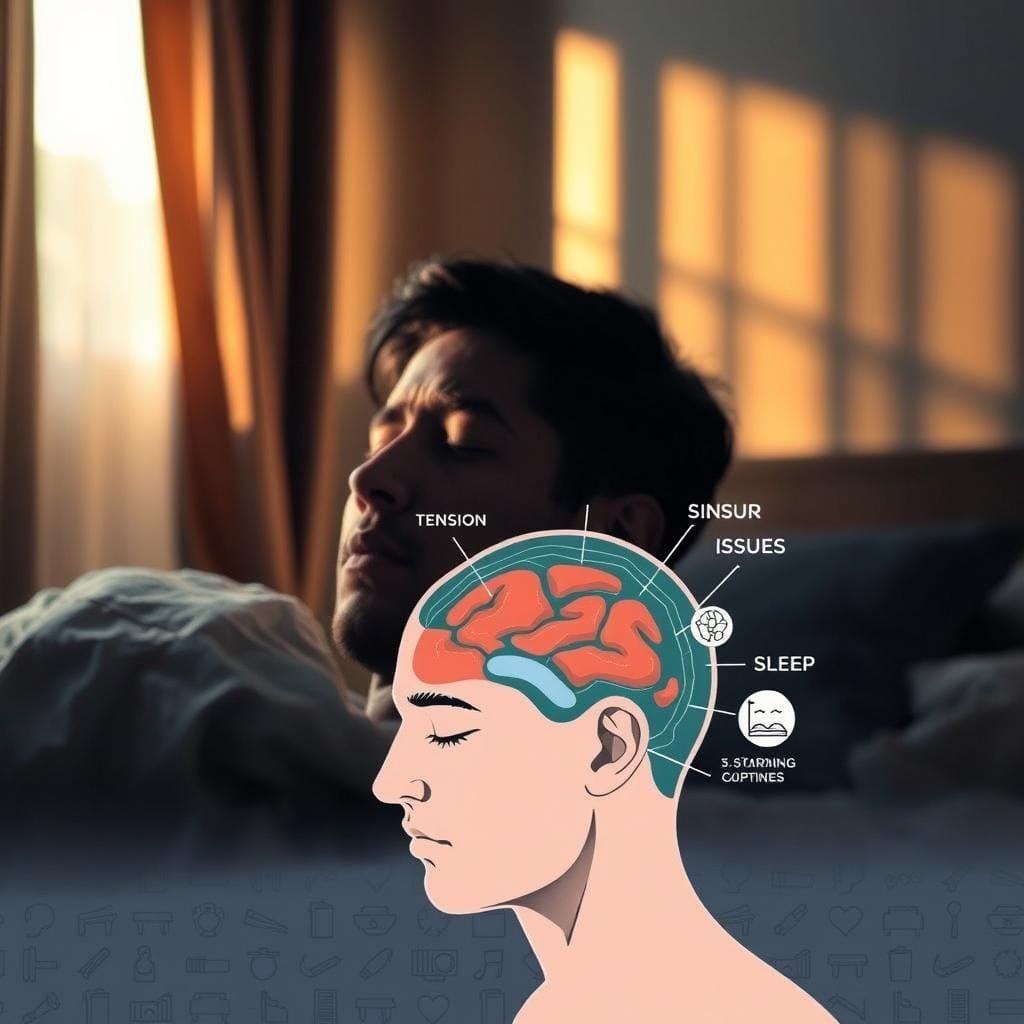
Do you often wake up with a headache upon waking? You’re not alone. Millions of Americans start their day with a throb. This can be from mild to very painful.
When you wake up with a headache, your body might be trying to tell you something. In the early morning, your body’s pain fighters work less. Your body also makes more adrenaline, which can start migraines in some people.
There are many reasons for these morning headaches. Bad sleep, stress, health issues, and where you sleep can all play a part. Knowing what causes your headaches is key to feeling better.
This guide will look at why you might have morning headaches. It will also share ways to feel better in the morning. Whether you get headaches sometimes or all the time, finding out what triggers them is the first step to feeling better.
Key Takeaways
- Morning headaches affect millions of Americans and can significantly impact daily functioning
- Early morning pain may result from reduced internal pain control mechanisms
- Increased adrenaline production during early hours can trigger migraines
- Poor sleep quality and stress are common contributors to waking headaches
- Identifying specific triggers is essential for effective prevention
- Both lifestyle modifications and medical interventions can help manage recurring morning head pain
Understanding Why You Wake Up with Headaches
Morning headaches are a special kind of pain that happens when you wake up. They can make your day worse, affecting your mood and how well you work. Knowing why you get these headaches is the first step to feeling better.
What Defines a Morning Headache
A morning headache is pain you feel when you wake up or soon after. It can feel different for everyone. Some people get a dull ache on their forehead, while others have sharp pain behind their eyes or at the base of their skull.
Morning headaches can be different types:
- Cluster headaches (often between 1-2 AM and 8-9 AM)
- Migraines that start early in the morning
- Tension headaches when you wake up
- Head pain from sleep apnea
Prevalence and Impact on Daily Life
About 1 in 13 people get morning headaches. This is more common in people with sleep disorders or chronic headaches. Studies show that 20% of people with sleep apnea often have morning headaches.
These headaches can really affect your day. They can make you feel less motivated, have trouble focusing, and be more irritable. This can hurt your work, relationships, and overall happiness.
Common Patterns and Characteristics
Morning headaches often follow certain patterns. They often happen between 4-8 AM, when you’re in deep sleep and your body goes through changes.
Some people find their headaches get worse with certain sleep positions. Others notice they get headaches more in certain seasons, with the weather, or when their bedroom is too humid.
Keeping track of these patterns can help you and your doctor find better ways to prevent and treat your headaches.
Sleep Disorders That Cause Morning Headaches
Waking up with a headache? Some sleep disorders might be the reason. They mess up your sleep and cause pain in the morning. Knowing about these disorders can help you find the cause and get help.
Sleep Apnea and Its Connection to Head Pain
Sleep apnea can lead to morning headaches. It makes you stop breathing for short times at night. About 20% of sleep apnea patients get morning headaches.
These headaches hurt both sides of your head. They feel like pressure and go away in 30 minutes.
Sleep apnea has two main types. Each type causes morning headaches in different ways:
| Type | Cause | Symptoms | Headache Pattern |
|---|---|---|---|
| Obstructive Sleep Apnea | Throat muscles relax and block airway | Loud snoring, gasping, choking | Bilateral, dull, pressure-like |
| Central Sleep Apnea | Brain fails to send proper breathing signals | Less snoring, more breathing pauses | Similar but often less severe |
| Complex/Mixed | Combination of both types | Varies based on dominant type | Can be more persistent |
How Sleep Apnea Disrupts Oxygen Flow
Sleep apnea lowers your oxygen levels at night. This makes your brain’s blood vessels expand. This expansion causes pain and headaches.
Insomnia’s Role in Morning Discomfort
Insomnia doesn’t just make you tired. It can also cause pain. About 50% of people with chronic insomnia get morning headaches.
Insomnia messes with your body’s pain control. It also increases inflammation. This can lead to headaches. The constant movement also tightens your neck and shoulders, adding to the pain.
Bruxism (Teeth Grinding) During Sleep
Do you wake up with a sore jaw and headache? You might be grinding your teeth at night. Bruxism affects up to 15% of adults.
This grinding causes tension in your jaw and muscles. It leads to dull pain in your temples and forehead in the morning. Untreated bruxism can also damage your teeth and cause jaw problems.
People with bruxism headaches often have worn teeth and sensitive teeth. They also have tight jaw muscles in the morning. A dental guard can help, but finding the cause—like stress—is key to feeling better.
Medical Conditions Behind Morning Headaches
Many morning headaches come from specific medical conditions. These conditions follow a pattern that causes pain when we wake up. Knowing what causes your morning headaches can help find the right treatment.
Migraine Patterns and Morning Triggers
The American Migraine Foundation found that morning migraine attacks often happen between 4 AM and 9 AM. This timing is linked to changes in brain chemicals like serotonin and melatonin.
Morning migraines hurt on one side of the head. They also bring nausea, light sensitivity, and sometimes weird visions. Many people say their headaches start when they wake up.
Tension Headaches Upon Waking
A tension headache morning feels like a tight band around your head. They happen when you wake up because of bad sleep or stress.
Tension headaches hurt both sides of the head and can go down to the neck. People say it feels like pressure, not throbbing pain.
Cluster Headaches and Their Timing
Cluster headache morning attacks often wake people up at the same time, like 2-3 AM. These headaches are very painful and cause eye tearing, nasal stuffiness, and trouble lying down.
Cluster headaches happen because of the hypothalamus, the brain’s clock. That’s why they’re called “alarm clock headaches.”
Medication Overuse and Rebound Headaches
Using too much headache medicine can lead to headaches. Medication overuse headache happens when you take pain relievers more than 10-15 days a month.
When these medicines wear off, you might get withdrawal headaches in the morning. Stopping these medicines safely needs a doctor’s help.
Hypertension and Morning Blood Pressure Spikes
Blood pressure goes up when we wake up. For people with high blood pressure, this can cause headaches, often at the back of the head.
These headaches are a warning sign of high blood pressure. They need medical attention.
| Headache Type | Typical Morning Timing | Key Characteristics | Pain Description |
|---|---|---|---|
| Migraine | 4 AM – 9 AM | One-sided, nausea, light sensitivity | Throbbing, moderate to severe |
| Tension | Upon waking | Both sides, neck involvement | Pressure, band-like tightness |
| Cluster | 2 AM – 3 AM | Eye pain, tearing, nasal congestion | Excruciating, stabbing |
| Medication Overuse | Early morning | Daily or near-daily occurrence | Varies, often dull and persistent |
| Hypertension | Upon waking | Back of head location | Pounding, pressure-related |
Lifestyle Factors That Trigger Morning Headaches

Many things in our daily lives can cause morning headaches. Knowing how our habits affect our brain and body helps us feel better in the morning. We can make small changes to wake up without pain.
Alcohol Consumption and Its Effects
Drinking alcohol in the evening can lead to morning headaches. Alcohol turns into a harmful compound called acetaldehyde in our body. This compound causes blood vessels to widen, leading to headaches.
Alcohol also makes us lose water. This loss of water and the widening of blood vessels create a perfect mix for headaches. These headaches feel like a pulsating pain that gets worse when we move. They also make us feel sick and sensitive to light.
Caffeine Withdrawal Symptoms
Drinking coffee in the morning can help prevent headaches if you drink it regularly. Caffeine makes blood vessels in your brain smaller. When caffeine levels go down at night, these vessels get bigger, causing pain.
Acaffeine withdrawal headachestarts 12-24 hours after you last had caffeine. This is why many coffee lovers wake up with headaches that go away after their morning coffee. The headache feels like a dull, pressing pain on both sides of the head.
Dehydration During Sleep
Many people don’t know they get dehydrated while sleeping. Our bodies need water all night, but we don’t drink for 7-8 hours. This can cause headaches in the morning.
Being dehydrated makes our brain shrink. This shrinkage pulls on the membranes around our brain, causing pain. Even a little dehydration at night can lead to a headache when we wake up.
Poor Sleep Posture and Neck Alignment
The way we sleep can cause morning headaches. Sleeping with a bad neck position can make the muscles in our head tight. This tightness leads to pain when we wake up.
Side sleepers often have this problem with pillows that are too high or too flat. Your pillow should keep your neck in line with your spine. If these muscles stay tight all night, you’ll likely wake up with a headache.
Irregular Sleep Schedules
Our bodies like routine. Irregular sleep patterns mess with our internal clock. This messes with hormone and neurotransmitter balance, leading to headaches, often in people who get migraines.
Going to bed and waking up at different times every day stresses our brain. This stress often shows up as morning headaches.
| Lifestyle Factor | Mechanism | Headache Characteristics | Prevention Strategy |
|---|---|---|---|
| Alcohol Consumption | Vasodilation and dehydration | Throbbing, worsens with movement | Limit intake, drink water between alcoholic beverages |
| Caffeine Withdrawal | Blood vessel dilation when caffeine levels drop | Dull, pressing pain on both sides | Maintain consistent caffeine intake or gradually reduce |
| Dehydration | Brain shrinkage pulling on pain-sensitive meninges | Dull, throbbing pain | Drink water before bed and upon waking |
| Poor Sleep Posture | Muscle tension in neck and shoulders | Tight, band-like pain | Use proper pillow height and supportive mattress |
| Irregular Sleep Schedule | Disruption of circadian rhythm | Varies, often resembles migraine | Maintain consistent sleep and wake times |
By figuring out what in our lifestyle causes morning headaches, we can make changes to feel better. Simple things like drinking more water, using a better pillow, or sleeping at the same time every day can help a lot.
Environmental Bedroom Triggers
The air, light, and feel of your bedroom affect your morning headaches. Many don’t know their bedroom has many triggers. These can mess up your sleep and cause pain in the morning.
Allergens and Indoor Air Quality
Bad air in your bedroom can cause morning headaches. Breathing in allergens at night makes your body less able to get oxygen. This can make you hurt when you wake up.
Dust Mites and Bedding Concerns
Dust mites live in mattresses and pillows. A bed can have millions of dust mites. Their waste is an allergen that can make it hard to breathe at night. This can lead to headaches in the morning.
To fight dust mites, wash your bedding in hot water (at least 130°F/54°C) every week. Use covers for mattresses and pillows that keep out allergens. Vacuuming your mattress often can also help.
Pet Dander and Allergic Reactions
Pet skin, saliva, and urine can cause allergies. These allergies can mess up your sleep. For some, this can lead to morning headaches.
If you often wake up with headaches, keep pets out of your room. Even if you’re not very allergic, pet dander can affect your breathing at night.
Light and Noise Disruptions
Even a little light or noise can mess up your sleep. This is bad because sleep helps with pain and thinking.
Street lamps, electronic devices, or morning sun can stop you from making melatonin. This makes your sleep worse. Use blackout curtains and turn off lights to help sleep better.
Temperature and Humidity Imbalances
The best sleeping temperature is 60-67°F (15-19°C). Humidity should be 30-50%. If your room is too hot or cold, or too humid or dry, you might wake up with a headache.
Too much humidity can make mold and dust mites worse. Dry air can make your nose hurt and cause headaches. Use a humidifier or dehumidifier to keep your room just right.
Electronic Devices and Blue Light Exposure
Blue light from phones, tablets, and computers messes with your sleep. Studies show that using screens close to bedtime can:
- Make you sleep less in REM sleep
- Wake you up more at night
- Stop you from making melatonin
- Make you hurt more in the morning
Stop using screens 1-2 hours before bed. If you must use them, wear blue light glasses or change your screen settings to reduce blue light.
Psychological Factors and Morning Headaches
Stress, anxiety, and depression can cause morning headaches. They work through the mind-body connection. This is why some people wake up with headaches, even without physical reasons.
Stress and Anxiety Effects on Sleep Quality
Stress and anxiety make your body stay alert. This makes it hard to sleep well. Research shows that people with chronic stress are up to three times more likely to experience regular morning headaches compared to those with lower stress levels.
Anxiety can make your muscles tight. This tightness can lead to headaches when you wake up. It can make your day start off badly.
Depression and Sleep Disturbances
Depression messes with your sleep. It reduces the restful sleep you need. This can lead to headaches in the morning. Studies show that people with depression are 2.5 times more likely to have morning headaches.
Depression also changes chemicals in your brain. These changes affect how you feel pain. This can make headaches worse.
Nightmares and Sleep Terrors
Nightmares and sleep terrors wake you up suddenly. They can cause headaches, mainly in people who get migraines. People who have nightmares are 40% more likely to have morning headaches.
Teeth Grinding Related to Psychological Stress
Stress can make you grind your teeth. Up to 70% of teeth grinding is due to stress. Grinding can hurt your jaw and temples when you wake up.
Reducing stress can help with morning headaches. You can try stress-reducing activities, therapy, or medicine.
Dietary Influences on Waking with Headaches
What you eat at dinner can make you wake up with a headache. Foods eaten in the evening can cause head pain when you wake. Knowing what foods to avoid can help you wake up without pain.
Common Food Triggers to Avoid Before Bed
Some foods can make your head hurt, more so when eaten before bed. Knowing and avoiding these foods can help prevent headaches in the morning.
Processed Foods and Additives
Processed foods have ingredients that can hurt your head. These include:
- Nitrates and nitrites (found in processed meats)
- Artificial sweeteners, like aspartame
- Monosodium glutamate (MSG)
- Food colorings and preservatives
These can make blood vessels change size and mess with your brain. Eating whole foods at night can stop these problems.
Tyramine-Rich Foods
Tyramine is in aged foods and can make your blood vessels change size. This can hurt your head, more so if you have migraines. Foods with tyramine include:
- Aged cheeses (cheddar, blue cheese, Camembert)
- Cured and processed meats
- Fermented foods like sauerkraut and kimchi
- Certain fruits, like overripe bananas and avocados
- Soy sauce and other fermented condiments
Evening Meal Timing and Composition
What and when you eat before bed affects your sleep and headaches. A big meal too close to bedtime can hurt your sleep and cause headaches.
Big meals before bed can cause stomach problems and disrupt sleep. This can lead to headaches. Eating a light meal 3 hours before bed is better.
Nutritional Deficiencies That Affect Sleep
Not eating enough of certain nutrients can hurt your sleep and cause headaches. Nutrients like:
- Magnesium: Helps with sleep and can reduce migraines.
- Vitamin D: Low levels can lead to headaches and poor sleep.
- B vitamins: B2 and B12 help your nervous system and may prevent migraines.
Eating foods rich in these nutrients or taking supplements can help with morning headaches.
Alcohol and Its Impact on Sleep Quality
Alcohol might help you sleep at first, but it messes with your sleep later. It can cause:
- Dehydration, a common headache trigger
- Blood sugar changes
- Disrupted REM sleep
- Increased inflammation
These problems can make you wake up with a headache. Even a little alcohol can hurt your sleep and cause headaches in the morning. Avoiding alcohol before bed is best if you have morning headaches.
Preventing Morning Headaches: Sleep Hygiene Strategies

Your morning headache prevention plan starts with sleep hygiene. This is a set of habits that help you sleep well. By using these strategies, you can lower your chance of waking up with a headache.
Establishing a Consistent Sleep Schedule
Your body likes routine, and sleep is no exception. Going to bed and waking up at the same times every day is key. Aim for 7-9 hours of quality sleep each night to prevent morning headaches.
Try not to nap too long during the day. Naps that go into the evening can mess up your sleep cycle. This can make you more likely to have a headache the next morning.
Creating an Optimal Sleep Environment
Make your bedroom a place to avoid headaches. Keep it cool (60-67°F), dark, and quiet. Use blackout curtains and white noise machines if needed.
Good air quality is also important. Preventing morning headaches means keeping the air clean. Use air purifiers and open windows to reduce allergens.
Pre-Sleep Routines That Reduce Headache Risk
Have a calming routine before bed. This tells your body it’s time to relax. Good routines include:
- Gentle neck and shoulder stretches to release tension
- Deep breathing or progressive muscle relaxation
- A warm bath or shower (the cooling effect afterward promotes sleepiness)
- Reading a physical book (not on a screen)
Proper Pillow Selection and Sleeping Position
Your pillow choice is important for avoiding morning headaches. Latex pillows with a contoured design are best. They support your neck’s natural curve. Look for a pillow height of 7 to 11 centimeters (2.8 to 4.3 inches) with a cooling surface.
Side sleepers need thicker pillows than back sleepers. Stomach sleeping is not good for your neck. If you must sleep on your stomach, use a very thin pillow or none at all.
Managing Screen Time Before Bed
Devices like phones and computers can mess up your sleep. They make it hard to fall asleep because of blue light. Try to avoid screens for at least 60-90 minutes before bed.
If you must use devices at night, wear blue light filtering glasses or use screen filters. This simple trick can make a big difference in how you feel in the morning.
When to Consult a Doctor About Morning Headaches
Many morning headaches can be helped by taking care of yourself. But, some signs mean you should see a doctor. Knowing when to get headache medical attention can stop serious problems and help you feel better.
Warning Signs That Require Immediate Attention
Don’t ignore some headache signs. Go to the emergency room if you have:
- A sudden, very bad headache
- A headache with fever, stiff neck, confusion, or rash
- A headache after a recent injury or trauma
- Head pain with vision changes, weakness, or trouble speaking
- New or changed headache patterns if you’re over 50 or have health issues
These signs might mean serious problems like meningitis, stroke, or brain hemorrhage. You need to see a doctor right away.
Diagnostic Procedures for Chronic Cases
When you see a doctor for headaches that happen every morning, they will check you carefully. They will look at your health history and do a physical exam.
| Diagnostic Test | Purpose | What It Detects | When It’s Recommended |
|---|---|---|---|
| Blood Tests | Check for underlying conditions | Infections, anemia, thyroid issues | Initial screening |
| Sleep Study | Evaluate sleep patterns | Sleep apnea, insomnia, bruxism | Suspected sleep disorders |
| MRI/CT Scan | Image brain structures | Tumors, bleeding, structural abnormalities | Severe or unusual symptoms |
| Lumbar Puncture | Analyze spinal fluid | Infections, bleeding, pressure issues | Suspected meningitis or hemorrhage |
Questions to Prepare for Your Doctor’s Visit
To make the most of your headache diagnosis visit, write down:
- When your headaches happen and how long they last
- What the pain feels like (where, how bad, what kind)
- Any other symptoms like nausea or light sensitivity
- Things that might make your headaches worse
- Any medicines or supplements you take
- What treatments you’ve tried before
Bring a headache diary to your visit. It can help your doctor find patterns and causes.
Treatment Options from Healthcare Providers
Doctors offer different treatments for morning headaches, depending on the cause:
- For sleep apnea: CPAP therapy, which helps up to 90% of patients
- For bruxism: Custom night guards to protect teeth and ease jaw tension
- For migraines: Preventive medicines like beta-blockers or CGRP antagonists
- For tension headaches: Muscle relaxants and pain management plans
- For psychological factors: Cognitive-behavioral therapy and stress management
Your doctor might send you to specialists like neurologists or sleep experts for tough cases. Finding the right treatment takes time and working with your healthcare team.
Your Action Plan for Headache-Free Mornings
Start by finding out what makes your headaches worse. Keep a journal for two weeks. Write down when you hurt and what might have caused it, like food, stress, or sleep issues.
Make sleep a big part of your plan. Try to sleep and wake up at the same time every day. Aim for 7-9 hours of sleep, focusing on the 10 PM to 2 AM window for growth hormones.
Make your bedroom sleep-friendly. Keep it cool (60-67°F), dark, and quiet. A good pillow can help a lot.
Be careful with what you eat and drink, mainly in the evening. Avoid alcohol, caffeine, and processed foods. Drink water all day but not too much before bed.
Use relaxation methods before bed to lower stress. Try stretching, deep breathing, or meditation to ease morning pain.
If headaches keep happening, see a doctor. They can check for serious problems and find treatments just for you.
Being consistent is important to avoid morning headaches. It might take weeks to see changes. But with effort and the right steps, you can have better mornings.
FAQ
What exactly is a morning headache?
A morning headache is pain in your head when you wake up. It can feel dull or sharp. It affects about 1 in 13 people and can make you feel tired and less focused.
How common are morning headaches?
Morning headaches happen to about 1 in 13 people. They are more common in people with sleep problems or chronic headaches. Sleep apnea and chronic insomnia can also cause them.
How does sleep apnea cause morning headaches?
Sleep apnea leads to morning headaches because it stops you from breathing. This lowers oxygen and raises carbon dioxide in your blood. Your blood vessels expand, causing pain in your head.
Can teeth grinding cause morning headaches?
Yes, grinding your teeth at night can cause morning headaches. It puts pressure on your jaw and muscles. This can lead to pain in your temples and forehead.
Why do migraines often occur in the early morning?
Migraines often happen in the early morning because of changes in your body’s clock. These changes affect how your brain works. Migraines can cause severe pain, sensitivity to light, and nausea.
How does alcohol consumption lead to morning headaches?
Drinking alcohol can cause morning headaches. It makes your blood vessels expand and can dehydrate you. It also disrupts your sleep, leading to headaches.
Can caffeine withdrawal cause morning headaches?
Yes, stopping caffeine can cause morning headaches. Caffeine makes your blood vessels smaller. When you stop, they get bigger, causing pain.
How does dehydration during sleep contribute to morning headaches?
Dehydration during sleep can cause morning headaches. It makes your brain pull away from your skull, causing pain. Drinking enough water is key to avoiding this.
What bedroom allergens can trigger morning headaches?
Allergens like dust mites, pet dander, and pollen can cause morning headaches. They can make you feel stuffy and reduce oxygen, leading to pain.
How does blue light from electronic devices affect morning headaches?
Blue light from screens can disrupt your sleep and cause morning headaches. It can delay your sleep and make you wake up more often. Avoid screens before bed to prevent this.
How do stress and anxiety contribute to morning headaches?
Stress and anxiety can cause morning headaches. They make it hard to sleep well and can lead to muscle tension. This tension can cause pain in your head.
What foods should I avoid before bed to prevent morning headaches?
Avoid foods with preservatives, artificial sweeteners, and MSG before bed. Also, skip large meals close to bedtime. They can disrupt your sleep and cause headaches.
What nutritional deficiencies are linked to morning headaches?
Deficiencies in magnesium, vitamin D, and B vitamins can cause morning headaches. These nutrients help regulate your sleep and pain. Eating foods rich in them or taking supplements can help.
What’s the ideal sleep environment to prevent morning headaches?
For a good sleep environment, keep your room cool, dark, and quiet. Use a supportive mattress and pillow. Good air quality and humidity are also important.
How important is sleep schedule consistency for preventing morning headaches?
Keeping a regular sleep schedule is very important. It helps regulate your hormones and improves sleep quality. This can reduce morning headaches.
What pillow type is best for preventing morning headaches?
Latex pillows are best for preventing morning headaches. They support your neck and keep it aligned. Choose a pillow that matches your sleeping position.
When should I see a doctor about my morning headaches?
See a doctor if your headaches are severe, sudden, or accompanied by fever or confusion. Also, if they’re getting worse or affecting your daily life.
What treatments might a doctor recommend for chronic morning headaches?
Doctors may recommend treatments like CPAP therapy for sleep apnea or night guards for teeth grinding. They might also suggest medications or therapy for migraines or tension headaches.
Can depression cause morning headaches?
Yes, depression can cause morning headaches. It disrupts your sleep and affects how your brain handles pain. People with depression are more likely to have morning headaches.
How effective is keeping a headache diary for managing morning headaches?
Keeping a headache diary is very effective. It helps you track patterns and find what triggers your headaches. This information can help you and your doctor find better ways to prevent and treat them.