Ever wake up and your eyes aren’t clear? This happens to lots of people. Morning vision problems can be small or show bigger health issues.
Most people find their vision clears after blinking or rubbing their eyes. Waking up with blurry vision is normal. It’s because your eyes change while you sleep.
Knowing why your eyes blur in the morning helps. It tells you if you need to change your life or see a doctor. Many things can cause blurry eyes, like where you sleep, what you take, and eye problems.
This guide will explain why your eyes blur in the morning. It will also tell you what causes it and how to fix it. You’ll learn a lot about this common problem.
Key Takeaways
- Temporary visual disturbances upon waking are common and typically resolve after blinking
- Environmental factors like sleeping with fans or in dry rooms can contribute to morning eye clarity issues
- Certain medications, including antihistamines and sleeping aids, may reduce tear production
- Sleeping position and contact lens use overnight can impact morning vision quality
- Underlying conditions like Fuchs’ corneal dystrophy may cause persistent morning sight problems
- Simple lifestyle adjustments often resolve most cases of unclear morning vision
- Persistent or worsening symptoms warrant consultation with an eye care professional
Understanding Morning Eye Blurriness
Why does your vision seem cloudy when you wake up? It’s because your eyes need time to adjust after sleep. Even when you’re asleep, your eyes keep making tears to stay moist and clean. But sometimes, this system gets a bit mixed up, causing blurry vision in the morning.
But don’t worry, this blurriness usually goes away quickly. If it doesn’t, it might be a sign of something more serious. Let’s look at how your eyes work normally and how morning blur is different.
Normal Eye Function vs. Morning Blur
When you’re awake, your eyes stay clear thanks to a special system. You blink a lot, spreading tears evenly over your eyes. This tear film has three layers: oil to stop evaporation, water for moisture, and mucin to stick to your eyes.
At night, everything changes. Blinking stops, and tear making slows down. Without regular tears, your eyes might get a bit dry. Plus, your eyelids might not close all the way, letting some tears evaporate.
When you wake up, your eyes need to get back to normal. They’re like rebooting to clear up your vision. This is why you might see blurry at first.
How Common Is This Condition?
Morning eye blurriness is very common. About 65-70% of adults get it sometimes. It gets worse with age, as your eyes naturally change.
Some people get it more often. This includes those who wear contact lenses, have allergies, or take certain medicines. Even the environment can play a role, like living in a dry place.
Most of the time, it goes away on its own. But if it doesn’t, it could mean there’s something more going on. About 15-20% of people might need to see a doctor about it.
Blurry Eyes in the Morning: Primary Causes
Morning eye blurriness has real reasons behind it. It’s not just random. Knowing why can help fix it and make your morning vision better. Many things, like how we sleep and our environment, play a part in this.
Sleep-Related Factors
Your sleep position affects how clear your eyes are in the morning. Sleeping face-down can cause eyelid syndrome. This makes your eyelids less flexible and can make your eyes burn, tear too much, and blur.
Side sleeping can make one eye blurrier than the other. It can also make your pillow rub against your eye, causing irritation. Incomplete eyelid closure during sleep, known as nocturnal lagophthalmos, affects about 5-10% of people. This means parts of your cornea stay open at night, leading to dryness and blurriness in the morning.
Not getting enough sleep can also hurt your eyes. Too much sleep can make your eyes swell and retain fluid, causing morning vision problems.
Tear Film Disruption
The tear film on your eyes has three layers. These layers keep your cornea healthy and your vision clear. But, during sleep, this system changes, affecting your morning vision.
Tear production goes down at night, leaving your eyes less lubricated. The tear composition also changes, with the oil layer not working as well to stop evaporation.
Without blinking, dry spots can form where the tear film breaks up or evaporates. Things like low humidity, heating systems, and fans can make this worse, making your eyes drier in the morning.
When you wake up, this disrupted tear film makes your vision blurry. For most, this clears up in a few minutes. But, those with dry eye issues might have lasting blurriness.
Eye Pressure Changes During Sleep
Intraocular pressure (IOP) changes throughout the day and night. It goes up by 3-6 mmHg when you lie down compared to sitting or standing.
This happens because fluid moves differently when you’re horizontal. It increases blood volume and pressure in your head and eyes. Sleeping flat can make this pressure change affect your vision when you wake up.Sleep position effectson eye pressure are significant. Face-down or direct pressure on one eye increases pressure more. While healthy eyes adjust quickly, those with glaucoma or ocular hypertension might face bigger risks.
Some studies say high nighttime IOP can damage the optic nerve, even with normal daytime pressure. This might raise glaucoma risk. Doctors might tell you to sleep with your head slightly raised if you have certain eye problems.
| Cause | Mechanism | Morning Symptoms | Recovery Time |
|---|---|---|---|
| Sleep Position | Face-down pressure on eyes | Asymmetrical blurriness, irritation | 5-15 minutes |
| Tear Film Disruption | Decreased tear production, evaporation | Dryness, hazy vision | 1-5 minutes with blinking |
| Incomplete Eyelid Closure | Corneal exposure during sleep | Significant dryness, irritation | 10-30 minutes |
| Increased Eye Pressure | Fluid redistribution when lying down | General blurriness, pressure sensation | 5-20 minutes |
Common Physiological Causes
Our eyes change a lot when we sleep. This can make our vision blurry when we wake up. These changes happen to most people and usually go away in a few hours.
It’s important to know these changes. This way, we can tell if our blurry vision is just from sleep or if it’s something more serious.
Sleep-Induced Corneal Swelling
When we sleep, our corneas soak up fluid. This is called corneal edema. It happens because our eyelids block oxygen, causing oxygen deprivation.
This swelling is normal and happens to everyone. When we wake up, oxygen from the air helps our corneas get back to normal. It takes about 1-2 hours for this to happen, which is why blurriness often gets better as the day goes on.
Some people’s corneas swell more because of age. This makes blurriness worse as we get older.
Meibomian Gland Dysfunction
Our eyelids have special glands that make oil for our tears. This oil stops our tears from drying out too fast. When these glands get blocked, it’s called oil gland blockage.
At night, this problem gets worse because we don’t blink as much. By morning, our tear film is often bad, making our vision blurry and feeling “sticky” or “gritty”.
More than half of adults over 50 have this problem. It can get worse from using digital devices, makeup, and skin conditions like rosacea. Morning blurry vision from MGD can get better with simple treatments like warm compresses and lid massage.
Age-Related Changes
As we get older, our eyes change a lot. After 40, our lens gets less flexible, making it hard to focus. This makes morning vision worse because it takes longer to adjust after sleep.
Our tear production goes down with age, making our tears thinner and less protective. The glands that make our tears also get less productive, leading to faster tear evaporation.
Our corneas also get more prone to swelling as we age. Our eyelids get less elastic, which can cause incomplete closure during sleep. These changes explain why senior vision problems like morning blurriness get more common and last longer as we age.
Medical Conditions Associated with Morning Eye Blur
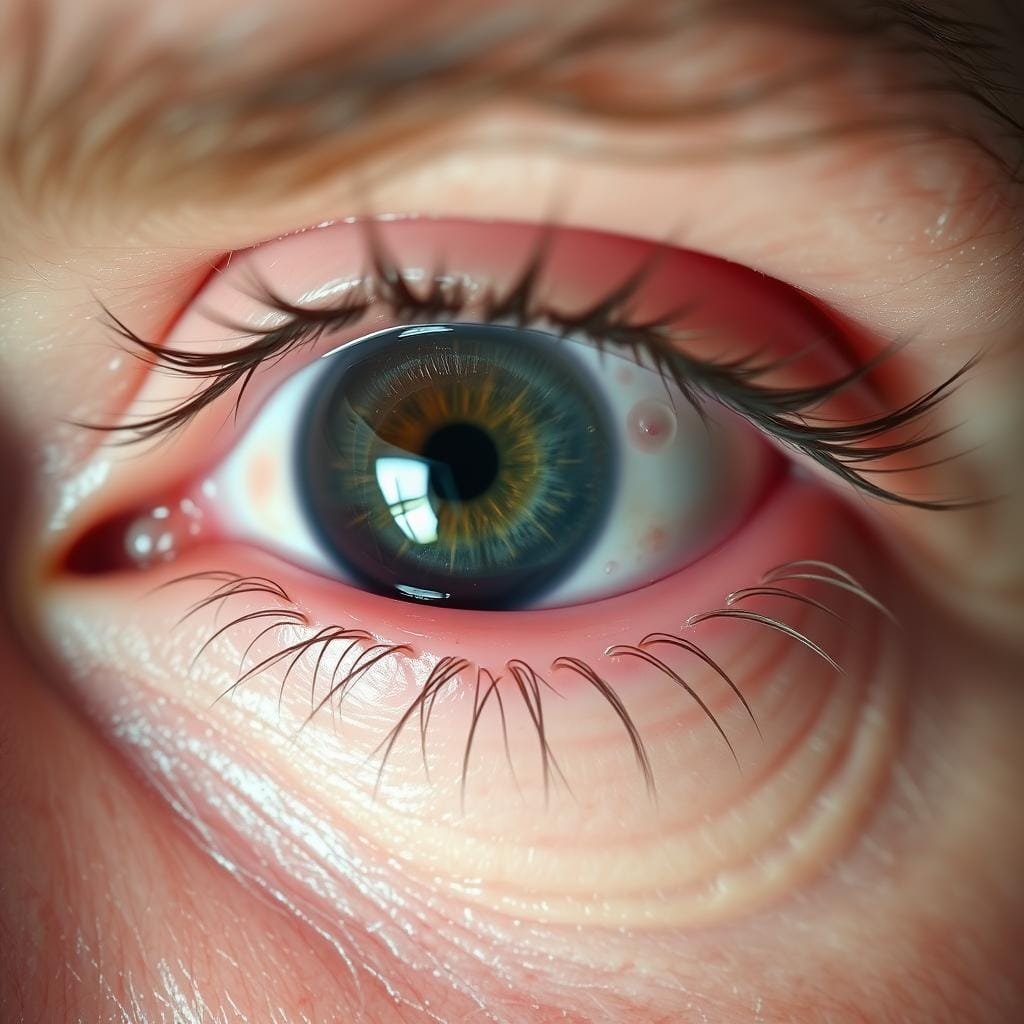
Many health issues can cause blurry vision in the morning. It’s important to get a proper diagnosis and treatment. Morning blurriness that doesn’t go away might mean you have a health problem.
Dry Eye Syndrome
Dry Eye Syndrome is common in the US. It makes morning vision hard. This happens when your eyes don’t make enough tears or when the tears are bad.
Symptoms and Identification
Signs of dry eye include a burning sensation, redness, and a gritty feeling. Blinking a few times can help. If blinking clears your vision, you might have dry eyes.
Impact on Morning Vision
During sleep, tear production goes down. This is hard for people with Dry Eye Syndrome. Their eyes may feel sticky or look bloodshot in the morning.
Without enough moisture, the cornea’s surface gets irregular. This scatters light and causes morning blurriness.
Blepharitis and Eye Inflammation
Blepharitis is inflammation of the eyelids. It often causes morning vision problems.
It’s usually caused by bacterial infection or skin issues like seborrheic dermatitis. Overnight, eyelid inflammation makes crusty eyelids. This debris clouds your vision when you wake up.
People with blepharitis often feel their eyelids stuck together in the morning. The inflammation irritates the eye, causing more tearing, redness, and burning. Keeping your eyelids clean is key to managing these symptoms.
Fuch’s Dystrophy
Corneal endothelium disease, like Fuch’s dystrophy, causes morning blurriness. It’s a genetic eye condition that affects the cornea’s inner layer.
At night, the cornea holds more fluid. For those with Fuch’s dystrophy, this swelling gets worse. This makes vision cloudy in the morning, but it gets better as the day goes on.
This condition affects about 4% of people over 40 and is more common in women. In severe cases, a corneal transplant might be needed, but new treatments have improved outcomes.
Diabetes and Blood Sugar Fluctuations
Diabetes can affect vision, making mornings blurry. This can help monitor blood sugar levels.
High glucose levels make the lens swell, affecting vision. This is more noticeable after fasting overnight. The “dawn phenomenon” can make vision worse in diabetics.
Unlike other causes, diabetic vision changes are linked to blood sugar. If morning vision doesn’t improve, it might mean blood sugar is too high. New blurriness could be a sign of diabetes, along with increased thirst or urination.
Environmental and Lifestyle Factors
Many things outside of health can affect how well you see in the morning. These things might not be obvious but can really mess with your morning vision. Knowing what they are can help you feel better in the morning.
Sleep Environment and Air Quality
Your bedroom affects your eyes while you sleep. The air in your room is usually too dry for your eyes. This dry air makes your tears dry out even when your eyes are closed.
Using air conditioning can make your eyes even drier. Fans can also dry out your eyes, even if they keep you cool.
Things like dust mites and pet dander in your room can make your eyes feel blurry in the morning. The dry air in winter makes things worse. Using a humidifier and air purifiers can help make your morning vision clearer.
Screen Time Before Bed
The time you spend on screens before bed affects your morning vision. Screens give off blue light that messes with your tears and blinking. This can make your eyes dry and blurry in the morning.
Looking at screens for too long can make your eyes tired and dry. This can make your vision blurry in the morning. It’s important to blink fully when using screens to avoid dry eyes.
Stopping screen use before bed can help your eyes feel better in the morning. Wearing blue light glasses or using screen filters can also help.
Contact Lens Wear
How you take care of your contact lenses affects your morning vision. Wearing lenses all day can make your eyes less oxygen-rich. This can make your vision blurry in the morning.
Sleeping in contact lenses can make your eyes swell more. This swelling can make your vision blurry. Even lenses meant for longer wear can cause eye stress when worn at night.
Not cleaning your lenses well can make things worse. Dirt and oils on lenses can irritate your eyes. This can make your eyes red, uncomfortable, and blurry in the morning. Using daily disposable lenses or cleaning your lenses better can help.
Diagnosing the Cause of Morning Blurry Vision
Getting clear morning vision starts with finding out why it’s blurry. You need to check yourself and see a doctor. This way, you can find out what’s wrong and get the right treatment.
Morning eye blur can be from simple dryness or serious health issues. Knowing what’s causing it helps. You’ll know if you need to see a doctor or not.
Self-Assessment Questions
Start by checking yourself at home. Write down when and how long your eyes are blurry. Does it go away soon or stay all day? Is one eye blurry or both?
Look for patterns in your symptoms. See if anything makes your blurry vision better or worse:
- Does how you sleep affect your morning vision?
- Is your bedroom dry or dusty?
- Do you wear contact lenses, and for how long?
- Have you started any new medicines?
- Do you have diabetes or thyroid disease?
Also, think about your sleep and eye care routine. Poor sleep and new makeup can affect your eyes. Keeping a record helps you and your doctor figure out what’s wrong.
Professional Diagnostic Tests
If home checks don’t help, see a doctor. They will ask you lots of questions. They want to know about your symptoms, health, and any other conditions.
Common Eye Exams
The first step is a comprehensive eye exam. It includes:
- Vision testing to see how well you can see
- Phoropter testing with different lenses
- Intraocular pressure measurement for glaucoma
- Checking your eyelids and tear film
The slit lamp examination uses a special microscope. It looks at your eye’s front parts. This can show signs of morning blurriness, like swelling.
Specialized Testing
For serious or ongoing symptoms, more tests might be needed:
- Tear film analysis for dry eye
- Corneal topography to map your cornea
- Eye dilation for a full eye check
- Meibomian gland evaluation for oil glands
Your doctor might also check your overall health and medications. Many drugs can affect your eyes. The tests help figure out the best treatment for you.
Effective Home Remedies for Blurry Morning Vision
There are simple ways to clear up blurry morning vision without a doctor. Dryness, oil gland problems, and the environment can cause it. By adding these easy steps to your day, you can see better in the morning.
Proper Eye Hygiene Practices
Starting a nighttime eye care routine helps a lot. Make sure to remove makeup every night with gentle products. This keeps your eyes healthy.
People with blepharitis or meibomian gland issues need to clean their eyelids daily. Use a warm washcloth on your eyes for 1-2 minutes. Then, clean the eyelid edges with a mild cleanser or baby shampoo. Clean from the inside to the outside to avoid pushing debris into your tear ducts.
If you wear contact lenses, keep them clean. Use fresh solution every day and change your case every three months. Don’t touch your eyes with dirty hands to avoid making them worse.
Warm Compresses and Eyelid Massage
Warm compresses and eyelid massage are great for blurry eyes. They help by making the oils in your glands flow better. This makes your tear film stable.
Here’s how to do it:
- Soak a clean washcloth in warm water (104-108°F).
- Put it on your closed eyes for 5-10 minutes.
- Then, gently massage your eyelids with clean fingers.
- Start from the nose and move outward to get the oils out.
Do this once or twice a day, before bed. It helps your eyes stay moist all night.
Artificial Tears and Lubricants
Eye drops and lubricants are good for morning blurriness, mainly for dry eyes. There are different kinds for different needs:
- Standard eye drops for quick relief.
- Gel tears or ointments for longer-lasting moisture.
- Preservative-free options for sensitive eyes or frequent use.
Use drops before bed and keep them by your bed for morning. People with CPAP machines need to be extra careful about keeping their eyes moist at night.
Hydration and Nutrition for Eye Health
Drinking enough water and eating the right foods help your eyes. They keep your tears flowing well and clear. Some foods are better than others for your eyes.
Essential Vitamins for Vision
Omega-3 fatty acids in fish, flaxseeds, and walnuts help your eyes. They can make your tear production go up by 30% in some people. Vitamin A in orange and yellow veggies is good for your cornea and tear mucin. Vitamins C and E in fruits, veggies, and nuts protect your eyes from damage.
Hydration Guidelines
Drinking enough water is key for your eyes. Try to drink 8-10 glasses a day. Avoid alcohol and caffeine, which dry you out, in the evening.
Using a humidifier in your bedroom helps keep your eyes moist. It’s good for air-conditioned or heated rooms.
Medical Treatments and Interventions
Healthcare providers have many treatments for morning eye blurriness. If home care doesn’t work, these solutions help fix the problem. They don’t just hide the symptoms.
Prescription Eye Drops and Medications
Prescription treatments are stronger than over-the-counter ones. For blurriness from inflammation, doctors might give anti-inflammatory drops. These drops reduce swelling and irritation fast.
Immunomodulators like cyclosporine (Restasis) or lifitegrast (Xiidra) help with dry eye. They take a few weeks to work best.
For Fuchs’ dystrophy, special eyedrops with hypertonic saline help. They pull water from the cornea. Oral antibiotics can also help with meibomian gland dysfunction.
Procedures for Chronic Conditions
When meds aren’t enough, procedures can help. Punctal plugs keep tears in the eye longer. This keeps the eye moist.
Thermal pulsation treatments like LipiFlow clear blocked glands. A single session can last 9-12 months.
Intense pulsed light (IPL) therapy helps meibomian gland dysfunction. For Fuchs’ dystrophy, corneal transplant can greatly improve morning vision.
Corrective Lenses and Vision Therapy
Scleral lenses are great for severe dry eye. They cover the cornea and keep it moist.
Orthokeratology (Ortho-K) lenses reshape the cornea at night. They give clear vision during the day without needing lenses.
Special eyeglasses with anti-reflective coatings help with morning glare. Vision therapy can also improve focusing, helping with digital eye strain.
Prevention Strategies for Morning Eye Clarity
Fighting morning eye blur starts with evening habits. Simple changes can help a lot. These steps stop morning blurriness before it starts.
Nighttime Routines for Eye Health
Start a bedtime eye care routine to clear your vision in the morning. Remove eye makeup gently with special cleaners. Then, warm compresses for 5-10 minutes help your eyes.
Use special drops for dry eyes 15-20 minutes before bed. This keeps your eyes moist. Also, keep your bedroom humid with a humidifier, but not too close to your face.
Good sleep habits are key. Try to sleep 7-9 hours without interruptions. Lack of sleep hurts your tear quality.
Sleep Position and Eye Protection
Your sleep position affects your eyes. Back sleeping is best because it doesn’t press on your eyes. Side sleeping is okay, but it might cause eyelid creases.
Don’t sleep on your stomach. It can make your eyes more pressured and irritate your eyelids. An elevated head position helps keep your eyes dry, which is good for some eye problems.
Use special sleep masks for better eye care. They keep your eyes moist and don’t press on them.
Digital Device Management
Too much screen time before bed hurts your sleep and eyes. Good digital device management can help avoid morning eye problems.
Blue Light Filters
Blue light from screens can mess up your sleep. Blue light blocking glasses help by letting other light through. They can make you fall asleep 30 minutes faster when worn 2-3 hours before bed.
Most devices have screen filters or night mode. Turn these on 2-3 hours before bed. Also, make your screen less bright for better sleep.
The 20-20-20 Rule
The 20-20-20 rule helps reduce eye strain from screens. Look at something 20 feet away for 20 seconds every 20 minutes. This relaxes your eyes and helps them feel less tired in the morning.
| Sleep Position | Impact on Eye Health | Recommendation Level | Benefits |
|---|---|---|---|
| Back Sleeping | Minimizes pressure on eyes | Highly Recommended | Even tear distribution, reduced pressure |
| Side Sleeping | Moderate pressure on one eye | Acceptable | Better than stomach sleeping, minimal pressure |
| Stomach Sleeping | Increases eye pressure by 20-30% | Not Recommended | None for eye health |
| Elevated Head | Reduces fluid accumulation | Recommended | Decreased corneal swelling, better drainage |
Maintaining Long-Term Eye Health Beyond Morning Blur
Fixing morning eye blurriness is just part of eye care. Taking care of your eyes all the time is key. If you see blur often, it’s time to get help.
Seeing an eye doctor regularly is very important. People under 40 should go every 2-3 years. Those 40-60 should go every 1-2 years. And people over 60 need to go every year.
If blurriness goes away after blinking, it’s okay. But if it doesn’t, you need to see a doctor.
Wearing good sunglasses is a smart move. They block harmful rays. Quitting smoking also helps a lot. It lowers your risk of eye problems.
Eating right is also important. Fruits and veggies are full of good stuff for your eyes. Taking care of health issues like diabetes helps too. These steps help keep your eyes healthy for a long time.
FAQ
Why do my eyes get blurry when I first wake up?
Your eyes get blurry in the morning because they don’t make tears well at night. Without blinking, the tear film gets messy. The cornea also gets a bit swollen from less oxygen. These issues make your vision blurry at first, but it gets better as you start moving around.
How common is morning eye blurriness?
Morning eye blurriness is very common. It happens to people of all ages. But, it gets more common as you get older. Some people, like those who wear contact lenses or have allergies, might get it more often.
Does my sleeping position affect morning eye blurriness?
Yes, how you sleep can affect your morning vision. Sleeping on your back is best because it doesn’t press on your eyes. Sleeping on your side is okay, but it might not be even. Sleeping on your stomach is the worst because it puts too much pressure on your eyes.
Why does my vision take longer to clear up as I get older?
As you get older, your eyes change. After 40, your lens gets less flexible. Your tear production goes down, and your eyelids get less elastic. These changes make it harder for your eyes to adjust in the morning.
Could dry eye syndrome be causing my morning blurriness?
Yes, dry eye syndrome is a big reason for morning blurriness. It makes your eyes feel blurry, gritty, and red. It’s more noticeable in the morning because your tear production goes down at night.
What is Meibomian Gland Dysfunction and how does it affect morning vision?
Meibomian Gland Dysfunction (MGD) happens when the glands in your eyelids don’t work right. It makes your tears evaporate too fast. This causes blurry vision and a gritty feeling in the morning. It’s common in people over 50.
Can diabetes cause blurry vision in the morning?
Yes, diabetes can make your vision blurry in the morning. High blood sugar makes your lens swell. This changes how your eyes focus. It’s more noticeable in the morning after you wake up.
How does my bedroom environment affect my morning eye comfort?
Your bedroom can really affect your eyes in the morning. Dry air from heating and air conditioning makes your tears evaporate faster. Allergens and poor air quality can also irritate your eyes. Winter is usually the worst because the air is drier.
Does screen time before bed affect morning eye clarity?
Yes, looking at screens before bed can make your eyes blurry in the morning. Screens make you blink less, which dries out your eyes. They also make it harder to fall asleep. This combination can make your eyes uncomfortable in the morning.
How do contact lenses affect morning vision?
Contact lenses can make your vision blurry in the morning, even more so if you wear them at night. They block oxygen to your cornea, making it swell. They also mess with your tear film and can trap irritants. This can make your eyes red and blurry in the morning.
What home remedies can help with morning eye blurriness?
There are a few things you can do at home to help. Warm compresses and gentle massage can help your eyes. Using artificial tears or ointment before bed can also help. Keeping your bedroom humid and cleaning your eyes properly are also important.
Can nutrition affect morning eye clarity?
Yes, what you eat can help your eyes. Omega-3 fatty acids can increase tear production. Vitamin A is good for your cornea. Eating foods rich in these nutrients can help your morning vision.
When should I see a doctor about morning blurry vision?
If your blurry vision lasts more than an hour, or if it’s painful or red, see a doctor. Also, if it’s getting worse or only happens in one eye, you should get checked. Certain health conditions or other vision problems can also be a sign to see a doctor.
What medical treatments are available for chronic morning blurriness?
Doctors can prescribe treatments for chronic blurriness. This includes eye drops, antibiotics, and special drops made from your own blood. They can also do procedures like punctal occlusion or intense light therapy.
Can specialized contact lenses help with morning blurriness?
Yes, special lenses can help. Scleral lenses create a reservoir of fluid that keeps your cornea moist. Orthokeratology lenses reshape your cornea while you sleep, so you can see clearly without lenses during the day.
How can I protect my eyes from blue light before bedtime?
To protect your eyes from blue light, wear blue light blocking glasses or use screen filters. Turn on your device’s blue light reduction feature. Try to avoid screens for at least an hour before bed.
What is Fuchs’ dystrophy and how does it affect morning vision?
Fuchs’ dystrophy is a condition that affects the cornea. It makes your vision cloudy in the morning because your cornea swells. It gets better as the day goes on.
How does corneal swelling affect morning vision?
Your cornea swells a bit at night because it absorbs fluid. When you wake up, it gets better as it loses fluid. This is more noticeable as you get older.
How do intraocular pressure changes during sleep affect morning vision?
Your eye pressure goes up when you sleep, which can make your vision blurry. This is more noticeable if you sleep on your stomach or with pressure on one eye. It’s usually not a problem for healthy eyes, but it can be for people with glaucoma.