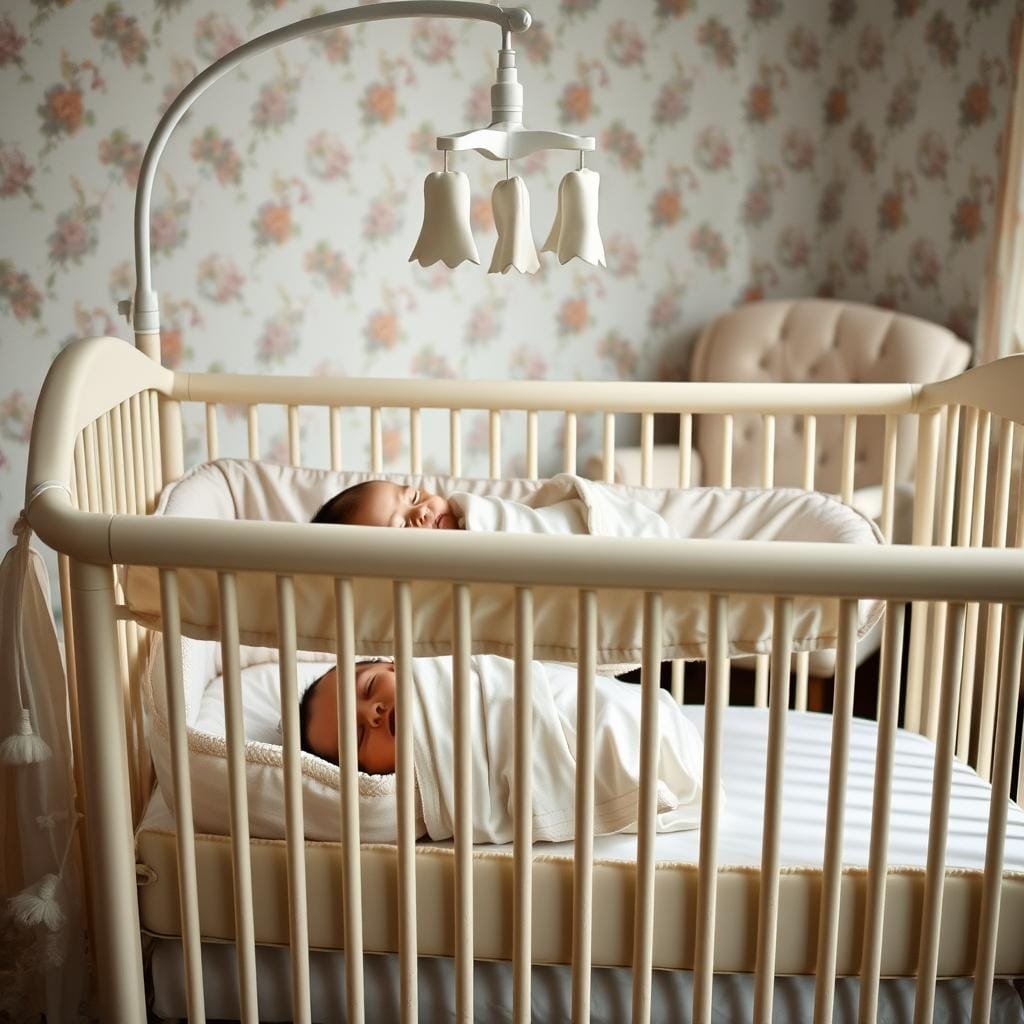
Getting your baby to sleep can be tough in the early weeks. By two months, you might see small changes in their sleep. But, it’s hard to know if they’ll ever sleep on a regular schedule.
Most babies need about 15.5 hours of sleep each day. They usually take 4-5 naps, with breaks of 45 minutes to 1.75 hours. Even though your 2 month old sleep schedule isn’t perfect, knowing these patterns helps a lot.
The newborn nap routine is not set at eight weeks. Sleep times can be short or long. Instead of a strict plan, watch for sleepy signs like yawning or rubbing their eyes.
Creating a baby sleep guide that changes with your baby is better than a strict schedule. By noticing their natural sleep times and starting bedtime routines, you help them sleep well as they grow.
Key Takeaways
- Two-month-old babies typically need 15.5 hours of total sleep daily
- Most infants require 4-5 naps per day at this stage
- Wake windows generally range from 45 minutes to 1.75 hours
- Nap durations vary widely from 10 minutes to 2 hours
- Flexible routines work better than strict schedules at this age
- Watching for sleepy cues helps time naps appropriately
- Day/night confusion typically improves around this age
Understanding Sleep Needs of 2-Month-Old Babies
Knowing how much sleep your 2-month-old needs is key for their health and growth. Every baby is different, but knowing the usual sleep patterns helps. It makes a good routine for you and your baby.
Total Sleep Requirements in 24 Hours
Most 2-month-old babies need 14-17 hours of sleep in 24 hours. They sleep 8-10 hours at night and 5-6 hours during the day. This is spread over 4-5 naps.
How much sleep a baby needs can vary a lot. Some need more, some less. What’s important is how they act when awake:
- They’re alert and fun when awake.
- They can be calmed when tired.
- They grow and develop well.
- They’re happy between feedings.
Biological Sleep Rhythms at This Age
At two months, babies are figuring out their sleep patterns. Unlike grown-ups, they don’t know day from night yet.
Babies sleep in shorter cycles than adults. Their cycles are 40-50 minutes, not 90 minutes like ours. This is why they wake up a lot or nap for short times. Their brains are learning to sleep longer.
By 6-8 weeks, babies start to show they’re learning to sleep better at night. They wake up less and sleep longer.
How Sleep Supports Brain Development
Sleep is very important for your baby’s brain. It’s when their brain sorts out the day’s events, gets stronger, and remembers things.
Good sleep helps babies:
- Learn and think better.
- Feel their emotions better.
- Grow physically.
- Stay healthy.
This is why babies who sleep well reach milestones faster. They also feel their emotions better. Knowing about infant sleep development helps parents give their babies the sleep they need for a growing brain.
Typical Sleep Patterns at 2 Months
Knowing how a 2-month-old sleeps can make parents feel more confident. Every baby is different, but some sleep habits are common. Your baby is getting better at sleeping, but it’s not always easy.
Day vs. Night Sleep Distribution
At two months, babies start to know day from night. But, they don’t always get it right. Some sleep longer at night, while others wake up often.
Nighttime sleep is usually 8-10 hours for a baby. Daytime sleep is 6-8 hours, spread out in naps.
Average Nap Length and Frequency
The2-month-old sleep schedulehas 4-5 naps a day. These naps can be short or long. Short naps are common and okay.
At two months, naps can be unpredictable. Your baby might sleep well one day and not the next. This is normal as their sleep patterns grow.
Sleep Cycle Development
Newborns sleep differently than adults. At two months, babies spend 50% of their sleep in active REM sleep. This helps their brains grow but means they wake up more.
A 2-month-old’s sleep cycle is 40-50 minutes. This is much shorter than an adult’s. Babies wake up after one cycle, which is why they nap often. As they grow, they’ll sleep longer.
The Importance of a Consistent Nap Routine for 2 Month Old Babies
A good nap routine is more than a schedule for your 2-month-old. It helps with healthy growth and sleep. Even though babies this age don’t need strict schedules, they like knowing when to sleep.
This routine helps them understand their day better. It also lays a good foundation for sleep that lasts long after these early months.
Benefits of Structured Sleep
Having a consistent nap schedule is very good for your 2-month-old. It makes them feel safe in their new world. When naps happen at the same time every day, they start to look forward to rest.
Structured sleep has many benefits:
- Less fussiness and irritability
- Longer, better sleep periods
- Easier switching between sleep and being awake
- Helps with body clocks
- Better mood and alertness when awake
Babies with routines nap better and seem happier. This makes it easier to keep up the routine.
How Routines Support Development
The baby sleep routine benefits go beyond just being predictable. Good sleep helps the brain grow fast, which is happening a lot in these early months. When your 2-month-old naps, their brain gets time to learn and grow.
Regular sleep helps your baby:
- Feel emotions better
- Focus when awake
- Learn and process information
- Manage stress hormones
By focusing on nap times, you’re giving your baby’s brain the best chance to grow. This effort in structured sleep for infants helps them feel good now and grow well later.
Building Sleep Associations
A consistent nap routine is great for making sleep associations. These are things that tell your baby it’s time to sleep. For a 2-month-old, these should be simple but always the same.
Good pre-nap routines might include:
| Routine Element | Purpose | Implementation Tips | Duration |
|---|---|---|---|
| Diaper change | Physical comfort | Keep movements gentle and voice soft | 2-3 minutes |
| Swaddling | Security and comfort | Use age-appropriate swaddle technique | 1-2 minutes |
| Gentle rocking | Calming movement | Slow, rhythmic motion in quiet space | 3-5 minutes |
| Soft singing/white noise | Auditory cue for sleep | Consistent sound used for all naps | Throughout nap |
These consistent actions help your baby know when it’s nap time. It’s not about strict timing but about doing the same things before naps. This helps them learn what comes next.
At 2 months, your baby’s routine should be flexible and change with their needs. The goal is to create a rhythm that feels safe while also growing with them. As you set these patterns, you’re teaching your baby healthy sleep habits that will grow with them.
Ideal Wake Windows for 2-Month-Olds
Finding the right awake time for your 2-month-old is key. Wake windows are the times your baby can stay awake. They usually last from 45 to 90 minutes. Knowing these times helps your baby sleep better and feel happier.
Morning Wake Windows
In the morning, your 2-month-old’s wake windows are short. They last from 45-60 minutes. This is because they’re just starting to feel sleepy after a night.
Afternoon Wake Windows
As the day goes on, your baby can stay awake a bit longer. Afternoon wake windows are 60-75 minutes. This is when they’re most awake and ready to play.
Evening Wake Windows
The evening wake windows are the longest. They last from 75-90 minutes. This helps them sleep well at night.
Watch your baby closely in the evening. They can get too tired if they’re awake too long.
Adjusting for Individual Babies
Every baby is different. Some need shorter or longer optimal wake periods. Look for signs that your baby needs a change:
- Increased fussiness or crying
- Difficulty settling for sleep
- Short, fragmented naps
- Resistance to sleep despite seeming tired
Listen to your baby’s cues. If they fight sleep at 60 minutes but sleep well at 50, adjust. The right wake window is the one that works for your baby.
Recognizing Sleep Cues in Your 2-Month-Old
Two-month-old babies show signs when they need sleep. It’s important to know these signs to help them nap well. They use body language and changes in behavior to tell us they’re tired.
Spotting these cues early helps your baby sleep better. It makes it easier for them to relax and fall asleep.
Early Tired Signs to Watch For
Early signs of sleepiness are small but clear. Catching these first tired signs in infants helps start nap time right:
- Decreased activity and movement
- Quieting down or becoming very calm
- Reduced eye contact
- Staring off into space
- Less engagement with surroundings
- Rubbing eyes or ears
- Subtle yawning
Late Tired Signs and Overtiredness
If you miss early signs, your baby will show more obvious tiredness. These signs mean they’re overtired:
- Increased fussiness and irritability
- Arching the back
- Crying or screaming
- Becoming hyper-alert or “wired”
- Dark circles appearing under the eyes
When babies are overtired, they have stress hormones. These hormones make it hard for them to sleep well. It creates a cycle that affects their sleep quality.
Distinguishing Between Sleep and Hunger Cues
New parents often mix up hunger and tiredness because some signs are similar. Recognizing sleepiness in babies versus hunger needs careful watching:
- Hunger signs: Rooting, bringing hands to mouth, smacking lips, and a certain cry
- Sleep signs: Reduced activity, avoiding stimulation, eye rubbing, and a whiny, intermittent cry
If your baby ate recently but looks tired, they need sleep. With time, you’ll get better at understanding your baby’s signals. This leads to better naps and more sleep for everyone.
Sample Nap Schedules for 2-Month-Old Babies

Sample nap schedules help parents with their 2-month-old babies’ sleep. These examples give a starting point, not strict rules. Most 2-month-olds need 4-5 naps a day, with breaks of 45-90 minutes.
4-Nap Schedule Example
A 4-nap schedule is good for babies who nap longer. It fits babies who sleep 1-2 hours during the day.
7:00 AM – Wake up and morning feeding
8:30 AM – First nap (following a 90-minute wake window)
10:00 AM – Wake and feeding
11:30 AM – Second nap
1:00 PM – Wake and feeding
2:30 PM – Third nap
4:00 PM – Wake and feeding
5:30 PM – Fourth nap (shorter catnap)
6:15 PM – Wake, evening routine begins
8:00 PM – Bedtime
This 4-nap routine offers structure with time for feeding and play. The longer breaks help in having fewer but longer naps.
5-Nap Schedule Example
Many 2-month-olds do well with a 5-nap schedule. This is for those who nap short or get tired easily. It has shorter breaks all day.
7:00 AM – Wake up and morning feeding
8:00 AM – First nap (following a 60-minute wake window)
9:15 AM – Wake and feeding
10:30 AM – Second nap
11:45 AM – Wake and feeding
1:00 PM – Third nap
2:15 PM – Wake and feeding
3:30 PM – Fourth nap
4:45 PM – Wake and feeding
6:00 PM – Fifth nap (shorter catnap)
6:30 PM – Wake, evening routine begins
8:00 PM – Bedtime
Flexible Schedule Approach
A flexible approach focuses on wake windows and listening to your baby. It’s for those whose sleep changes daily.
Keep wake windows between 45-90 minutes. Watch for tired signs like yawning or rubbing eyes. Start the nap routine when you see these signs.
This flexible sample sleep routine keeps a day rhythm but is adaptable. It’s less stressful than strict schedules, which can be hard to follow.
Adapting Schedules to Your Baby’s Needs
The best nap schedule is one that fits your baby. Several things affect what works best:
- Temperament – some babies are more adaptable
- Individual sleep needs – some need more sleep
- Feeding method – breastfed babies eat more often
- Development – growth spurts and milestones can change sleep
Watch how your baby reacts to different wake windows. If they fight naps at 60 minutes, try 75 minutes. If they get tired at 45 minutes, nap earlier.
| Schedule Type | Best For | Wake Windows | Typical Day End | Flexibility Level |
|---|---|---|---|---|
| 4-Nap Schedule | Babies who take longer naps | 75-90 minutes | 8:00-8:30 PM | Moderate |
| 5-Nap Schedule | Babies who take shorter naps | 45-75 minutes | 8:00-8:30 PM | Moderate |
| Flexible Approach | Highly variable nappers | 45-90 minutes (cue-based) | Variable | High |
| Parent-led Schedule | Predictable babies | Fixed intervals | Consistent | Low |
Any flexible nap plan for a 2-month-old should focus on their needs. It’s about finding a rhythm that works for everyone.
Creating a Sleep-Friendly Environment
A good sleep environment is key for your 2-month-old’s naps. The right setup tells your baby it’s time to sleep. It also helps them nap longer. Let’s look at how to make the perfect baby sleep environment for quality naps.
Optimal Room Setup
The best nursery setup for sleep is simple and free from distractions. Blackout curtains are a must for a dark room. This darkness helps your baby’s body make melatonin.
Keep the nursery tidy and free of clutter. The crib should be away from windows, vents, and doors. A clean space helps your baby focus on sleep.
Temperature and Lighting Considerations
The room should be between 68-72°F (20-22°C) for your baby’s comfort. Dress your baby in layers for the room’s temperature.
For naps, the room should be dark. Use blackout curtains or shades. If you need to check on your baby, use a dim red nightlight.
White Noise and Comfort Items
White noise machines help block out noise and create a soothing sound. Place the machine at least 6-7 feet from the crib. Keep the volume soft, like a shower.
Swaddling can make your baby feel safe and snug. But stop swaddling when they start rolling. A pacifier can also help your baby sleep and may lower SIDS risk.
Safe Sleep Practices for Naps
Always prioritize safety in your baby’s safe sleep space. Place your baby on their back in a firm, flat place. The crib or bassinet should be empty of pillows, blankets, and toys.
Room-sharing is safe for the first 6-12 months. But bed-sharing is not safe. It’s better to have your baby in your room but in their own bed.
| Sleep Environment Element | Recommendation | Safety Consideration | Benefit |
|---|---|---|---|
| Room Temperature | 68-72°F (20-22°C) | Prevents overheating | Optimal comfort for deep sleep |
| Lighting | Dark room with blackout curtains | Avoid string lights or cords | Promotes melatonin production |
| White Noise | 50-65 decibels, 6+ feet from crib | Not too loud to protect hearing | Masks household sounds |
| Sleep Surface | Firm mattress with fitted sheet only | No soft bedding or toys in crib | Reduces SIDS risk |
| Sleep Position | Always on back | Never on side or stomach | Significantly reduces SIDS risk |
Remember, these safe sleep practices are for all sleep times, not just at night. Being consistent helps your baby sleep well and stay safe.
Feeding and Its Impact on Nap Routines
Knowing how your 2-month-old’s eating schedule affects their sleep is key. Their hunger and sleep needs are closely linked. This balance needs your attention and flexibility.
Breastfeeding vs. Formula Considerations
The feeding and sleep connection changes with how you feed your baby. Breastfed babies might need to eat every 2-3 hours. This can lead to shorter naps but more often.
Formula-fed babies might eat less often, every 3-4 hours. This can mean longer naps and more regular sleep times.
Neither way is better for sleep. They just create different rhythms for your baby’s nap routine.
Timing Feeds Around Naps
When you time feeds right, it can improve nap quality. The “eat-play-sleep” method helps avoid feed-to-sleep links. It also makes sure your baby isn’t hungry when it’s nap time.
But, some babies might need a small feed before naps if they seem hungry. The trick is to be consistent but also flexible to your baby’s changing needs.
Experts say watching your baby’s cues is better than following a clock. This is true for breastfeeding and naps.
Cluster Feeding and Evening Sleep
Many 2-month-olds have cluster feeding in the evening. This can affect your evening nap and bedtime routine.
During cluster feeding, your baby might want to eat a lot for 2-3 hours. They might seem fussy between feeds. This helps them prepare for longer sleep at night but might mess with your formula and sleep schedule.
Instead of fighting it, adjust your nap plans during cluster feeding. A flexible approach that meets feeding needs while keeping some sleep order is best for you and your baby.
Common Nap Challenges at 2 Months

Getting your 2-month-old to nap well can be tough. It takes patience and smart plans. Knowing these common issues helps you feel more confident. Remember, many sleep problems at this age will get better with time and regular routines.
Short Naps (Cat Naps)
If your 2-month-old naps for only 20-30 minutes, you’re facing “cat naps.” These short naps are very common and have a reason.
Babies at two months have sleep cycles that last about 30-45 minutes. Unlike grown-ups, they wake up fully between cycles. This is whyshort naps in babiesare normal, even if they’re hard for parents.
Many parents think short naps mean there’s a problem. But they just show your baby’s sleep stage. Some babies take longer naps, but many 2-month-olds can’t connect sleep cycles during the day.
Difficulty Falling Asleep Independently
Does your baby need to be rocked, nursed, or held to sleep? This is normal at two months. Most babies can’t self-soothe yet.
Your baby’s need for help to sleep isn’t a bad habit. It’s a need for safety and comfort. Their nervous system is growing, and they need your help to sleep.
While you might hear about sleep training, 2 months is too early. Focus on creating sleep habits that comfort your baby. Gradually help them learn to fall asleep on their own.
Day/Night Confusion
Some 2-month-olds have trouble telling day from night. This usually gets better by 6-8 weeks. If your baby is more awake at night and sleepy during the day, they might be confused.
This confusion comes from life in the womb. Your movements rocked them to sleep during the day. But they were active at night. Making day and night different can help their internal clock.
Try these to fix day/night confusion:
- Keep daytime activities bright and normally noisy
- Make nighttime interactions quiet, dim, and minimal
- Create distinct routines for day versus night
- Expose your baby to natural daylight during wake times
Strategies for Extending Short Naps
While many short naps are normal, some methods can help extend daytime sleep:The “wake to sleep” methodgently wakes your baby slightly before they wake up. This can help them start their next sleep cycle without waking fully.Strategic darkness and white noisecan reduce stimulation that wakes your baby. Use room-darkening shades and consistent white noise for naps.Respect wake windowsby watching for sleep cues and napping within 45-90 minutes. An overtired or undertired baby will have trouble with long naps.
If your baby always takes short naps, you might need to try more frequent naps. Some babies do better with five or six short naps than a few long ones.
Remember, extending infant naps is often about development, not technique. Many babies start taking longer naps around 3-5 months as their sleep cycles grow. Until then, being consistent and patient is key for managing nap challenges.
Balancing Daytime Naps and Nighttime Sleep
Parents of 2-month-olds learn a big secret. Daytime naps and nighttime sleep are connected. They are not separate things.
How Daytime Sleep Affects Night Sleep
Many think keeping a baby awake helps them sleep better at night. But, it’s actually the opposite. Sleep begets sleep. Babies who nap well during the day sleep better at night.
Missing naps or short naps makes babies overtired. This makes it hard for them to fall asleep at night. It also makes them wake up more often.
It’s important for babies to have a good balance of day and night sleep. Well-rested babies sleep better at night. They can fall asleep on their own and sleep longer.
Last Nap of the Day Considerations
The last nap of the day is very important. For 2-month-olds, it should end 1-2 hours before bedtime. This helps them get ready for sleep.
This nap is usually shorter, lasting 30-45 minutes. If your baby has trouble with this nap, try using motion. A stroller walk or car ride can help them rest without affecting nighttime sleep.
Finding the right time for this nap takes watching and being flexible. Too early, and your baby might be too tired for bedtime. Too late, and it might mess up night sleep.
Bedtime Routine Connections
Having a consistent nap routine and bedtime ritual helps your baby. Use a short version of your bedtime routine before naps. This could be a diaper change, sleep sack, and a lullaby.
These consistent cues tell your baby it’s time to rest, day or night. Over time, your 2-month-old will learn to recognize and respond to sleep cues.
Think of your baby’s sleep as a 24-hour cycle. Changes to daytime naps can improve nighttime sleep. This creates a positive cycle that helps your baby sleep better.
Transitioning Between Different Nap Locations
It’s hard to manage where your 2-month-old naps. They sleep in many places, like your arms, cribs, strollers, and car seats. It’s good to be flexible but also to have some routine.
From Arms to Crib Strategies
Many 2-month-olds like to nap in your arms but wake up in a crib. It’s okay! Here are some tips to help them nap in a crib:
- Drowsy but awake – Put your baby in the crib when they’re sleepy but not asleep. This helps them learn to sleep in their crib.
- Pause and put down – Wait 10-15 minutes after your baby falls asleep in your arms. Then, move them to the crib.
- Warm the surface – Use a heating pad or warm blanket in the crib. This makes it warmer when you move your baby.
At 2 months, babies often need help to fall and stay asleep. Don’t worry if they don’t nap in the crib right away. It takes time.
On-the-Go Napping Tips
Life with a baby doesn’t stop for nap time. Here are some tips for napping on the go:
- Use a breathable cover over strollers or car seats to block light and distractions.
- Bring a portable white noise machine or use a white noise app.
- Plan outings around your baby’s nap times.
- Keep some parts of your usual nap routine, like a song or swaddle.
Stroller or car naps might be shorter. But they’re important for your baby’s sleep. Some babies sleep better with a little motion.
Maintaining Consistency While Traveling
Travel can mess up routines. But you can make sleep easier with these tips:
- Pack familiar sleep items like swaddles, sleep sacks, or white noise machines.
- Keep wake windows the same, even when you’re not home.
- Make a sleep-friendly place wherever you are by darkening it and reducing noise.
- Use a portable bassinet or travel crib for a familiar sleep spot.
Finding a balance between being flexible and having a routine is key. Your 2-month-old can adapt to different places while keeping some routine.
| Nap Location | Benefits | Challenges | Best Practices |
|---|---|---|---|
| Crib/Bassinet | Promotes independent sleep skills, safer sleep environment | Initial resistance, shorter naps at first | Consistent sleep environment, gradual transitions |
| Arms/Contact Naps | Longer naps, comfort for baby, bonding | Parent mobility limited, difficult transitions | Use carrier for hands-free option, practice transfers |
| Stroller/Car Seat | Convenient while out, motion helps some babies | Often shorter naps, not ideal for all sleep | Use cover to block light, maintain safe positioning |
| Baby Carrier | Hands-free for parent, comforting for baby | Can be warm, requires proper positioning | Ensure airway is clear, check baby regularly |
At 2 months, the main goal is to make sure your baby sleeps enough. While it’s good to have a routine, being flexible is most important.
Looking Ahead: Sleep Development in the Coming Months
As your baby grows, their sleep patterns change a lot. Around 3-4 months, babies go through a big change in sleep. This is called the “4-month sleep regression.” It’s not really a step back, but a move to sleep like grown-ups.
Future sleep patterns will include fewer but longer naps. Between 3-5 months, babies go from 4-5 short naps to 3-4 longer ones. The morning nap usually becomes more regular first, helping you plan your day better.
Wake windows get longer during these 3 month changes. Your baby will stay awake for 1.5-2 hours by 3-4 months. This is because their brain is growing and getting smarter.
Many babies start going to bed earlier around three months. This helps their body clocks get better at sleeping at night.
Look for signs your baby needs a sleep schedule change. They might fight naps, wake up early, or seem tired later than usual. These signs help you adjust to their needs.
Keep in mind, sleep development isn’t always straight. There might be ups and downs during growth spurts, teething, and sickness. But, most sleep habits get better as your baby grows.
FAQ
How much total sleep does a 2-month-old baby need in 24 hours?
A 2-month-old baby needs 14-17 hours of sleep in 24 hours. This includes 5-6 hours of daytime sleep. Each nap can last 30 minutes to 2 hours.
What are typical wake windows for a 2-month-old?
Wake windows for 2-month-olds are 45-90 minutes. Morning wake windows are 45-60 minutes. Afternoon and evening wake windows are 60-75 and 75-90 minutes, respectively.
How many naps should my 2-month-old take each day?
Most 2-month-old babies take 4-5 naps a day. Each nap can last 30 minutes to 2 hours. They usually take short naps of 20-30 minutes.
Why does my 2-month-old only take short naps?
Short naps are common at 2 months. Babies have short sleep cycles and spend more time in active sleep. This is normal and will improve as they grow.
What are the early tired signs I should watch for in my 2-month-old?
Look for signs like decreased activity and quieting down. Also, watch for reduced eye contact and staring off into space. These are early tired signs.
How can I tell if my baby is overtired?
Signs of overtiredness include increased fussiness and arching the back. Also, look for crying and becoming hyper-alert. These signs mean your baby needs sleep.
Should I put my 2-month-old on a strict nap schedule?
No, strict schedules are not good for 2-month-olds. Instead, aim for a flexible routine based on wake windows and sleep cues. This approach is better for your baby’s needs.
What’s the ideal sleep environment for my 2-month-old’s naps?
The ideal sleep environment is dark, quiet, and at a comfortable temperature. Use white noise and a firm, flat sleep surface. Always place your baby on their back for naps.
Should I wake my baby from naps to maintain a schedule?
No, waking your baby from naps is not usually necessary. Unless it affects night sleep or feeding, let them sleep as long as they need. Short naps are normal at this age.
How does feeding affect my 2-month-old’s nap routine?
Feeding can influence nap patterns. Breastfed babies may need to eat more often. Formula-fed babies may go longer between feedings. Balance feeding and nap schedules.
Is it normal for my 2-month-old to need help falling asleep for naps?
Yes, it’s normal for 2-month-olds to need help falling asleep. Rocking, feeding, or holding your baby is okay. They will learn to fall asleep on their own as they get older.
Do daytime naps affect nighttime sleep for a 2-month-old?
Yes, daytime naps affect nighttime sleep. Babies who nap well during the day sleep better at night. Missing or short naps can make it hard to settle at night.
How should I handle the last nap of the day?
The last nap of the day should end 1-2 hours before bedtime. If your baby struggles, try using motion or contact napping. This can help them not get overtired before bedtime.
Can my 2-month-old nap in different locations?
Yes, 2-month-olds can nap in different places. This includes cribs, strollers, and car seats. The main goal is to ensure they get enough sleep, even if it’s in different locations.
When will my baby’s naps become more predictable?
Naps become more predictable around 3-5 months. Babies start to take 3-4 naps a day. Morning naps usually become regular first. Sleep patterns improve as they get older.
How can I help my 2-month-old transition from napping in my arms to the crib?
Transitioning to the crib should be gradual. Try the “drowsy but awake” approach. Use a warm surface to ease the transition. This process takes time and may not be fully accomplished at 2 months.
Should I swaddle my 2-month-old for naps?
Swaddling can be helpful for naps. It mimics the womb and prevents the startle reflex. Stop swaddling when your baby starts rolling over. Always follow safe swaddling practices.
Is white noise helpful for a 2-month-old’s naps?
Yes, white noise is helpful for naps. It masks sounds and mimics the womb. Use it at a moderate volume. Consistent use can help your baby sleep better.