Ever notice how a bad night’s sleep affects your day? Quality sleep is key to good health. It helps your body fix itself, your brain work, and your immune system get stronger.
But, many things can mess up our sleep. Work stress, family duties, and health issues can keep us awake. Mayo Clinic says we can’t control everything, but we can make habits for better sleep.
Not sleeping well can lead to big problems. It can cause heart disease, diabetes, obesity, and depression. It also makes you feel tired, sad, and not sharp.
This guide has easy, science-backed sleep tips for tonight. If you have trouble sleeping, staying asleep, or want to sleep better, you’re in the right place. You’ll find tips from experts and the latest research.
Key Takeaways
- Quality sleep directly impacts physical health, cognitive function, and emotional wellbeing
- Adults typically need 7-8 hours of sleep per night for optimal health
- Consistent sleep schedules help regulate your body’s internal clock
- Your sleep environment significantly affects your rest quality
- Evening routines can prepare your body and mind for better sleep
- Diet and exercise choices throughout the day influence nighttime rest
Understanding the Science of Sleep
Sleep science has grown a lot in recent years. It shows how sleep helps our bodies and minds. Research into sleep chemistry finds how sleep affects memory and metabolism.
Sleep Cycles and Their Importance
Your body goes through different sleep stages every 90 minutes at night. These stages include REM (Rapid Eye Movement) and non-REM sleep. Each stage is important for your health.
Deep non-REM sleep helps fix tissues, build bone and muscle, and boost your immune system. REM sleep, with more brain activity, is when you dream. It helps with memory and emotions.
Breaking these cycles can hurt your thinking, mood, and health. This is true even if you sleep enough.
| Sleep Stage | Duration | Primary Functions | Brain Wave Pattern |
|---|---|---|---|
| Stage 1 (N1) | 1-5 minutes | Transition to sleep | Theta waves |
| Stage 2 (N2) | 10-25 minutes | Memory processing | Sleep spindles & K-complexes |
| Stage 3 (N3) | 20-40 minutes | Physical restoration | Delta waves |
| REM | 10-60 minutes | Mental restoration, learning | Similar to wakefulness |
How Much Sleep Do You Really Need?
How much sleep you need changes with age and health. Most adults need 7-9 hours. But, your genes, how active you are, and health also play a part.
Young people need more sleep for growing. Older people might sleep less naturally. But, it’s the quality of sleep that matters more than how long you sleep. Sleeping well and without breaks is better than sleeping a lot but not well.
The Connection Between Sleep and Overall Health
The sleep-health connection is big. Not sleeping well can lead to serious health problems. This includes heart disease, diabetes, obesity, and weak immune system.
Poor sleep messes with hormones that control hunger and stress. This can make you want to eat more, leading to weight gain.
Your brain gets rid of waste during sleep. This helps protect against diseases like Alzheimer’s. It shows how important sleep is for your brain.
The Best Way to Sleep: Optimal Positions for Quality Rest
How you sleep affects your comfort and health. Some sleep positions are better than others. Knowing the best way to sleep can improve your rest.
Back Sleeping Benefits and Techniques
Sleeping on your back is great for your spine. It spreads your weight evenly and keeps your spine straight.
Back sleeping also helps with acid reflux. It keeps your head up and can prevent wrinkles.
Proper Pillow Placement for Back Sleepers
Choosing the right pillow is key for back sleepers. Pick a medium pillow that supports your neck. A small pillow under your knees can also help.
Side Sleeping Advantages and Proper Alignment
Side sleeping is common and has many benefits. It’s good for sleep apnea and acid reflux. Pregnant women should sleep on their left side for better heart circulation.
Supporting Your Spine While Side Sleeping
Side sleepers need to keep their head in line with their spine. A supportive pillow is important. A pillow between your knees can also help.
Is Stomach Sleeping Ever Recommended?
Stomach sleeping is not the best for most. It can hurt your spine and neck. But, if you must sleep on your stomach, use a thin pillow or none at all.
Adjusting Your Sleep Position for Health Conditions
Some health issues need special sleep positions. Side sleepers with sleep apnea might find relief. Acid reflux sufferers can try left-side sleeping or elevate their upper body.
Pregnant women should sleep on their left side for the baby. Those with shoulder pain should avoid sleeping on that side.
The best sleep position is the one that feels right for you. Trying different positions can help you sleep better and stay healthy.
Creating Your Ideal Sleep Environment
Your sleep environment can help or hurt your sleep. The things around you while you sleep can change how fast you fall asleep and how well you rest. Let’s make your bedroom the best place to sleep.
Temperature and Humidity Control
Keeping your bedroom cool is key for good sleep. Studies say a room at 65°F (18.3°C) is best for most people. This helps your body cool down as you sleep.
Humidity is also important. Keep it between 30-50% to avoid dry or wet air. Use a humidifier in winter and a dehumidifier in summer if needed.
Lighting and Sound Management
Even a little light can mess with your sleep. Blackout curtains block outside light well. Eye masks are good for travelers. Turn off all electronic lights in your room.
Too much noise can keep you from deep sleep. Here are ways to manage sound:
- White noise machines to mask sounds
- Earplugs for those who sleep lightly
- Soundproofing for windows and doors
- Soft things that soak up sound
Selecting the Right Mattress and Pillows
Your mattress and pillows affect your comfort and how your body is aligned. The right mattress supports your spine and eases pressure. Your mattress firmness depends on how you sleep and your weight.
| Sleep Position | Recommended Mattress Type | Ideal Pillow Height | Key Benefits |
|---|---|---|---|
| Back Sleeper | Medium-firm to firm | Medium loft | Spinal alignment, reduced lower back pressure |
| Side Sleeper | Medium to medium-soft | High loft | Shoulder/hip pressure relief, neck alignment |
| Stomach Sleeper | Firm | Low loft or none | Prevents spinal arching, reduces neck strain |
| Combination Sleeper | Medium | Adjustable | Versatile support, easier position changes |
Bedroom Organization for Better Sleep
A messy bedroom can make your mind feel cluttered. Your brain links your sleep space with rest. Make your bedroom just for sleep and intimacy. Get rid of work stuff, exercise gear, and entertainment.
Use calming colors like soft blues, gentle greens, or neutral tones. These colors can lower your blood pressure and heart rate. They help you relax and sleep better.
Establishing a Sleep-Promoting Evening Routine
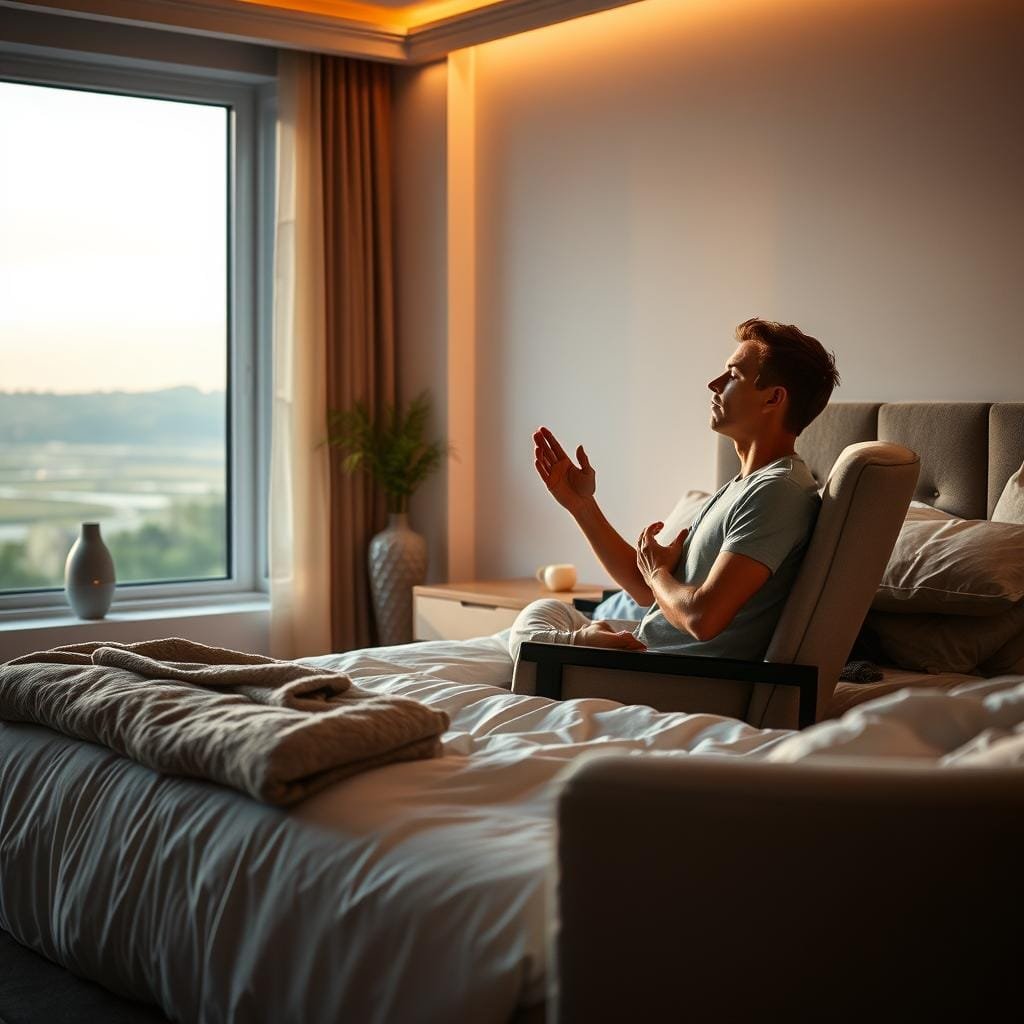
Creating a bedtime routine is very powerful for better sleep. Doing the same things every night tells your brain it’s time to sleep. A good evening routine can help you fall asleep faster and sleep better.
The Ideal Bedtime Schedule
Being consistent is key for a good sleep routine. Go to bed and wake up at the same times every day. This helps your body get into a rhythm.
Adults need 7-9 hours of sleep each night. To figure out your bedtime, count back from when you need to wake up. For example, if you wake at 6:00 AM, aim to sleep by 10:00-11:00 PM.
Relaxation Techniques Before Bed
Adding relaxation techniques to your bedtime routine is important. They help your body relax and get ready for sleep. These practices can make it easier to fall asleep.
- Deep breathing exercises (try the 4-7-8 method: inhale for 4 seconds, hold for 7, exhale for 8)
- Progressive muscle relaxation, tensing and releasing muscle groups sequentially
- Gentle stretching or bedtime yoga
- Meditation or guided imagery
Creating Consistent Sleep Cues
Sleep cues are actions that help your brain get ready for sleep. They are like signals that it’s time to rest. Examples include wearing specific pajamas or brushing your teeth.
It’s important to do these actions in the same order every night. This way, your brain starts to get ready for sleep when you start these cues.
The Power of a Pre-Sleep Wind-Down Period
A wind-down period of 30-60 minutes before bed is helpful. Use this time for calming activities, not for work or screens. This helps your brain relax and get ready for sleep.
Try reading, listening to soft music, or practicing mindfulness during this time. It helps your brain slow down and makes it easier to fall asleep.
Blue light from screens can mess with your sleep. If you must use devices, wear blue-light blocking glasses or use apps that filter blue light after sunset.
Nutrition and Hydration Strategies for Better Sleep
Good food and drink choices can help you sleep better. What you eat before bed affects how fast you fall asleep. It also affects how well you sleep all night.
Knowing how diet and sleep are linked helps you make better choices. These choices can help you sleep better, not worse.
Foods That Help You Sleep
Some foods have special helpers for sleep. These sleep-enhancing nutrients help your body relax and get ready for sleep.
Foods like turkey, chicken, and dairy have tryptophan. This helps make serotonin and melatonin, important for sleep. Magnesium in greens, nuts, and seeds relaxes muscles.
Tart cherries are special because they have melatonin. Drinking tart cherry juice before bed can make you sleep longer and better.
What to Avoid Before Bedtime
Some foods can hurt your sleep. Caffeine stays in your body for 6-8 hours. That afternoon coffee can steal your sleep.
Alcohol might make you sleepy at first. But it messes with your sleep patterns. Foods high in sugar can also wake you up at night.
Spicy or fatty foods can cause stomach problems when you lie down. This makes it hard to sleep well.
Optimal Timing for Eating and Drinking
When you eat is as important as what you eat. Try to eat your last big meal 2-3 hours before bed. This lets your body digest and prevents hunger at night.
Drinking water is good, but not too much before bed. Most experts say to stop drinking 1-2 hours before bed. This helps you avoid getting up to use the bathroom.
Sleep-Friendly Midnight Snacks
If you get hungry before bed, choose small snacks. Look for snacks with carbs and a little protein. These snacks keep your blood sugar steady all night.
| Sleep-Promoting Foods | Benefits | Recommended Timing |
|---|---|---|
| Tart cherries/cherry juice | Natural melatonin source | 1-2 hours before bed |
| Kiwi fruit | Contains serotonin and antioxidants | After dinner |
| Warm milk with honey | Tryptophan and calming effect | 30-60 minutes before sleep |
| Handful of nuts | Magnesium and healthy fats | 1-2 hours before bed |
| Herbal tea (chamomile, valerian) | Relaxing compounds | 30-60 minutes before sleep |
Exercise and Physical Activity for Improved Sleep Quality
Regular exercise and physical activity can greatly improve sleep. The right amount of activity can make you sleep better. This can change your nights and days for the better.
Exercise and sleep are connected. Good sleep helps you perform better in sports. The right exercise can also make you sleep better.
Best Types of Exercise for Sleep
Not all exercise is the same for sleep. Studies show that moderate aerobic activities are best for most people.
Aerobic exercise like walking and swimming helps you sleep deeper. This is the stage where your body heals. A study found that it can cut insomnia by nearly 50%.
Strength training also helps sleep. It reduces anxiety and relaxes muscles. The breathing in strength training calms your body for sleep.
High-intensity workouts like HIIT are good for health but might keep you awake if done too close to bed. Mix your workouts to relax and stay flexible.
Timing Your Workouts for Optimal Sleep Benefits
When you exercise is as important as what you do. Morning workouts help set your body clock. Being outside in the morning helps even more.
Exercising in the afternoon, between 3 and 7 PM, is best for sleep. Your body is strongest then. The drop in body temperature later helps you sleep.
Don’t exercise too hard right before bed. It can keep you awake. But, some people find evening exercise helps them sleep.
Gentle Stretches to Do Before Bed
Light stretches before bed can help you relax. They prepare your body for sleep without making you tired.
Try these stretches 20-30 minutes before bed:
- Child’s pose – Kneeling with arms extended forward, this gentle stretch releases tension in your back, shoulders, and neck
- Gentle neck rolls – Slowly rotating your head in half-circles relieves upper body tension where stress accumulates
- Supine spinal twist – Lying on your back with knees dropped to one side relaxes your lower back and hips
- Legs up the wall – This restorative pose reduces swelling in legs and feet while calming your nervous system
Focus on slow, deep breathing during these stretches. Hold each position for 30-60 seconds without bouncing or forcing the stretch. The goal is relaxation, not increasing flexibility.
How Much Exercise Is Needed for Better Sleep?
Even a little exercise can help you sleep better. The Physical Activity Guidelines for Americans suggest 150 minutes of moderate exercise weekly. That’s about 30 minutes, five days a week.
But, you don’t need much to see benefits. Just 10 minutes a day can help sedentary people. What matters most is being consistent.
| Exercise Type | Optimal Timing | Sleep Benefits | Recommended Frequency |
|---|---|---|---|
| Moderate Aerobic | Morning or Afternoon | Increases deep sleep, reduces sleep onset time | 3-5 days per week |
| Strength Training | Morning or Early Afternoon | Reduces anxiety, promotes muscle relaxation | 2-3 days per week |
| Yoga/Stretching | Evening (even before bed) | Releases physical tension, calms nervous system | Daily or as needed |
| High-Intensity (HIIT) | Morning or Early Afternoon | Improves sleep efficiency if timed properly | 1-2 days per week |
For busy people, short activities throughout the day work well. Three 10-minute walks are as good as one 30-minute session. Find activities you enjoy to keep up with them.
Mental Techniques to Fall Asleep Faster
Getting good sleep isn’t just about being comfy. It also needs mental tricks to calm your thoughts. When your body is ready but your mind isn’t, these tricks can help you sleep better.
Progressive Muscle Relaxation
Progressive muscle relaxation (PMR) helps relax your body. It’s a systematic approach that makes your muscles relax one by one. You start with your toes and go up to your head.
To do PMR, lie down and tense your toes for 5-10 seconds. Then, let them go completely. Feel the difference. Do this with each muscle group in your body.
Visualization and Guided Imagery
Sleep visualization uses your imagination to calm your mind. Imagine a peaceful place, like a beach or a forest.
Another way is to imagine simple tasks, like counting sheep or walking down a staircase. Make your pictures clear but not too exciting.
Breathing Exercises for Sleep
Deep breathing slows your heart and tells your body it’s time to sleep. Try the 4-7-8 method. Breathe in for 4 seconds, hold for 7, and breathe out for 8.
Box breathing is also good. Breathe in for 4, hold for 4, breathe out for 4, and hold again for 4. Deep belly breathing also relaxes you and helps you sleep.
Cognitive Techniques to Quiet a Racing Mind
When your mind won’t stop, say “stop” to yourself. Then, think of something nice or neutral.
Write down worries in a journal before bed. This helps you let go of thoughts and sleep better.
Thinking about what you’re thankful for before bed can also help. Just list three things you’re grateful for.
Managing Common Sleep Disruptors

Sleep quality can be affected by many things. These issues bother millions of Americans every night. Even good sleep habits can’t always beat these problems. Knowing and fixing these issues can help solve sleep troubles.
Stress and Anxiety Reduction Techniques
Stress and anxiety can keep you awake. They make your body stay alert. This can lead to insomnia and less sleep.
Try these targeted techniques to calm your mind before bed:
- Practice mindfulness meditation for 10 minutes
- Write worries in a journal to “park” them for tomorrow
- Use progressive muscle relaxation to release physical tension
Addressing Snoring and Sleep Apnea
Sleep apnea is common in the U.S. It causes breathing stops during sleep. Simple snoring can also disturb sleep for you and your partner.
First steps to tackle these issues include:
- Sleeping on your side instead of your back
- Using nasal strips to improve airflow
- Maintaining a healthy weight
When to Seek Professional Help
See a doctor if you snore loudly or have breathing pauses. Also, if you’re very tired during the day. Sleep studies can help find the cause and suggest treatments like CPAP therapy.
Dealing with Insomnia
Many adults have insomnia. It’s not just about sleep hygiene. There are proven ways to manage it.
Effective methods include:
- Stimulus control therapy (only using your bed for sleep)
- Sleep restriction to build sleep pressure
- Cognitive behavioral therapy for insomnia (CBT-I)
Managing Shift Work and Jet Lag
Irregular schedules mess with your body’s clock. If you work odd hours or travel a lot, try these tips:
- Use light therapy to reset your internal clock
- Take strategic naps of 20-30 minutes
- Maintain consistent meal times to help regulate your body
Nighttime Pain Management
Pain can keep you awake. It’s a cycle of pain and poor sleep. Try these to manage pain at night:
- Optimize sleeping positions with supportive pillows
- Apply heat or cold therapy before bed
- Practice gentle stretching to release tension
Finding out what disrupts your sleep is key. These tips help right away. But fixing the root cause will improve sleep the most.
Technology and Sleep: Finding the Right Balance
Technology and sleep have a tricky relationship. Our devices can hurt or help our sleep, depending on how we use them. It’s important to understand this to sleep well in today’s world.
The Impact of Blue Light on Sleep Quality
Blue light from screens is a big problem for sleep. It stops our sleep hormone, melatonin, from working right. Using phones or computers at night tells our brain it’s daytime.
Blue light before bed can make it hard to fall asleep by up to 3 hours. Try to stop using screens 60 minutes before bed. Blue light glasses and screen filters can help too.
Sleep-Tracking Tools: Help or Hindrance?
Sleep tracking tech has changed how we see our sleep. Devices and apps give us info on our sleep. This info helps us find and fix sleep problems.
But, tracking can also cause stress about perfect sleep numbers. It’s better to use these tools as guides. Listen to how you feel in the morning, not just numbers.
Creating a Tech-Free Bedroom
Make your bedroom a tech-free zone for better sleep. Devices give off light and signals that can mess with sleep. They also tempt you to check things when you should be sleeping.
Put devices to charge outside your room. Use old-fashioned alarm clocks. Reading real books can help your brain get ready for sleep.
Apps and Devices That Can Improve Sleep
Not all tech is bad for sleep. Some tools, like white noise machines and smart lights, help sleep. Meditation apps calm your mind before bed.
| Technology Type | Benefits | Best For | Usage Tips |
|---|---|---|---|
| White Noise Machines | Masks disruptive sounds | Light sleepers, noisy environments | Place 3-6 feet from bed, moderate volume |
| Smart Lighting | Supports circadian rhythm | Shift workers, seasonal affective disorder | Program gradual dimming at night |
| Meditation Apps | Reduces mental chatter | Anxiety-related insomnia | Use audio-only mode to avoid screen exposure |
| Temperature Regulators | Maintains optimal sleep temperature | Hot sleepers, menopausal night sweats | Set to 65-68°F for most adults |
Being mindful with tech is key for good sleep. Choose wisely when and how to use devices. This way, you can enjoy tech without losing sleep quality.
Your Path to Consistently Restful Nights: Putting It All Together
Start by figuring out what keeps you up at night. Do you find it hard to fall asleep, stay asleep, or wake up feeling good? Knowing this helps you choose the right strategies.
Make small changes first, not big ones. Pick one or two easy tips from this guide. This way, you build good sleep habits slowly.
Keep track of your sleep with a diary or app. Write down when you go to bed and wake up. Also, note how you feel during the day. Good mood, energy, and focus are signs you’re getting better sleep.
Don’t worry if you have bad nights sometimes. It’s okay to have ups and downs. Just get back to your routine the next day. Don’t try to make up for it with naps or sleeping in.
Try mixing different tips for even better sleep. A cool, dark room and a relaxation trick work together better. This mix helps you sleep better faster.
Remember, sleep gets better over time, not overnight. Stick with your plan for at least 21 days. Your brain and body need time to adjust to new sleep habits.
Seeing sleep as a health priority is a big step. Good sleep is key to feeling your best. It supports your body and mind.