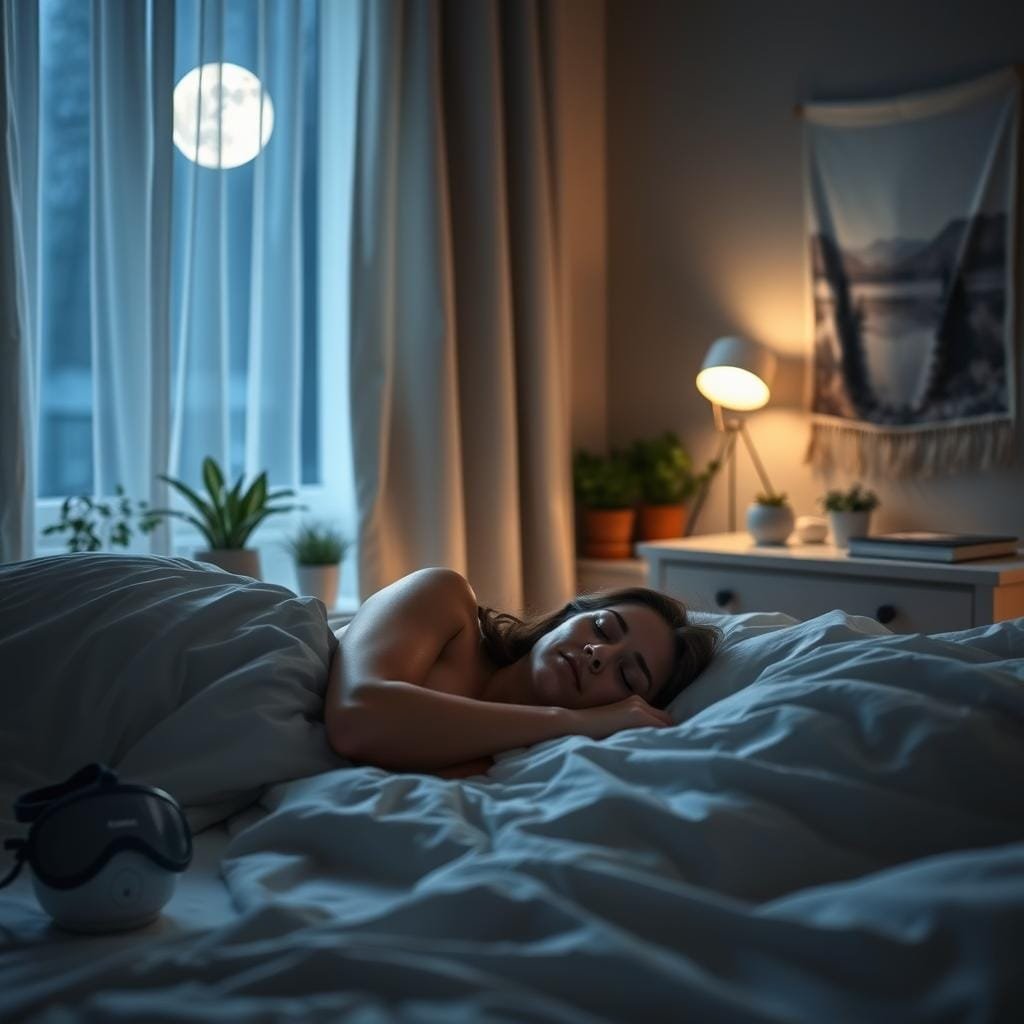
Many Americans toss and turn at night. Almost one in three people in the U.S. don’t get enough sleep. They need at least seven hours each night.
Not sleeping well can harm your body and mind. It raises your risk of serious health problems. These include depression, anxiety, heart disease, diabetes, and obesity. It’s not just about feeling tired the next day.
There’s good news. You don’t have to count sheep all night. Creating a sleep routine can help you fall asleep faster. These methods are backed by science and can make you sleep in minutes, not hours.
In this guide, we’ll share quick and effective sleep tips. These are for anyone who struggles with sleep, whether it’s occasional or all the time. These strategies can help you sleep better tonight.
Key Takeaways
- About 33% of Americans experience sleep deprivation, which can lead to serious health problems
- Adults need at least 7 hours of quality sleep per night for optimal health
- Falling asleep quickly is vital for your mental and physical health
- Having a regular bedtime routine can make you fall asleep faster
- Things like room temperature and lighting affect how well you sleep
- Simple breathing techniques can calm your nervous system and help you sleep faster
- Making small changes to your daily life can greatly improve your sleep
The Impact of Quick Sleep Onset on Your Health
Falling asleep fast is good for your health. It helps your brain and immune system work better. When you sleep quickly, your body gets more rest.
Sleep latency is how long it takes to fall asleep. Experts say 10-20 minutes is best. It means you’re tired but not too tired.
How Sleep Latency Affects Sleep Quality
How long it takes to fall asleep affects your sleep pattern. If it’s too long, you sleep less in important stages.
Long sleep latency can make sleep broken. Your brain might not get enough deep sleep. This is bad for your body and mind.
This can make you feel tired even after sleeping a lot. You might wake up a lot and not feel refreshed.
Benefits of Falling Asleep Quickly
Falling asleep fast is very good for you. Your brain gets better at remembering things and thinking clearly. You also feel happier.
Your body gets stronger when you sleep well. You make more antibodies to fight off sickness. This is because you sleep well.
Quick sleep helps your body control hunger better. This can help you avoid gaining weight and diabetes. Your heart also stays healthy with good sleep.
Stress goes down when you sleep fast. This makes you sleep better, which lowers stress more. This makes you healthier over time.
Understanding Common Sleep Obstacles
First, you need to know what keeps you awake. Many of us can’t sleep well, even when we’re very tired. Sleep problems affect nearly 70 million people. Finding out what stops you from sleeping is the first step to better sleep.
Physical Barriers to Rapid Sleep
Your body might be fighting sleep without you knowing. Chronic pain conditions like arthritis make it hard to find a comfy sleep spot. Even a little pain can stop your body from relaxing.
Problems like sleep apnea or allergies can wake you up often. These issues don’t let you sleep well and break up your night.
Hormonal changes, like during menopause, can cause night sweats. Caffeine, alcohol, or nicotine close to bedtime also mess with your sleep.
Psychological Factors Keeping You Awake
Your mind can be the biggest hurdle to sleep. Stress and anxiety make your body ready to fight, not relax. This makes it hard to fall asleep fast.
Thinking too much keeps you awake. Your brain might keep replaying things or worrying. This keeps you alert and awake.
Depression can also mess with your sleep. It can make you sleep too much or not enough. This makes it hard to break the cycle.
Environmental Sleep Disruptors
Your sleep space is key to falling asleep fast. Noise from outside or inside can keep your brain awake. Even small sounds can bother some people.
Light from screens or outside can also disrupt sleep. Your body is meant to sleep in the dark. Even a little light can mess with this.
Being too hot or cold, or having bad bedding, can also keep you awake. Most people sleep best in a cool room. The right mattress and pillows are important too.
| Sleep Obstacle Category | Common Examples | Primary Impact | Key Solution Approach |
|---|---|---|---|
| Physical | Chronic pain, caffeine, sleep apnea | Body discomfort, alertness | Medical intervention, lifestyle changes |
| Psychological | Anxiety, depression, racing thoughts | Mental hyperarousal | Relaxation techniques, therapy |
| Environmental | Noise, light, temperature | Sensory disruption | Bedroom optimization |
| Behavioral | Irregular schedule, screen time | Circadian rhythm disruption | Consistent sleep routine |
The Science Behind Falling Asleep Fast
Learning about sleep science can help you sleep better. It’s not just about closing your eyes. Your body has a special process for falling asleep.
Modernsleep scienceshows how we can influence our sleep. By understanding brain activity, hormone changes, and temperature, you can sleep better.
Your Brain’s Sleep Initiation Process
Thebrain sleep processstarts with a change in brain waves. Your brain moves from alert to relaxed waves. This is controlled by different brain parts.
Your hypothalamus helps control your sleep clock. The thalamus quiets down, making you less aware of the world.
The brainstem helps you fall asleep. But stress or irregular sleep can stop this process.Learn how to sleep fast.
The Role of Melatonin and Sleep Hormones
Melatonin is key for sleep. It increases when it’s dark, telling your body to sleep. This hormone keeps your sleep cycle in sync with the day.
Adenosine builds up during the day, making you sleepy. Caffeine blocks this, keeping you awake.
Cortisol, or the stress hormone, should go down at night. But stress can keep it high, making sleep hard.
| Sleep Hormone | Primary Function | Optimal Timing | Factors That Disrupt |
|---|---|---|---|
| Melatonin | Signals darkness and sleep onset | Rises 1-2 hours before bedtime | Blue light, irregular sleep schedule |
| Adenosine | Creates sleep pressure | Builds throughout waking hours | Caffeine, napping late in day |
| Cortisol | Promotes wakefulness | Lowest at midnight, peaks at dawn | Stress, anxiety, late-night exercise |
| Serotonin | Regulates sleep cycles | Converted to melatonin at night | Poor diet, chronic depression |
How Body Temperature Affects Sleep Onset
Yourbody temperature sleepconnection is key. Your body cools down in the evening, signaling sleep. This is a natural process.
Keeping your body cool helps you sleep. A cool bedroom is best, around 65-68°F (18-20°C). This is why some people wear socks or take a warm bath before bed.
Hands and feet help cool your body. As bedtime comes, they get warmer. This helps you sleep faster.
Creating Your Ideal Sleep Sanctuary

Making your bedroom perfect for sleep is very important. It’s not just about what you think or take. Your room’s setup can help you fall asleep fast.
Your bedroom should feel good to all your senses. It should also help your body get ready for sleep. When it’s just right, your room can teach your brain to relax.
Optimizing Bedroom Temperature
Temperature is key for falling asleep. The National Sleep Foundation says keep your room between 60-67°F (16-19°C). This cool temperature helps your body get ready for sleep.
In hot weather, use fans or cool mattress toppers. In cold weather, use blankets that you can take off. A cool room helps your body cool down, which is a sign of sleep.
Light Management for Better Sleep
Light affects your sleep hormone, melatonin. Even a little light can mess with your sleep.
Use blackout curtains or shades to block outside light. Cover up screens and use dim red lights if you need to. An eye mask can also help block light.
Try to avoid screens for at least 60 minutes before bed. Blue light glasses can help if you can’t avoid screens.
Sound Control Strategies
Noise can keep you awake. A quiet or soothing room helps your brain know it’s time to sleep.
If you like it quiet, try earplugs or soundproofing. But if you prefer some sound, background noises can help.
White noise machines or apps with nature sounds can block out loud noises. Some people like sleep headphones or smart speakers with timers.
Selecting Sleep-Promoting Bedding
Your mattress, pillows, and bedding affect your comfort and temperature. The right ones can help you fall asleep faster.
Choose a mattress based on how you sleep. Side sleepers need softness, while back and stomach sleepers prefer firmness.
Use breathable fabrics like cotton, bamboo, and linen. Here are some tips based on your sleep style:
| Sleep Position | Recommended Mattress | Ideal Pillow Height | Best Bedding Materials |
|---|---|---|---|
| Side Sleeper | Medium to soft | High (4-6 inches) | Cotton or bamboo |
| Back Sleeper | Medium-firm | Medium (3-5 inches) | Linen or Tencel |
| Stomach Sleeper | Firm | Low (2-3 inches) | Lightweight cotton |
| Combination | Medium | Adjustable | Moisture-wicking blends |
The Best Way to Sleep Fast: Military and Breathing Techniques
Looking for quick sleep? There are special methods, like military techniques and breathing exercises. They make bedtime better. These methods have been tested and work well.
Using these methods often can make you fall asleep faster. You might go from hours to just minutes. Let’s look at three top methods to help you sleep well tonight.
The Military Method Step-by-Step
The military sleep method was made in World War II. It helps U.S. Navy pilots sleep in two minutes, even when stressed. It works well, with 96% mastering it in six weeks.
- Relax your face, tongue, jaw, and eye muscles
- Drop your shoulders and relax your arms on both sides
- Breathe out slowly, relaxing your chest
- Relax your legs, starting from your thighs and working down
- Clear your mind for 10 seconds by imagining a relaxing scene
- If this doesn’t work, try saying “don’t think” repeatedly for 10 seconds
This method relaxes your body and clears your mind. It helps you relax like you’re about to sleep.
4-7-8 Breathing Technique
The 4-7-8 breathing method was made by Dr. Andrew Weil. It’s based on ancient practices. It calms your nervous system by increasing oxygen and slowing your body down.
The basic technique involves:
- Place the tip of your tongue against the ridge behind your upper front teeth and keep it there
- Exhale completely through your mouth, making a whoosh sound
- Close your mouth and inhale quietly through your nose to a mental count of 4
- Hold your breath for a count of 7
- Exhale completely through your mouth to a count of 8, making the whoosh sound
- Repeat this cycle three more times
Proper Positioning for Maximum Effect
For the best results, how you lie down matters. Lie on your back with your head slightly up. This keeps your airways open and prevents acid reflux.
If back-sleeping is hard, try your side with a pillow between your knees. Avoid stomach sleeping as it can strain your neck and make breathing hard.
Common Mistakes to Avoid
Even simple techniques can be done wrong. Watch out for these common errors:
- Breathing too shallowly or from your chest instead of your diaphragm
- Rushing through the counts—precision matters more than speed
- Giving up too soon—these techniques improve with consistent practice
- Trying too hard, which creates counterproductive tension
- Practicing only when you’re already struggling with insomnia
Box Breathing for Sleep
The box breathing technique, also called square breathing, is used by Navy SEALs and those with anxiety. Its pattern is easy to remember, even when tired.
To practice box breathing:
- Inhale slowly through your nose for a count of 4, feeling your lungs fill completely
- Hold your breath for another count of 4
- Exhale through your mouth for a count of 4, emptying your lungs completely
- Hold your breath again for a final count of 4
- Repeat for at least 4 complete cycles
This technique activates your parasympathetic nervous system. It’s your body’s “rest and digest” mode. The equal timing creates a calming rhythm that helps you sleep while reducing stress hormones.
Practice these techniques often, not just when you can’t sleep. With regular use, they become automatic signals to your body that it’s time to sleep. This makes falling asleep smoother and faster each time.
Body Relaxation Methods for Rapid Sleep
Body relaxation techniques are great for falling asleep fast without drugs. When your mind is racing but your body is tense, sleep is hard to get. Physical relaxation techniques help by easing the tension that keeps you awake. They focus on the physical part of sleep problems that many miss.
Our bodies hold tension in different ways. Some people clench their jaw, others tighten their shoulders. By letting go of this tension, you make it easier to fall asleep fast. Here are three methods that can change how you sleep.
Progressive Muscle Relaxation Guide
Progressive muscle relaxation (PMR) is a method that involves tensing and then relaxing muscles. It helps your body feel and release hidden tension. Studies show that progressive muscle relaxation can make falling asleep faster when done regularly.
This method makes you aware of the difference between tense and relaxed muscles. Many people hold muscle tension without knowing it, often when stressed. By tensing and then relaxing muscles, you learn to release this hidden tension.
Full-Body PMR Sequence
For the best results, follow this sequence while lying in bed:
- Start with three deep breaths, inhaling through your nose and exhaling through your mouth
- Tense your forehead by raising your eyebrows for 5 seconds, then release and feel the warmth spreading
- Clench your jaw for 5 seconds, then relax, noticing the heaviness
- Shrug your shoulders toward your ears for 5 seconds, then drop them down
- Continue down your body: arms, hands, abdomen, buttocks, thighs, calves, and feet
- For each area, hold the tension for 5 seconds, then release for 10 seconds
Body Scanning Meditation
Body scanning meditation is a softer way to relax than PMR. It doesn’t need tensing muscles. This mindfulness method scans your body from head to toe, noticing feelings without judgment, and letting go of tension.
To practice, lie comfortably and focus on each part of your body. Start at the top of your head and move down slowly. If you feel tension, imagine it melting away with each breath. This method is great for those who find focusing on body sensations helps quiet their mind.
Acupressure Points for Sleep
Acupressure for sleep uses traditional Chinese medicine to relax. A 2019 study found that acupressure can make falling asleep faster and improve sleep quality. Three key points include:
- Spirit Gate (HT7) – On the wrist crease on the little finger side. Press gently for 2-3 minutes.
- Inner Frontier Gate (PC6) – Three finger-widths from your wrist crease on the inner forearm. Press for 2-3 minutes.
- Wind Pool (GB20) – At the base of your skull, in the hollows on both sides of your neck. Press with your thumbs for 1-2 minutes.
These methods work best when part of your bedtime routine. Try each one to see which works best for you. Many people mix them—starting with acupressure, then a body scan, and ending with PMR—to fall asleep quickly.
Crafting a Sleep-Inducing Bedtime Routine
Falling asleep fast is not just about what you do in bed. It’s about how you prepare your mind and body first. A bedtime routine tells your brain it’s time to sleep. This helps you fall asleep faster.
Think of your pre-sleep ritual as a bridge to a good night’s sleep. These routines help you sleep better. They can even help those who have trouble sleeping.
The 60-Minute Pre-Sleep Timeline
The best evening wind-down starts an hour before bed. This time lets your body and mind relax.
- 60 minutes before bed: Turn off electronic devices or switch them to night mode. This helps your brain make melatonin.
- 45 minutes before bed: Take a warm shower or bath. This makes your body cool down like when you sleep.
- 30 minutes before bed: Do something calming like reading or stretching.
- 15 minutes before bed: Dim the lights and relax a bit.
- 5 minutes before bed: Get into bed and relax with deep breathing.
Calming Activities to Include
Not all pre-sleep activities are good for sleep. The best ones calm you down without making you bored.
Reading physical books is great for sleep. It reduces stress and helps you relax.
Gentle stretching or yoga at night helps release tension. Do slow movements and deep breathing.
Writing in a gratitude journal is also good. It makes you think positive thoughts and improves sleep.
Habits That Sabotage Sleep Onset
Even the best bedtime routine can be ruined by bad habits. Eating too much or spicy food before bed is bad.
Screen time is a big sleep saboteur. The blue light from screens stops melatonin production.
Stress from late-night talks or work is also bad. Try to talk or work earlier in the day.
Being inconsistent with your routine is also bad. Your body likes routine for sleep. Try to keep your sleep schedule the same every day.
Mind-Quieting Tactics for Busy Brains
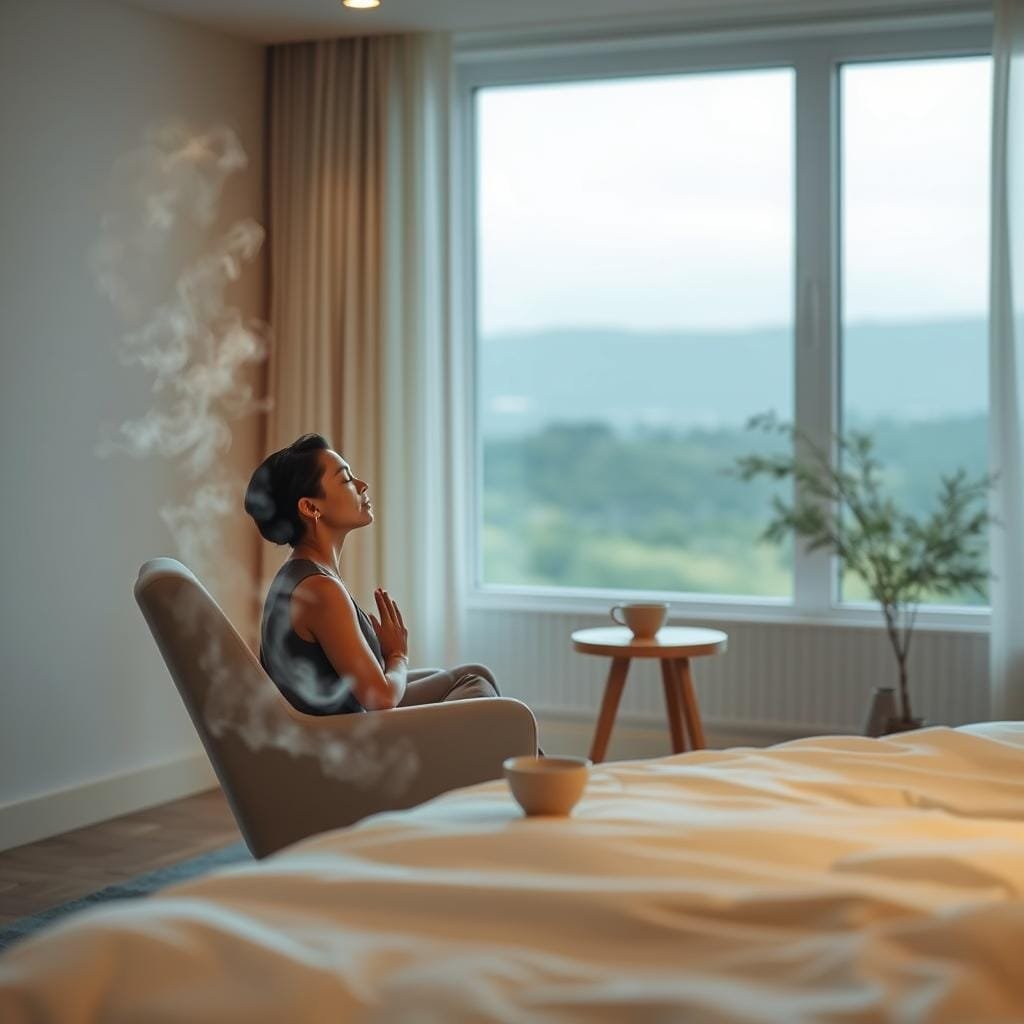
Many people struggle to fall asleep because their minds won’t slow down. Lying in bed with racing thoughts can be very hard. Mental relaxation techniques help by giving your brain something else to think about.
Studies show these methods can make falling asleep much faster. Let’s look at some ways to calm your mind at night.
Guided Imagery Scripts for Sleep
Guided imagery uses your imagination to relax and sleep. It helps by focusing on peaceful scenes instead of worries.
Imagine yourself on a quiet beach. Feel the sand, hear the waves, and breathe with the ocean. This can make you fall asleep 20 minutes faster.
Make your mental picture as real as possible. The more vivid it is, the better it works.
The “Brain Dump” Journaling Method
Writing down tomorrow’s tasks or worries can calm your mind. This method is called the “brain dump.”
Keep a notebook by your bed and write for 10-15 minutes. It helps by letting your brain release worries.
Write without stopping or organizing. This makes your mind feel lighter and ready for sleep.
Thought-Stopping Techniques
Thought-stopping techniques can stop racing thoughts. They interrupt cycles that keep your brain awake.
Try the “stop” technique. When your mind starts racing, shout “STOP!” and breathe deeply. This breaks the cycle and helps you sleep.
Another method is paradoxical intention. Briefly focus on unwanted thoughts, then let them go. This can help you relax.
Studies show sleep meditation with these techniques improves sleep. It’s not just a quick fix but a lasting solution.
By using these tactics, you can quiet your mind and sleep better. Remember, practice makes them more effective.
Nutrition and Supplements for Faster Sleep
Choosing the right foods and supplements can help you sleep faster. What you eat before bed affects how quickly you fall asleep. Knowing how nutrition and sleep are linked can guide you to make better food choices. This way, you can sleep quickly without needing medicine.
Sleep-Promoting Foods and Timing
Some foods naturally help your body get ready for sleep. Foods with tryptophan (like turkey, chicken, eggs, and cheese) help make serotonin and melatonin. These are important for sleep.
Magnesium-rich foods like dark greens, nuts, and seeds relax muscles and calm the nervous system. Whole grains with these foods help tryptophan get into your brain better.
Eating your last big meal 2-3 hours before bed is key. If you get hungry later, choose a snack with carbs and protein. A banana with almond butter or whole-grain cereal with milk is good.
Beverages That Help or Hinder Sleep
Drinks can also affect your sleep. Herbal teas like chamomile, valerian, and passionflower help you relax and sleep. Drink them 30-60 minutes before bed.
Warm milk is also a traditional sleep aid. It has tryptophan and calcium, which help make melatonin.
But, some drinks can hurt your sleep. Avoid caffeine for at least 6 hours before bed. This includes coffee, tea, chocolate, and some meds. Alcohol might make you sleepy at first but can disrupt your sleep later. Sugary drinks can also mess with your sleep patterns.
Evidence-Based Natural Sleep Aids
Melatonin supplements are well-studied for sleep. They signal your body to sleep. Start with a small dose (0.5-1mg) 30 minutes before bed. You can increase it if needed.
Valerian root can also help with sleep. It’s best taken 30-60 minutes before bed. Magnesium supplements (200-400mg) can help those with deficiencies sleep faster by relaxing muscles and regulating neurotransmitters.
L-theanine, found in tea, promotes relaxation without making you drowsy. Take 200-400mg before bed. Always talk to a healthcare provider before starting any supplements, as they can affect different people in different ways.
Mastering Quick Sleep in Challenging Situations
Life doesn’t always give us perfect places to sleep. When traveling, make a mini-routine. Bring small comforts like a pillow case or sleep sounds on your phone.
Dealing with noise? Use earplugs or earbuds to block sounds. White noise apps can also help. A sleep mask adds extra protection.
Stress can keep you awake. Try the paradoxical intention technique. Instead of trying to sleep, stay awake. This can help you relax and sleep better.
Insomnia can happen when life changes. Stick to good sleep habits. Keep your sleep schedule the same, even when things are busy. Use breathing and muscle relaxation to help you sleep.
Finding the best way to sleep fast is unique to you. Try different techniques from this guide. If sleep problems last more than two weeks, talk to a doctor. They can help you sleep better.