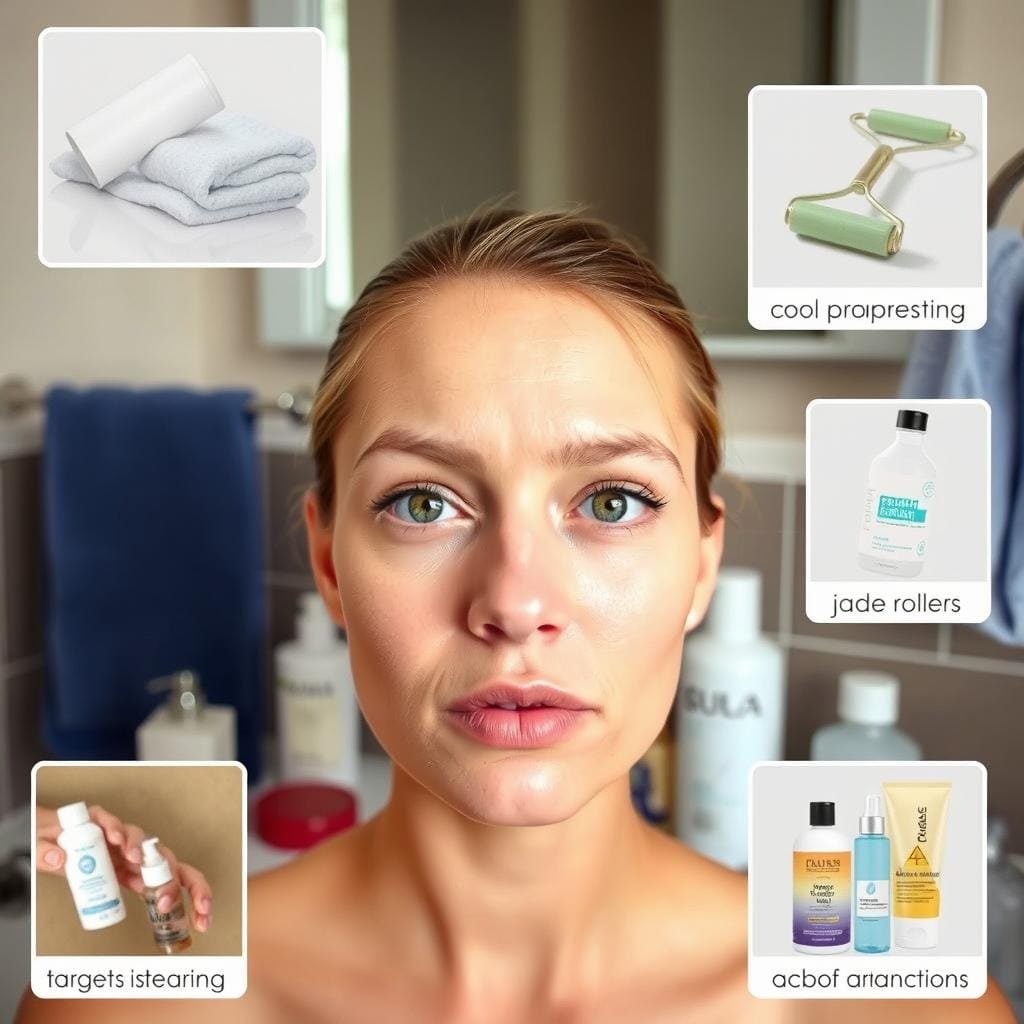
Ever looked in the mirror and saw a puffy face? Morning facial bloating is common and can ruin your morning. It happens when your body holds onto water while you sleep.
But don’t worry, a puffy face usually goes away as you start moving. Gravity helps push out the extra water. Knowing why it happens can help you fix it.
Many things can make your face swell in the morning. How you sleep is a big factor. Sleeping flat lets water gather around your eyes and cheeks.
What you eat before bed also matters. Eating salty foods or drinking alcohol can make it worse.
While a little morning puffiness is okay, it’s not good if it keeps happening. It might mean there’s something wrong that needs a doctor’s check. But the good news is, small changes in your life can help a lot.
Key Takeaways
- Fluid retention during sleep is the primary cause of morning facial puffiness
- Sleeping position significantly impacts how fluid accumulates in facial tissues
- Dietary factors like salt intake and alcohol consumption can worsen swelling
- Most morning facial bloating resolves naturally as the day progresses
- Simple home remedies can help reduce puffiness quickly
- Persistent or severe swelling may indicate underlying health conditions
Understanding Morning Facial Bloating
Waking up with a puffy face is common. It can be just water moving around or a sign of health problems. Knowing why your face looks puffy in the morning helps decide if you need to see a doctor.
Facial bloating happens when your face holds too much water at night. This can happen to anyone, but some people might get it more often.
Before trying to fix your puffy face, figure out if it’s just a normal thing or something serious. Let’s look at the main differences and how to tell what’s going on.
The Difference Between Temporary and Chronic Puffiness
Temporary facial puffiness is usually not a big deal. It looks worse when you wake up but goes away as the day goes on. This is because your body moves the water around.
This swelling is more noticeable around your eyes and cheeks. It might feel tight or full, but it doesn’t hurt.
Chronic facial swelling stays all day or gets worse. It can hurt, feel warm, or look uneven. It’s different from morning puffiness.
| Characteristic | Temporary Puffiness | Chronic Swelling |
|---|---|---|
| Duration | Resolves within hours | Persists throughout day |
| Symmetry | Generally even | Often asymmetrical |
| Discomfort | Minimal to none | May include pain/tenderness |
| Associated symptoms | None | Possible redness, warmth |
How to Assess Your Morning Facial Bloating
To figure out your morning puffiness, watch how it looks and feels. Note when it happens, how long it lasts, and if it hurts or itches.
Ask yourself these questions:
- Does your facial puffiness go away by mid-morning or early afternoon?
- Is the swelling even on both sides of your face?
- Does eating certain foods or drinks make it worse?
- Does sleeping in a certain way make your puffiness worse?
- Does the swelling spread to your neck or other parts of your body?
If your puffiness doesn’t go away, gets worse, or hurts a lot, see a doctor right away. These are warning signs.
For most people, puffiness is just from salty food, bad sleep, or drinking too much. Knowing what makes it worse helps you avoid it.
The Science Behind Facial Fluid Retention
Morning facial puffiness comes from how your body handles fluids and gravity. That swollen look in the mirror is real. It’s about how fluids move in your body while you sleep. Knowing this can help you fix the problem, not just cover it up.
Your body manages fluids all day long. When you’re standing, fluids go down because of gravity. But when you lie down, fluids move to your face.
Gravity and Horizontal Sleep Positions
Changing from standing to lying down changes how gravity works on your body. In an upright position, fluids go to your legs. But lying down, fluids spread out, including to your face.
Thin skin and loose tissue, like around your eyes and cheeks, get affected. This is why you might seepuffy bags under your eyes in the morning.
Sleeping face-down or on your side can make swelling worse. These positions can block fluid drainage. Sleeping on your back with your head up helps keep fluids from building up.
The Lymphatic System’s Overnight Function
Your lymphatic system is key in managing fluid balance, including in your face. Unlike your heart, it doesn’t have a pump. It relies on muscle movement to move fluid.
When you sleep, your body moves less, slowing down fluid drainage. This means fluids stay in your face longer, making it puffy in the morning.
The lymphatic vessels in your face are very delicate. Without movement, they get slow, making puffiness worse. Washing your face or massaging it gently can help by getting the lymphatic system moving.
When you start moving after waking, your lymphatic system kicks in. Muscle movements help push fluid through your body, reducing puffiness as you go about your day.
Common Causes of Face Bloated in the Morning
Waking up with a puffy face? It’s often due to what you ate or how you slept. Knowing why helps fix it.
Dietary Triggers
Evening snacks and drinks can make your face swell. Some foods and drinks make your body hold onto water.
Salt Consumption and Water Retention
Eating too much salt makes your face puffy. Salt-heavy foods like pizza make your body hold onto water. This is because your body needs to keep the right balance of salts.
Drinking salty things at night makes morning puffiness worse. Your body can’t get rid of extra salt before you wake up.
Evening Alcohol and Its Effects
Drinking alcohol before bed makes your face puffy. It makes you pee a lot and then holds onto water. This is because your body tries to make up for the lost water.
Alcohol also makes your skin inflamed. This makes your face look even puffier the next morning.
Sleep Position Impact
How you sleep affects your face. Gravity plays a big role in how your face looks in the morning.
Sleeping on your back makes your face even. But sleeping on your side can make one side puffier. Sleeping with your face down is the worst because it blocks the flow of fluids.
Your pillow is important too. The right pillow helps keep your head up and fluids from pooling. The wrong pillow can make your face puffier.
Medical Conditions That Contribute to Facial Bloating
Some health issues can make your face puffy. Allergies and sinus infections cause swelling. Hormonal changes can also make your face puffier.
Heart or kidney problems can make your face swell too. If your face is always puffy, see a doctor. They can help figure out why.
How Your Sleep Habits Affect Morning Facial Puffiness

Morning facial bloating is linked to how you sleep. The way you sleep affects how fluids move in your body, including your face. Bad sleep habits can make your face look puffy and swollen in the morning.
Understanding how sleep affects your face can help you fight morning puffiness. It’s a powerful way to tackle this common issue.
Sleep Duration and Quality Connection
How much and how well you sleep affects your face’s puffiness. Sleep deprivation makes your body produce more cortisol, a stress hormone. This can cause inflammation and water retention, making your face look puffy.
A study in the journal Sleep showed poor sleep makes your face look older. Even one bad night can make your face look bloated the next morning.
Not getting enough sleep, less than 7-8 hours, messes with your body’s fluid balance. This can make your face and eyes look puffy.
Your sleep position also plays a big role. Sleeping face-down can make your face look puffy because of gravity. Side sleepers might see puffiness on the side they sleep on.
Elevated Head Sleeping Techniques
One great way to avoid morning puffiness is to sleep with your head up. This stops fluid from building up in your face.
Try to keep your head 15-20 degrees above your heart. You can use extra pillows or a wedge pillow for this. This helps your lymphatic system drain properly while you sleep, reducing puffiness.
Here are some tips for sleeping with your head elevated:
- Stack two firm pillows under your head and neck
- Use a specialized wedge pillow designed for upper body elevation
- Ensure your neck remains properly aligned to avoid strain
- Consider a cervical support pillow that elevates while supporting neck curvature
The pillow you choose can really help prevent puffiness. Here’s a look at different pillow options:
| Pillow Type | Elevation Level | Benefits for Facial Puffiness | Best Sleep Position |
|---|---|---|---|
| Standard Pillow (Stacked) | Moderate | Basic elevation, inconsistent support | Back sleeping |
| Wedge Pillow | High | Consistent elevation, excellent drainage | Back sleeping |
| Cervical Pillow | Moderate | Neck alignment plus elevation | Back or side sleeping |
| Adjustable Base Bed | Customizable | Perfect elevation control, whole upper body support | Any position |
Dietary Influences on Morning Facial Bloating
What you eat at dinner can affect how your face looks in the morning. Different foods can cause inflammation and water retention. This can make your face look puffy.
Foods That Cause Water Retention
High-sodium foods lead to facial bloating. Your body holds onto water to keep sodium levels right. This water settles in your face at night.
Processed meats, salty snacks, and fast food are high in sodium. Even some healthy foods like canned soups can have a lot of salt.
Refined carbs and sugary foods also cause puffiness. They make blood sugar spike, leading to inflammation and water retention. Alcohol dehydrates and causes inflammation too.
Optimal Hydration Timing and Amount
Drinking water all day helps prevent morning puffiness. It helps flush out sodium. But, don’t drink too much before bed.
Drink 6-8 glasses of water a day. Spread it out, not all at once. Most should be before evening.
Don’t drink much water 2-3 hours before bed. This helps avoid fluid retention. Lemon or cucumber in water can help reduce bloating.
Anti-Inflammatory Diet Recommendations
An anti-inflammatory diet can help reduce morning puffiness. Eat foods rich in omega-3s like salmon and walnuts. They fight inflammation.
Fruits and veggies are full of antioxidants. Berries, leafy greens, and orange or red produce are great. Turmeric and ginger are also good for fighting inflammation.
Green tea is anti-inflammatory and helps with fluid. Dark chocolate (70% cocoa or higher) is good too. Eating these foods can make your face look better in the morning.
Immediate Solutions for a Bloated Face in the Morning
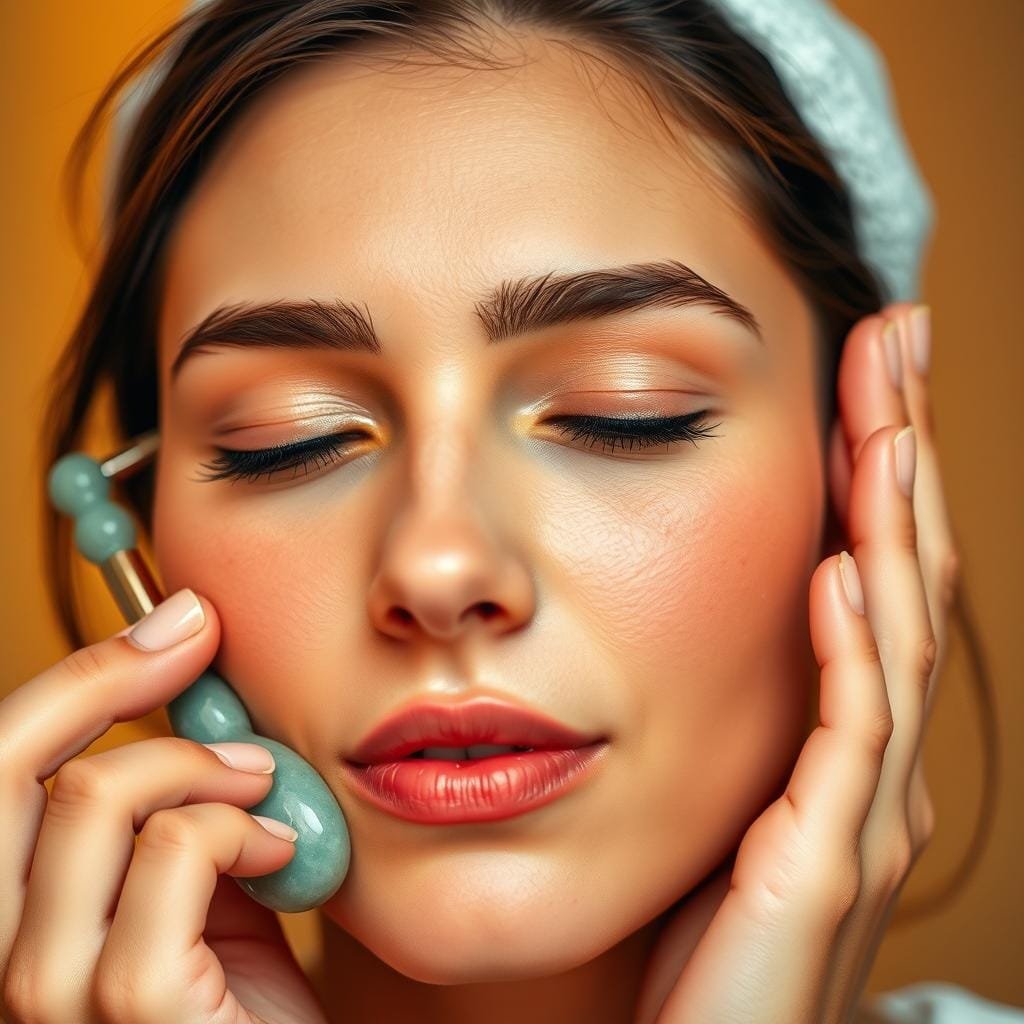
Find quick fixes for morning facial puffiness. When you’re short on time but need fast results, these methods can help reduce morning face bloating. They use temperature therapy, massage, and special products to make your face look and feel better after waking up.
Cold Therapy Applications
Cold therapy is a top choice for quick facial puffiness relief. The cold tightens blood vessels, reducing swelling. This natural action quickly makes your face look less puffy.
Using cold therapy for facial puffiness in the morning boosts your lymphatic system. It also wakes you up with a cool feeling, making you feel alert and refreshed.
Ice rollers are great for morning de-puffing. Keep the roller cold overnight and roll it on your face for 3-5 minutes. For a DIY fix, use ice cubes in a cloth or frozen spoons on puffy spots. Cold compresses also work well.
Refrigerated Skincare Products
Chill some skincare products in the fridge for better de-puffing. Eye creams and serums with caffeine, peptides, or aloe vera work best when cold. Cold gel moisturizers and sheet masks also help. Use gentle patting motions to apply these products.
Lymphatic Drainage Massage Techniques
Lymphatic drainage massage is a soft way to move fluid away from puffy areas. It boosts the lymphatic system, which removes waste and toxins. This massage can quickly reduce morning facial bloating.
To do a basic facial lymphatic massage:
- Start with clean hands and apply a facial oil or serum for slip
- Use your fingertips to make gentle sweeping motions from the center of your face outward
- Pay special attention to the under-eye area, using your ring finger to lightly tap from the inner corner outward
- Massage along your jawline toward your ears, then down the sides of your neck
- Finish by gently pressing on the lymph nodes behind your ears and at the base of your neck
For better results, use a gua sha tool or jade roller. These tools stay cool and apply even pressure. Spend about 5 minutes on this massage for noticeable de-puffing effects.
Emergency De-Puffing Products
For quick fixes, use de-puffing products made for emergencies. These products have fast-acting ingredients that reduce swelling and make your face look better.
Caffeine eye creams are great for under-eye bags. They shrink blood vessels and boost circulation. Peptide serums strengthen skin and reduce fluid. Hyaluronic acid products draw moisture into deeper layers, reducing puffiness.
| Solution Type | Time to Results | Best For | Key Ingredients |
|---|---|---|---|
| Cold Compress | 5-10 minutes | Overall facial puffiness | N/A (temperature is the active element) |
| Lymphatic Massage | 5-15 minutes | Fluid retention | Facial oils for slip |
| Caffeine Eye Cream | 10-20 minutes | Under-eye bags | Caffeine, peptides |
| De-puffing Mask | 15-20 minutes | Whole face treatment | Aloe, cucumber, green tea |
For the best results, mix these emergency solutions. Start with a cold compress, then do a quick lymphatic massage, and end with a de-puffing product. This combo tackles bloating from all sides for faster, more noticeable results.
Long-Term Strategies to Prevent Morning Facial Bloating
Fixing puffiness right away is good, but stopping it before it starts is better. Making lasting changes in your life can help you wake up with less swelling. Focus on habits that stop fluid buildup before it shows as puffiness.
Evening Routine Adjustments
What you do before bed affects your face in the morning. Eat your last meal 3 hours before bed to avoid fluid buildup. Drinking water early in the day helps too.
Try a gentle massage on your face before bed. Use your fingers to massage your jaw, cheeks, and eyes. This helps move fluid away from your face.
Use an extra pillow to keep your head up. This helps fluids not pool in your face. Side sleepers might need a special pillow to keep their face right.
Anti-Puffiness Skincare Ingredients
Some skincare ingredients can fight facial bloating. Look for caffeine in products to reduce swelling. Peptides help your skin stay firm and elastic.
Niacinamide strengthens your skin and improves blood flow. Green tea, witch hazel, and ginkgo biloba are good for reducing inflammation. Use these products in the right order so they absorb well.
| Ingredient | Primary Benefit | Best Application Time | Product Types |
|---|---|---|---|
| Caffeine | Constricts blood vessels, reduces fluid retention | Morning/Evening | Eye creams, serums |
| Peptides | Improves skin elasticity and firmness | Evening | Serums, moisturizers |
| Niacinamide | Strengthens skin barrier, improves circulation | Morning/Evening | Serums, toners |
| Green Tea Extract | Anti-inflammatory, antioxidant protection | Morning | Toners, mists |
When Medical Intervention May Be Necessary
Some puffiness is normal, but some signs need a doctor. See a doctor if swelling is uneven, painful, red, or warm. This could mean an infection or inflammation.
Long-lasting puffiness might mean a bigger health issue. Like thyroid problems, allergies, or kidney issues. If you also notice weight changes, feel tired, or pee differently, see your doctor.
You might see a dermatologist, allergist, or endocrinologist. They can do tests to find out why you’re bloated. They’ll help you get the right treatment.
Products and Tools to Combat Morning Facial Puffiness
Getting rid of morning facial puffiness is easier with the right tools. The beauty world has come up with new ways to fight fluid retention and swelling. Knowing which products work can save you time and money.
Effective Skincare Formulations
Good anti-puffiness skincare has special ingredients. Caffeine-infused eye creams are great because they shrink blood vessels and lessen swelling. Products with peptides make skin stronger, and niacinamide fights inflammation.
Natural options can also help. Soaking black or oolong tea bags in warm water, then cooling them, and placing them on your eyes is amazing. The caffeine in these teas helps narrow blood vessels and cuts swelling fast.
Cucumber slices are also good because they’re anti-inflammatory and full of water. They help calm puffy skin. Serums with hyaluronic acid hydrate without making skin feel heavy.
Facial Massage Tools and Techniques
Facial massage tools have changed home skincare. Jade rollers and gua sha tools move fluid away from your face with gentle strokes. Keep them cold for better results.
Stainless steel ice rollers cool your skin, shrinking blood vessels and reducing swelling. Electronic facial massagers vibrate, improving circulation and breaking up fluid.
How you use the tool is key. Start in the middle of your face and move up and out. This helps get rid of morning bloat.
| Massage Tool | Best For | Temperature | Technique | Results Timeline |
|---|---|---|---|---|
| Jade Roller | General puffiness | Refrigerated | Gentle rolling upward | 5-10 minutes |
| Gua Sha | Defined contours | Room temperature | Scraping at 45° angle | Immediate to 24 hours |
| Ice Roller | Severe puffiness | Frozen | Roll in outward motions | Immediate |
| Electronic Massager | Deep tissue fluid | Room temperature | Circular vibrating motions | 15-20 minutes |
Specialized Pillows and Sleep Accessories
Your sleep setup affects morning facial bloating. Wedge pillows use gravity to keep fluid from your face. Look for a 10-15 degree angle for best results.
Memory foam pillows support your head without pressure. This helps prevent fluid retention and sleep lines. Side sleepers need pillows with cutouts to keep their face up.
Silk pillowcases are better than cotton because they’re less rough. They reduce pressure on your skin. Some even have copper for extra anti-inflammatory benefits.
Creating Your Personal Morning De-Puffing Routine
Now that you know what causes facial bloating, it’s time to make your own morning routine. First, find out what makes your face puffy. Is it salt, how you sleep, or allergies? Then, make your routine fit your needs.
Begin with cold water to shrink blood vessels. Then, use your fingers or a jade roller for upward strokes. This helps get rid of water in your by moving lymph fluid.
Here are the key steps for your routine:
1. Drink a full glass of water as soon as you wake up. It helps get rid of extra sodium.
2. Use a cold pack or cool eye masks for 5-10 minutes.
3. Apply products with caffeine or peptides to make your skin tighter.
4. Massage your face, focusing on your cheeks and under your eyes.
5. Have a low-sodium breakfast with foods that fight inflammation.
On busy mornings, focus on cold therapy and massage. For long-term results, change your evening habits. Sleep better and eat less salt at dinner.
Being consistent is important. Your morning routine will work better if you do it every day. By taking care of your face in the morning and evening, you can look great every day.