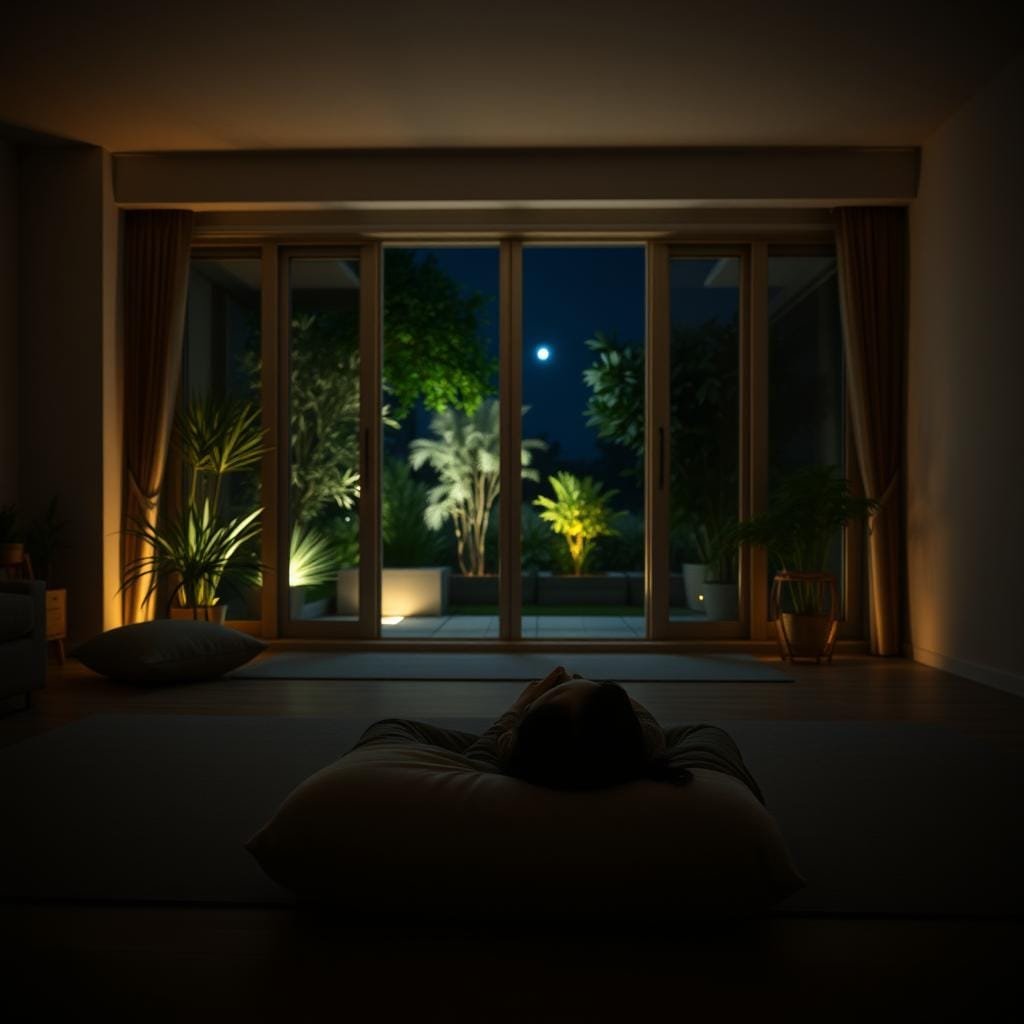
Tossing and turning at night can make you very tired and upset. You’re not the only one – many adults worldwide have trouble sleeping. Instead of medicines, mindfulness is a natural way to help.
Mindfulness calms your mind and relaxes your body. This makes it easier to sleep. It works by making your body relax and lower stress hormones.
This guide shows you research-backed relaxation methods for sleepless nights. You’ll find easy techniques for beginners and more for long-term sleep issues. These methods are better than pills because they’re safe and work long-term.
By the end of this article, you’ll know how to make bedtime better. These mindfulness tips help you sleep better and feel better overall.
Key Takeaways
- 35-50% of adults worldwide regularly experience symptoms of sleeplessness
- Mindfulness practices address the underlying causes of sleep difficulties
- Research shows relaxation techniques can improve both sleep quality and duration
- Unlike medication, mindfulness approaches offer sustainable solutions without side effects
- Simple techniques can be implemented tonight to begin improving your sleep
- Consistent practice leads to lasting improvements in sleep architecture
Understanding the Sleep-Meditation Connection
The sleep-meditation connection shows how old practices help with today’s sleep issues. When you meditate, your body gets ready for sleep in many ways. It makes more melatonin, the sleep hormone, and serotonin.
It also lowers your heart rate and blood pressure. And it turns on parts of the brain that help you sleep.
The Neuroscience of Insomnia
From a neuroscience perspective, insomnia is more than just being awake. Brain scans show that people with insomnia have too much activity in alertness areas. They have too little in sleep areas.
This makes it hard to fall asleep. People with chronic sleep problems have a nervous system that’s always on. This makes it hard to relax and sleep.
How Meditation Affects Brain Waves During Sleep
Meditation changes your brain waves during sleep. It moves your mind from active thinking to relaxed alertness. Then to drowsiness, which is a step towards sleep.
Studies show that meditation increases GABA, a relaxer in the brain. It also changes the brain’s paths over time. This makes it easier to sleep.
Unlike sleep meds that stop working, meditation gets better with time. It’s a lasting way to solve sleep problems.
Why Traditional Sleep Solutions Often Fail
Many people with insomnia try quick fixes that don’t help. These fixes can make sleep problems worse. They mess with how our body sleeps naturally.
The Downside of Sleep Medications
Some sleep medicines are okay for a short time. But they can lead to big problems. Users might need more and more of the medicine.
These medicines can also make you feel very tired the next day. You might feel confused and have trouble remembering things. This is because they mess with the good sleep stages.
The Sustainable Nature of Meditation Practices
Meditation is different from medicines. It helps fix the real reasons for sleep trouble. It helps your body learn to sleep better without getting stuck.
Some people try to fix sleep by napping or drinking alcohol before bed. But these things can mess up your body’s sleep clock. Meditation works with your body’s natural sleep clock.
Meditation gets better with practice. It helps you sleep better over time. This is unlike medicines that stop working after a while. Meditation is a better choice for long-term sleep health.
The Science Behind Meditation for Insomnia
Meditation helps with insomnia, and science proves it. Studies show it changes sleep in big ways. We learn more about how it works on our brains and sleep.
Research-Backed Evidence
Studies have shown meditation helps sleep a lot. A big study in 2018 looked at 18 trials. It found meditation makes sleep better and keeps it that way for months.
Harvard and University of Massachusetts found big benefits too. They saw less insomnia and faster sleep times. These studies show meditation helps calm the mind and body.
How Meditation Reduces Cortisol and Anxiety
Meditation is great for stress hormones. It helps balance the body’s stress system. This is key for better sleep.
Stress keeps cortisol high at night, making sleep hard. Meditation lowers cortisol. It helps you relax and sleep better.
Meditation’s Impact on Sleep Architecture
Meditation does more than just help you sleep. It makes your sleep better all night. It changes how you sleep in good ways.
Studies show meditators sleep deeper and better. They wake up feeling refreshed. Meditation changes sleep quality in big ways.
Setting Up Your Mind and Environment for Sleep Success
Getting your sleep area and mind ready is key to using meditation to fight insomnia. When these things work together, your body knows it’s time to relax. This makes your meditation better.
Creating a Sleep Sanctuary
Your bedroom should be a sleep sanctuary that tells your brain it’s time to rest. Darkness is very important, more so as you get older. Even a little light can mess with your sleep.
Use blackout curtains or a sleep mask to keep it dark. The room’s temperature is also important. It should be cool, between 65-68°F (18-20°C). This helps you sleep better.
Try to keep the room quiet with earplugs or a white noise machine. Don’t have any devices that give off blue light or electromagnetic fields. These can mess with your sleep.
The Ideal Timing for Sleep Meditation
When you meditate is very important. Studies say do it 1-2 hours before bed for the best results. This lets your body relax while it’s ready to sleep.
Be consistent with your meditation time. Your body likes routine. So, try to meditate at the same time every night.
Essential Props and Supports
The right meditation props can really help:
- A good meditation cushion or chair that keeps you comfortable
- Weighted blankets (7-12% of your body weight) for calming
- Aromatherapy like lavender or chamomile to help you sleep better, as research shows
- Wear loose, comfy clothes that won’t bother you
Keep changing your sleep area and routine to find what works for you. Even small changes can make a big difference in your sleep and meditation.
5 Beginner-Friendly Meditation Techniques for Falling Asleep
When insomnia hits, these five easy meditation techniques can help you sleep better. They calm your body and mind, keeping you from thinking about what’s keeping you awake. Pick the one that feels right to you, and remember, the more you practice, the better you’ll get.
Body Scan Meditation Step-by-Step
The body scan meditation helps release tension you might not even know you’re holding. First, make your bedroom quiet and phone-free. Lie down and breathe deeply.
Start with your head, feeling any tightness in your face. Relax each part before moving to your neck and shoulders. Keep going down to your arms, chest, hips, legs, and feet.
If your mind drifts off, it’s okay. Just bring it back to the part of your body you were focusing on. Imagine any tension leaving with each breath.
4-7-8 Breathing Technique
This breathing technique for sleep was made by Dr. Andrew Weil. It calms your nervous system. Keep your tongue against the roof of your mouth during the exercise.
Exhale fully through your mouth, making a sound. Then, inhale quietly through your nose for 4 counts. Hold for 7 counts. Exhale for 8 counts. Do this three times more.
Guided Visualization for Sleep
Guided sleep visualization uses your imagination to relax. Imagine a calm place, like a quiet beach or a peaceful forest. Use all your senses to feel the setting.
Or, picture yourself going down a staircase, getting more relaxed with each step. For beginners, try guided meditations to help you get started.
Counting Meditation
The counting meditation is simple and great for beginners. Lie down and count backward from 100. Just focus on the numbers to keep your mind busy.
Try counting by 3s or 7s for a bit more challenge. If you lose count, start again without worrying about it.
Mindful Breathing for Sleep
This technique combines mindfulness with breathing awareness. Lie down and put one hand on your chest and the other on your belly. Watch your breath without trying to change it.
When thoughts pop up, just notice them and come back to your breath. This teaches you to watch your thoughts without getting caught up in them.
Advanced Meditation Practices for Chronic Insomnia

People with chronic insomnia might find these advanced meditation methods helpful. They need more effort but can lead to big benefits. These benefits might help you stop using sleep medicines.
Yoga Nidra (Yogic Sleep) Protocol
Yoga Nidra, or “yogic sleep,” is a deep meditation. It takes you through different mind states while you stay awake. This powerful relaxation technique makes your brain act like it’s sleeping.
The steps include setting an intention, rotating your consciousness, focusing on your breath, and imagining opposites. A session lasts 20-45 minutes. It can feel as refreshing as a full night’s sleep.
Progressive Muscle Relaxation Method
This method helps you find and release hidden tension. It’s about tensing and then relaxing each muscle group, from your toes to your head.
Begin by tensing your feet for 5-7 seconds, then relax. Feel the difference. Move up through your body, relaxing each part. This reduces physical restlessness that keeps you awake.
Mindfulness-Based Stress Reduction for Sleep
MBSR for sleep is a special version of the 8-week program. It includes sitting meditation, body scans, and mindfulness in daily life.
This method helps with the hyperarousal state of chronic insomnia. It trains your mind to watch thoughts without getting caught up. Regular practice can stop sleep-related anxiety and worries.
Loving-Kindness Meditation for Anxiety-Related Insomnia
Loving-kindness meditation is great for anxiety-related insomnia. Start by saying kind things to yourself: “May I be peaceful. May I sleep easily.”
Then, send these wishes to others, even those you find hard to get along with. This stops negative thoughts and helps you sleep better. With practice, your mind learns to be kind instead of worried.
Building an Effective Bedtime Meditation Routine
A good bedtime meditation routine helps you relax at night. It trains your brain to get ready for sleep. Let’s see how to make a meditation practice that helps you sleep better.
Designing Your Personal Sleep Ritual
Your sleep ritual should be special just for you. Start with calming activities like a warm bath or gentle stretching. Then, do your meditation.
Make your bedroom sleep-friendly. Dim the lights and keep the room cool. This helps you sleep better.
Add things that make you feel calm, like lavender or soft sounds. Your ritual should help you relax, not stress you out.
Consistency: The Non-Negotiable Element
Do your sleep ritual every night. Your body likes a routine for sleep. Go to bed at the same time every day.
Regular meditation changes your brain. It’s important to keep it up, even when you don’t feel like it. A short meditation helps your brain know it’s time to sleep.
Adapting Your Practice as You Progress
Change your meditation as you get better. What works at first might not later. Listen to your body and adjust.
Start with short meditations and get longer as you focus better. You might move to more natural meditation as you get more skilled.
| Experience Level | Meditation Duration | Focus Technique | Expected Challenges |
|---|---|---|---|
| Beginner | 5-10 minutes | Guided meditations | Mind wandering, impatience |
| Intermediate | 10-20 minutes | Self-directed breathing | Inconsistency, physical discomfort |
| Advanced | 20-30 minutes | Body scanning, visualization | Plateau in benefits, attachment to outcomes |
| Expert | 30+ minutes | Mindful awareness, non-striving | Integrating practice with sleep onset |
A good meditation practice is about being open to sleep. With time, you’ll stay calm during insomnia. You’ll watch your wakefulness with curiosity, not frustration.
Overcoming Common Obstacles in Sleep Meditation
Meditation for better sleep isn’t always easy. But knowing common problems can help you solve them. Many start meditation hoping it fixes sleep issues right away. But, it takes time and patience to get good at it.
Let’s look at common challenges and how to overcome them. This will help you keep going on your meditation journey.
Taming the Racing Mind
Racing thoughts at night can be hard to stop. They feel like a never-ending train of thoughts. Instead of fighting them, try these tips:
- Thought labeling – Just note your thoughts as “planning,” “worrying,” or “remembering” without getting caught up in them
- Worry journal – Write down your worries for 10 minutes before bed to get them out
- Thought diffusion – Imagine your thoughts as leaves floating down a stream, creating distance from them
A busy mind doesn’t mean you’re failing at meditation. It’s about changing how you think about your thoughts.
Troubleshooting When Meditation Isn’t Working
If meditation isn’t helping with sleep after a few weeks, it’s time to try something different. Here are some ideas:
First, check when you meditate. Meditating too close to bedtime might not help. Try meditating 1-2 hours before bed instead.
Also, look at your environment. Things like temperature, noise, or light can distract you. Make sure your space is calm and quiet.
Maybe you need to change your meditation technique. If guided meditations keep you awake, try simple breathing exercises. If you find your mind wandering during unguided meditation, a guided practice might be better.
Managing Physical Discomfort During Practice
Physical discomfort can stop your meditation. Issues like back pain or restless legs can be fixed with a few changes:
| Discomfort Type | Possible Cause | Practical Solution | Alternative Approach |
|---|---|---|---|
| Back Pain | Poor posture or support | Use pillows against wall for support | Try meditating in a reclined position |
| Restless Legs | Excess energy or circulation issues | Gentle stretching before practice | Try a walking meditation instead |
| Numbness | Restricted blood flow | Adjust position every few minutes | Use a meditation bench or chair |
| General Discomfort | Tension or anxiety | Progressive muscle relaxation first | Begin with gentle yoga poses |
Dealing with Sleep Performance Anxiety
One of the biggest challenges is sleep anxiety. The pressure to fall asleep can actually keep you awake. This creates a cycle where worrying about not sleeping makes it harder to sleep.
The key is to not worry about not sleeping. Sleep is a natural process that works best when you let it. Try these tips:
- Paradoxical intention – Give up the goal of sleep and focus on resting
- Reframe success – See meditation as valuable rest, even if you don’t sleep
- Cultivate curiosity – View your sleep process with interest, not judgment
Remember, these challenges are normal. They don’t mean you’re failing. With consistent practice and the right changes, meditation can help you sleep better.
Digital Resources for Meditation-Based Sleep Support

In today’s world, technology helps a lot with sleep. It offers tools that guide and help you stay on track. This is key for starting a sleep meditation practice.
Top-Rated Sleep Meditation Apps and Programs
Many sleep meditation apps are top-notch. Calm has sleep stories from stars and a “Sleep Check-In” feature. Headspace has sleep courses for different insomnia types.
Insight Timer has over 80,000 free meditations for sleep. Sleep Cycle tracks your sleep and how meditation affects it.
Using Technology Mindfully for Better Sleep
Using devices to sleep better is tricky. Experts say to follow these tips:
- Enable night mode/blue light filters at least 2 hours before bedtime
- Set volume to the lowest effective level
- Place devices at least 2 feet from your head
- Use “sleep timer” functions to automatically stop playback
- Download content in advance to use airplane mode overnight
Free vs. Premium Resources: What’s Worth It
Choosing between free meditation resources and premium sleep programs depends on your needs. Premium options offer personalized guidance and sleep tracking.
But, free resources are great too. Public libraries give free access to premium apps. YouTube channels like Yoga with Adriene offer free sleep content.
| Resource Type | Best Features | Limitations | Ideal For |
|---|---|---|---|
| Free Apps (Basic) | No cost, variety of basic meditations | Ads, limited personalization | Beginners, occasional users |
| Premium Apps | Structured courses, personalization | Monthly/annual cost | Committed practitioners |
| YouTube Channels | Free, diverse content | Screen exposure, inconsistent quality | Budget-conscious users |
| Library Resources | Free access to premium content | Limited selection, availability | Value-seekers |
Complementary Practices to Enhance Your Sleep Meditation
Adding daily habits to sleep meditation makes it even better. Meditation calms your mind. But, other practices get your body ready for sleep. Together, they fight insomnia from all sides.
Essential Sleep Hygiene Principles
Sleep hygieneis key for good meditation. Stick to a sleep schedule every day, even on weekends. This helps your body stay in sync.
Make your bedroom sleep-friendly. It should be cool, dark, and quiet. Avoid screens for 90 minutes before bed to keep melatonin levels up.
Try relaxing activities like reading or stretching before bed. This helps your mind calm down.
Nutritional Strategies for Better Sleep
Your diet affects your sleep. Eat foods with tryptophan like turkey and eggs. They help make melatonin.
Eat dinner early to avoid stomach trouble at night. Don’t have caffeine or alcohol too close to bedtime. They can mess with your sleep.
Movement Practices That Support Sleep
Evening exercise is okay. It gets your body ready for sleep. Try gentle yoga or stretching.
A warm bath before bed is great. It makes your body cool down afterwards. This helps you sleep better.
Creating a 24-Hour Sleep-Supporting Lifestyle
A good sleep lifestyle starts in the morning. Morning sunlight helps set your day-night rhythm. Avoid caffeine after 2 PM to keep your sleep cycle right.
Slow down in the evening. Even activities like sex can help you relax. Small, consistent habits lead to better sleep over time.
When to Expect Results and When to Seek Help
Meditation can really help with sleep. But, knowing when to see results and when to get help is key. Some nights of trouble sleeping might be good for thinking things over. This balance helps you use meditation well and know when you need more help.
Realistic Timelines for Sleep Improvement
People often want quick fixes with sleep meditation. But, it’s important to be patient. Most people see small changes in 2-8 weeks, not right away. Some might sleep better faster, while others might feel less worried at night.
Here’s how sleep can get better with meditation:
| Timeline | Expected Changes | What’s Happening |
|---|---|---|
| First week | Subtle relaxation response | Learning the techniques |
| 2-4 weeks | Easier sleep onset | Nervous system adaptation |
| 1-2 months | More consistent sleep patterns | Habit formation |
| 2-3 months | Deeper, more restorative sleep | Neurological rewiring |
Tracking Your Sleep Progress Effectively
Keeping track of your sleep helps stay motivated and see what works. Instead of focusing on every night, look at patterns over time. A simple diary can show you a lot.
Don’t get too caught up in tracking. Some find that tracking meditation, not sleep, helps more. Focus on the journey, not just the end goal.
When to Consult a Sleep Specialist
Even with meditation, some sleep issues need a doctor. Get help if you have:
- Insomnia that lasts more than 8 weeks, even with meditation
- Loud snoring, gasping, or pauses in breathing
- Leg movements or crawling feelings at night
- Daytime sleepiness that makes it hard to do things
Meditation can help with sleep, but it’s not a replacement for medical care. Many doctors now use meditation along with traditional treatments. This can lead to better sleep.
Your Path to Peaceful Nights: Making Meditation a Sleep Ally
Meditation is not just for quick fixes. It’s about making real changes. Regular practice brings big meditation benefits for sleep quality. It helps you sleep better than just falling asleep fast.
Adding meditation to your bedtime routine is key. It treats the cause of sleep problems, not just the symptoms. This quietens your mind before bed, leading to real sleep change.
Begin with 3-5 minutes of meditation before bed. Then, slowly add more time, up to 15-20 minutes. This way, you build sleep habits that work with your body.
Meditation is simple and doesn’t need special tools. Just use your breath and a quiet spot. Choose mindfulness, body scan, or guided meditation. What’s important is being consistent, not perfect.
Changing how you sleep takes time. Some nights will be better than others. The goal is to make sleep come naturally. With patience and regular practice, you’ll sleep better and wake up feeling refreshed.
Your journey to peaceful nights starts with one breath. Take that first step tonight. Let meditation be your ally for better sleep.