Do you have trouble sleeping at night? Ancient healing secrets might help. For centuries, Eastern medicine used special spots on the body to relax and fight insomnia.
These gentle touch techniques are now popular in the West. People use them instead of medicine. By gently pressing certain spots with your fingers, you can relax and sleep better.
These methods are easy to use. You don’t need any special tools, just your hands and a bit of time. Unlike medicine, acupressure for insomnia works with your body’s energy to help you relax.
These ancient practices are simple. You can do them in bed, in a chair, or even at work. Many people find that using these sleep pressure points helps them relax and sleep better.
In this guide, we’ll look at specific techniques, their history, and how to use them. We’ll help you sleep better naturally.
Key Takeaways
- Traditional pressure point methods offer a natural alternative to sleep medications
- These techniques can be easily performed at home without special equipment
- Acupressure has centuries of history supporting its effectiveness for relaxation
- Strategic touch points may help activate your body’s natural sleep mechanisms
- Consistent practice can create powerful bedtime cues for your nervous system
- These methods complement other healthy sleep habits for complete results
The Ancient Practice of Using Pressure Points for Sleep
Long ago, healers found a secret to better sleep. They learned that certain body spots could help. This led to pressure point therapy for sleep.
These ancient sleep techniques have lasted for thousands of years. They work with the body, not against it.
Using pressure points to sleep better is an old remedy. It’s different from medicines that just mask problems. It uses touch to help the body fix itself.
These old healing ways turned into advanced medicine. They help people all over the world today. They offer natural ways to sleep better.
Historical Origins in Traditional Chinese Medicine
Traditional Chinese medicine sleep points started over 2,500 years ago. The Huangdi Neijing, an old Chinese book, talked about meridians. These are paths for energy in the body.
Healers thought sleep issues came from energy blockages. They found many spots on the body to help. These spots could help balance energy and improve sleep.
This idea spread across Asia. It became acupuncture and acupressure history. These methods are key in traditional healing in many places.
How Pressure Points Influence the Body’s Sleep Mechanisms
Pressure points for sleep are not just old stories. They work because of how our bodies are made. Certain spots can make us relax and get ready to sleep.
When we press these spots, it calms our body. It lowers our heart rate and blood pressure. This helps us relax and sleep better.
These spots also make us feel less pain and anxiety. They help our body make more melatonin. This is our sleep hormone.
Modern Applications of Ancient Techniques
Today, we use pressure points in new ways. Modern doctors have made these techniques better. They help with sleep problems like insomnia and sleep apnea.
Acupressure is used in sleep treatments now. Sleep doctors suggest it as a way to help. It’s part of holistic sleep care.
Pressure point therapy is easy to use at home. You don’t need a doctor. This makes it popular for natural sleep help.
Now, there are apps and devices for pressure points. They guide you through sequences and target spots at night. These new tools show how ancient wisdom meets today’s needs.
The Science Behind Pressure Point to Sleep Techniques
Pressure point techniques are getting more support from science. They help improve sleep quality. Scientists now understand how these techniques change our brain and sleep patterns.
They found out how certain points on our body affect our sleep. This connects old wisdom with new medicine.
Research Studies Supporting Acupressure for Insomnia
Studies show pressure points help us sleep better. A landmark 2010 study helped 25 people in care homes sleep better. They got acupressure for five weeks.
After treatment, they slept better for two weeks. This shows acupressure can change how we sleep for a long time.
A 2011 clinical trial helped 45 postmenopausal women with insomnia. They slept faster and woke up less after four weeks of acupressure.
This is great news for women who have trouble sleeping because of hormones.
How Pressure Points Affect Neurotransmitters and Hormones
Pressure points work by changing our body’s chemistry. They help us relax and sleep better. They affect important sleep neurotransmitters like serotonin and melatonin.
Serotonin helps us feel good and is important for sleep. Studies show it goes up when we use pressure points. Melatonin, which helps us sleep, also goes up.
Pressure points also lower stress hormones like cortisol. Scientific evidence on pressure points shows this. Lower cortisol means we can sleep better.
Clinical Evidence for Sleep Improvement
Sleep labs have shown how pressure points improve sleep. They use special tests to measure sleep. These tests show many benefits.
People who get acupressure sleep faster and better. They also sleep more deeply. Deep sleep is important for our body and mind.
A big study looked at 12 trials. It found acupressure really helps sleep. This shows it’s not just a trick of the mind.
Key Benefits of Using Pressure Points for Sleep
Pressure point therapy can change how you sleep naturally. It’s a good choice for those looking for sleep solutions without drugs. Pressure points for sleep are known to work well without the side effects of medicines. Not sleeping enough can lead to health problems like a weak immune system and weight gain.
Natural Alternative to Sleep Medications
Pressure point techniques are natural sleep remedies that don’t use chemicals. They don’t cause the problems that prescription sleep aids can, like needing more and more to sleep.
These non-pharmaceutical sleep aids have many benefits:
- No morning grogginess or “hangover” effect
- Zero risk of chemical dependency or addiction
- Absence of potentially harmful side effects
- Can be applied as needed without prescription limitations
For those worried about long-term medication use, pressure points are a safe way to improve sleep. They can be used forever without health worries.
Addressing Specific Sleep Disorders
Different pressure points help with different sleep problems. The acupressure benefits help many sleep disorders that affect millions in the U.S.
Research shows pressure point therapy can help with:
- Insomnia and difficulty falling asleep
- Sleep maintenance problems and nighttime waking
- Stress-related sleep disturbances
- Restless leg syndrome symptoms
- Sleep quality issues and non-restorative sleep
Pressure points work by fixing the underlying problems, not just forcing sleep. This makes them a better way to tackle sleep disorders.
Complementary Approach to Conventional Treatments
Pressure point techniques are great when used with traditional sleep treatments. They don’t replace medical care but can make it better. These natural sleep remedies can help reduce the need for medicines.
The benefits include:
- Potentially lowering required medication dosages
- Addressing side effects from conventional treatments
- Providing additional relief when medications alone aren’t sufficient
- Creating a more complete sleep management strategy
Doctors are starting to see the value of using pressure points with traditional treatments. This mix often leads to better results, even for complex sleep issues.
While pressure points are very helpful, they should be part of a bigger sleep plan. People with serious sleep problems should talk to doctors and use these natural methods too.
Most Effective Pressure Point to Sleep Locations
There are special spots on your body that help you sleep better. When you press them right, they calm your mind and body. This makes it easier to fall asleep.
Traditional Chinese Medicine found these spots. They are easy to find and use. They can make your sleep much better.
Head and Ear Points
The head and ear have special points for sleep. They are close to your brain and nervous system.
Shen Men (Spirit Gate)
The Shen Men pressure point is in your ear. It’s in the triangle where the upper and lower parts meet. It calms your mind and helps you relax.
To use it, press with your finger or thumbnail for 2-3 minutes. Breathe deeply while you do it.
An Mian (Peaceful Sleep)
The An Mian sleep point is behind your ear. It’s where your neck and jaw meet. It helps your body relax.
Press this point gently for 1-2 minutes on each side. It tells your body it’s time to sleep.
Wrist and Hand Points
The wrists and hands have points for better sleep. They are easy to find when you’re getting ready for bed.
Nei Guan (Inner Gate)
The Nei Guan point is on your inner forearm. It’s three finger-widths above your wrist crease. It calms your anxiety and helps with nausea.
Press it firmly but gently for 2-3 minutes on each wrist. It helps if stress keeps you awake.
Heart 7 (Spirit Gate)
The Heart 7 point is on your wrist crease. It’s on the pinky side of your hand. It calms your mind and spirit.
Press it for 1-2 minutes on each hand before bed. It helps quiet your thoughts and sleep deeper.
Foot and Ankle Points
Points in your feet and ankles help you sleep. They help move energy in your body.
Kidney 1 (Bubbling Spring)
The Kidney 1 point is on the sole of your foot. It’s in a small depression when you curl your toes. It’s one-third of the way down from your toes.
Stimulating this point grounds you. Rolling a golf ball or marble under it helps. Do it for 1-2 minutes on each foot.
Liver 3 (Great Rushing)
The Liver 3 point is on the top of your foot. It’s between your big toe and second toe. It helps with stress and sleep.
Press it firmly for 1-2 minutes on each foot. It releases stress and helps you sleep.
Step-by-Step Application Techniques
To get the most from acupressure for sleep, learn the right steps. Doing it right lets you enjoy its ancient healing benefits. When done right, pressure points tell your body it’s time to sleep. This can make you fall asleep faster and sleep better.
Proper Finger Positioning and Pressure Methods
The right way to start is with the right finger placement. Use your thumb for most points, but index and middle fingers work too. Put the pad of your thumb on the point.
Press with firm, steady force that’s strong but not too hard. It should feel like a good hurt. Start soft and get firmer until you feel a warm ache.
For tiny points, like on ears or between fingers, use your fingernail. For foot points, knuckles or a tennis ball can help.
Duration and Timing for Maximum Effectiveness
Press each point for 2-3 minutes for best results. This lets your body respond well. Use a circular motion or steady pressure, whichever feels better. If it’s too sensitive, press for 1 minute.
Do these techniques 15-30 minutes before bed. This tells your body it’s time to sleep. You can also use them if you wake up and can’t sleep.
Being consistent is important. Daily use is better than now and then. Many see big changes after 1-2 weeks of regular practice.
Sequence for Combining Multiple Pressure Points
Using points together can make them more effective. Start with head and face points, then move to wrists, legs, and feet. This calms your whole body.
For trouble falling asleep, start with the point between your eyebrows (Yin Tang). Then, the hollow at the base of your skull (An Mian), and end with the inner wrist point (Heart 7). This helps you fall asleep faster.
If you wake up a lot, try a different order. Start with the point below your navel (Conception Vessel 6). Then, the inside of your ankle (Spleen 6), and end with the point between your big and second toes (Liver 3). This keeps you sleeping all night.
Signs That You’re Applying Techniques Correctly
Your body tells you if you’re doing it right. You might feel warmth or tingling from the point.
Feeling a good warmth or tingling means it’s working. You might also yawn more, breathe deeper, or feel your limbs get heavy. Thoughts might quiet down too.
If you feel sharp pain, numbness, or discomfort, you’re doing it wrong. It should feel good, not hurt. Keep trying until it feels right.
Who Can Benefit Most from Pressure Point Sleep Therapy
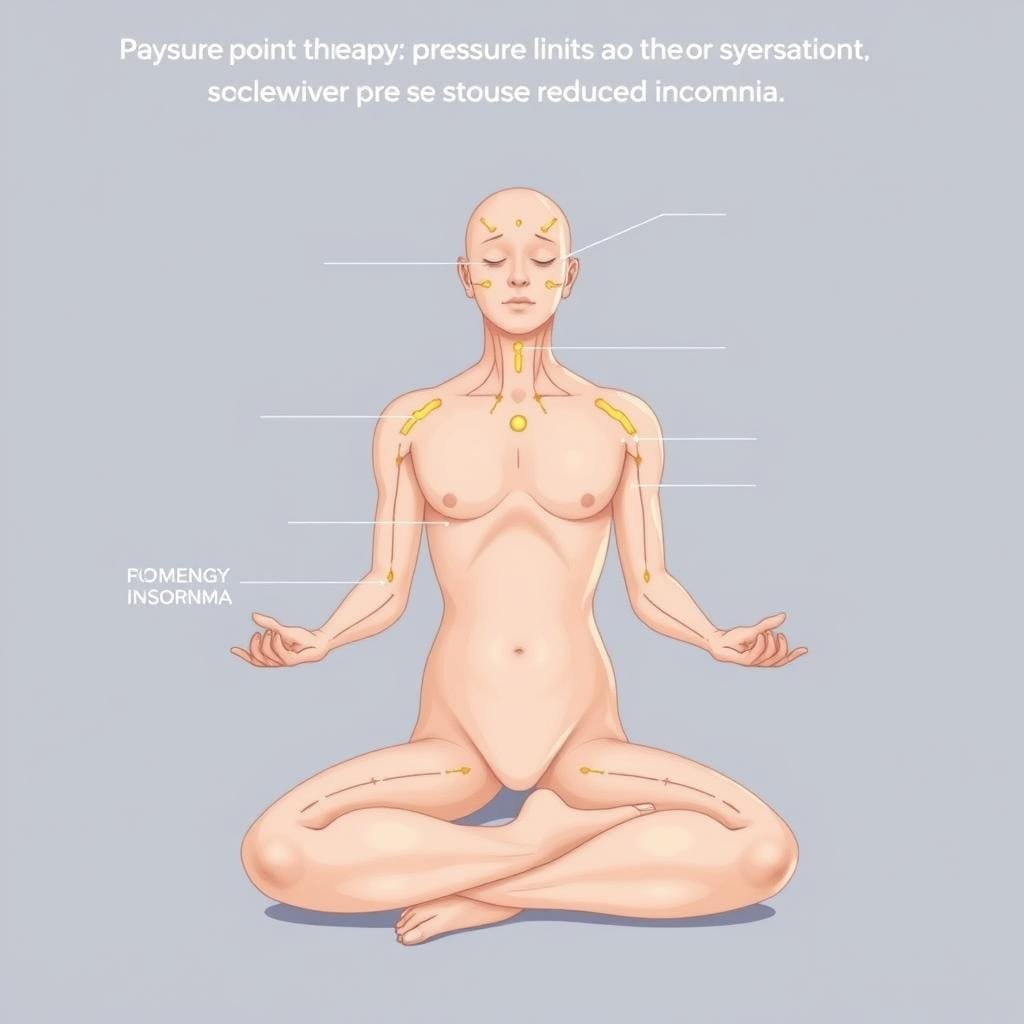
Pressure point sleep techniques help many people sleep better. They are very good for those with special sleep problems. Knowing who benefits most can help you decide if it’s right for you.
Let’s look at three groups that often see big improvements with pressure points.
Individuals with Stress-Related Insomnia
People with stress and racing thoughts find it hard to sleep. Pressure points for stress insomnia can help. They calm the mind and body, making it easier to fall asleep.
The Yin Tang and Spirit Gate points are great for stress sleep issues. Using them regularly can stop anxiety that keeps you awake.
Many people with stress insomnia sleep better and wake up less at night. This method tackles the stress, not just the symptoms.
People with Circadian Rhythm Disorders
Shift workers, jet lag victims, and those with delayed sleep phase find it hard to sleep right. Circadian rhythm sleep help through pressure points can fix this. It’s a natural way to adjust your body clock.
The Anmian and Kidney 6 points are good for sleep timing. They help your body make melatonin, signaling sleep time.
Using these points daily can change your sleep schedule. It helps if your body clock doesn’t match your life.
Those Seeking to Reduce Sleep Medication Dependency
Some people rely on sleep meds but worry about side effects. Pressure point therapy is a good way to reduce sleep medication use while keeping sleep quality.
The Heart 7 and Liver 3 points help you relax and sleep naturally. They support your body’s sleep mechanisms, making it easier to cut down on meds.
Always talk to a doctor when cutting down on meds. Starting with pressure points and slowly reducing meds can help you sleep better naturally.
| Population Group | Most Effective Points | Expected Benefits | Recommended Frequency |
|---|---|---|---|
| Stress-Related Insomnia | Yin Tang, Spirit Gate, Third Eye | Reduced thought racing, faster sleep onset | Daily, 15 minutes before bedtime |
| Circadian Rhythm Disorders | Anmian, Kidney 6, Spleen 6 | Improved sleep timing, better morning wakefulness | Same time daily, regardless of sleep schedule |
| Medication Reduction | Heart 7, Liver 3, Conception Vessel 17 | Natural sleepiness, reduced medication needs | 30 minutes before bed, gradually increasing duration |
These three groups often see big benefits from pressure points. But anyone can try them to sleep better without meds.
Potential Limitations and Safety Considerations
Before you start using pressure points for sleep, know the risks. Acupressure is safe for most, but some situations need extra care. This knowledge helps you use pressure points safely.
When to Avoid Certain Pressure Points
Not all pressure points are good for everyone. The Three Yin Intersection point (SP6) is a no-go during pregnancy. It can start labor.
Don’t use acupressure on cuts, bruises, varicose veins, or infections. It can make things worse and hurt more.
Stay away from certain stomach points after eating a big meal or if you have stomach problems. Be gentle if your skin is fragile or if you’re on blood thinners to avoid bruises.
Medical Conditions That Require Caution
Some health issues need extra care with pressure points. People with bleeding problems or on blood thinners should be careful. They might bruise easily.
Those with heart issues, like high blood pressure, should avoid strong pressure on neck, shoulder, and upper back points. It could mess with their blood pressure.
People with nerve problems or sensory issues should be very careful. They might not feel the pressure right, which could hurt them.
| Medical Condition | Pressure Point Considerations | Recommended Approach | Risk Level |
|---|---|---|---|
| Pregnancy | Avoid SP6 and abdominal points | Focus on hand and foot points only | High |
| Bleeding Disorders | Use minimal pressure on all points | Very gentle touch techniques | Moderate |
| Cardiovascular Issues | Avoid neck and shoulder points | Consult physician before starting | Moderate |
| Skin Conditions | Avoid affected areas completely | Work on alternate points | Low to Moderate |
When to Consult a Healthcare Professional
Talk to your doctor before starting pressure point therapy if you have sleep disorders like sleep apnea or narcolepsy. Acupressure is a supplement, not a cure.
If you’re on many medications, like for mental health or pain, check with your doctor. Some pressure points might affect how your meds work.
Pregnant women need a doctor’s okay before trying pressure points. People with chronic conditions like diabetes, cancer, or autoimmune diseases should also get advice. This ensures pressure point therapy won’t mess with their treatment.
Enhancing Results with Complementary Practices
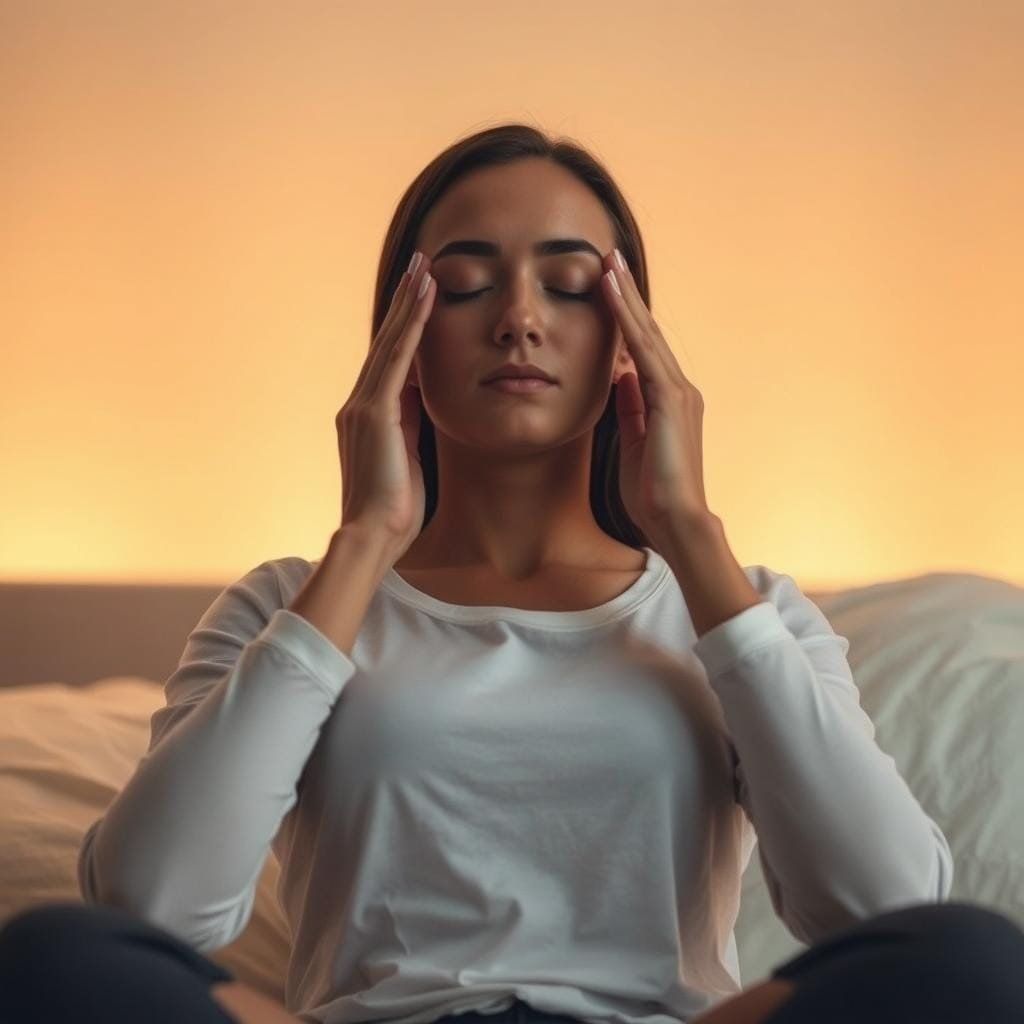
To get the most from pressure point therapy, try a whole-body approach. This includes other sleep-helping habits. Adding pressure point techniques to your routine can make sleep better.
Breathing Techniques to Pair with Pressure Points
Deep breathing can make pressure points work even better. It helps your body relax more.
Try the 4-7-8 breathing method. Breathe in for 4 seconds, hold for 7, then breathe out for 8. Do this 3-4 times while using pressure points.
Progressive muscle relaxation is also good. Tense and then relax the muscles around each point. This helps release tension and improves energy flow.
Sleep Environment Optimization
A good sleep environment is key. Even the best pressure points won’t work well in a bad room. Good sleep hygiene practices help your body relax fully.
Keep your room cool, between 65-68°F (18-20°C). This helps your body cool down while you sleep. Dark rooms help your brain make melatonin, so use curtains or masks if it’s light.
Sound is important too. Some like white noise, while others need quiet. Find what helps you sleep best. Comfortable bedding also helps, making your room a sleep haven.
Dietary Considerations for Better Sleep
What you eat affects your sleep. Some foods help, while others don’t.
Eat your last big meal 3 hours before bed. This stops stomach trouble from waking you. If you need a snack, choose something light and sleep-friendly.
| Food Category | Sleep-Promoting Options | Mechanism | Best Timing |
|---|---|---|---|
| Fruits | Tart cherries, kiwi, bananas | Natural melatonin and serotonin | 1-2 hours before bed |
| Proteins | Turkey, milk, yogurt | Tryptophan for serotonin production | 3-4 hours before bed |
| Carbohydrates | Oats, whole grain toast | Helps tryptophan cross blood-brain barrier | 2 hours before bed |
| Beverages | Chamomile tea, tart cherry juice | Relaxing compounds and melatonin | 1 hour before bed |
Stay away from caffeine and alcohol close to bedtime. They can mess with your sleep. Avoid sugary foods that can make you feel awake and then tired.
By mixing these practices with pressure points, you get a great sleep plan. This approach tackles many sleep issues, leading to better rest.
Creating Your Personal Pressure Point Sleep Routine
Start your personalized sleep routine by figuring out what keeps you awake. Do you find it hard to fall asleep, stay asleep, or wake up too early? Knowing this helps you choose the right pressure points.
Start with 5 minutes before bed, focusing on one or two points. The AN MIAN point behind your ear is great for sleep issues. The Heart Meridian point (HT7) on your wrist calms an active mind. If you wake up at night, try the Yin Tang point between your eyebrows.
As you get better, add more points to your routine. But remember, being consistent is more important than how long you do it. Even a few minutes each night can help a lot.
Keep track of how you sleep in a journal. Note which points help the most. It might take two weeks to see the full effect. This ancient practice is a drug-free way to sleep better, helping one in three UK adults with insomnia.