
Dealing with back pain can make it hard to sleep. People who feel great sleep 23 minutes more each night. But, not sleeping well can make pain worse.
It’s important to find good sleeping positions when you have back pain. Many people have trouble finding the right way to sleep. This is because back pain at night can really hurt your mood.
This guide will help you sleep better with back pain. We’ll talk about the best ways to sleep, what to use for support, and how to relax before bed. We’ll also suggest products that can help with back pain.
By using these tips, you can sleep better and feel better during the day. Better sleep means less pain and feeling more refreshed. It’s good for more than just sleeping.
Key Takeaways
- Quality sleep and pain levels are directly connected—poor rest can increase pain sensitivity
- Finding optimal sleeping positions can significantly reduce nighttime discomfort
- Proper mattress and pillow selection plays a critical role in spinal alignment
- Pre-sleep routines can help prepare your body for more comfortable rest
- Supportive products like specialized pillows can provide targeted relief
- Consistent sleep schedules help regulate pain management systems
- Small adjustments to sleeping habits can lead to substantial improvements in comfort
Understanding the Connection Between Sleep and Back Pain
Back pain and sleep quality are linked in a cycle. When your back hurts, it’s hard to sleep well. Poor sleep can make back pain worse, creating a tough cycle to break.
Back pain makes daily life hard, and sleeping is even tougher. Many people find it hard to find a comfy sleeping spot. Getting in and out of bed can hurt too.
How Back Pain Affects Sleep Quality
Back pain messes with sleep in many ways. It keeps your body alert, making it hard to fall asleep. This leads to a lot of tossing and turning.
Even if you do fall asleep, back pain can wake you up. These wake-ups stop you from getting deep, restorative sleep. Many people wake up a lot, feeling pain when they move.
Worrying about pain at night can make bedtime hard. This worry makes it tough to relax and sleep well. Over time, this can lead to avoiding sleep or insomnia, making the problem worse.
The Cycle of Pain and Poor Sleep
Bad sleep makes you feel pain more. This creates a cycle where pain hurts sleep, and bad sleep makes pain worse.
Poor sleep also messes with your body’s fight against inflammation. This is key in many back pain cases. Without good sleep, your body’s inflammation markers go up, making back pain worse.
The pain cycle affects more than just your body. It messes with your mood, energy, and thinking. These changes make it hard to deal with pain and manage it well.
To break this cycle, you need to tackle both physical pain and sleep habits. Improving one area can help the other, leading to better sleep and less pain over time.
Identifying Your Back Pain Type and Causes
Getting a good night’s sleep with back pain starts with knowing what kind you have. Back pain isn’t just one thing. It has many types, each needing its own fix. Knowing your back pain helps you sleep better.
Many people try the wrong fixes for their back pain. By knowing your specific pain, you can make your sleep space better. This helps you feel better at night.
Common Types of Back Pain
Back pain can be many things, each needing its own fix. Knowing what kind you have is key to feeling better. This is true, even more so when you’re trying to sleep.
Acute back pain comes on fast and goes away in less than six weeks. It’s often from lifting something too heavy or a sudden move. Rest and basic care usually help it go away.
Chronic back pain lasts more than three months. It might mean there’s something deeper going on. Finding a comfy sleep spot can be hard for those with chronic pain.
Muscular vs. Nerve Pain
Muscular pain feels dull and gets worse with movement. It’s often from overusing muscles or bad posture. You might feel stiff in the morning.
Nerve pain feels sharp and electric. It can make your legs or arms feel numb. It gets worse when you lie in certain ways.
Underlying Causes That Worsen at Night
Some things make back pain worse at night. Knowing what these are can help you sleep better.
Conditions like arthritis can get worse when you’re resting. This is because your body makes less anti-inflammatory hormones at night. This is why you might feel stiffer and in more pain in the morning.
Disc problems can also get worse at night. When a disc bulges, it can press on nerves. This makes lying down hard.
Bad posture during the day can hurt your back at night. Sitting or standing wrong puts pressure on your back. This strain doesn’t go away when you lie down.
Other things like not moving enough, lifting wrong, and stress can also hurt your back. Knowing what’s causing your pain helps you fix it before bed.
Optimal Sleep Positions for Sleeping with Back Pain
How you sleep affects your back pain. Many don’t realize how much their sleep position matters. The right position can make a big difference in how you feel in the morning.
Best Positions for Lower Back Pain
People with lower back pain often find relief in two main positions.Back sleeping is good when done right. Side sleeping can also help if you have the right support.
For back sleepers, a pillow under your knees helps. It keeps your spine’s natural curve. This reduces pressure on your nerves and relaxes your lower back muscles.
Side sleeping with a pillow between your knees is great for some. It keeps your hips, pelvis, and spine aligned. This is good for those with herniated discs or sciatica.
Using Pillows for Support
Using pillows the right way can make a big difference. Side sleepers need a pillow that fills the space between their ear and shoulder. This keeps your neck in line with your spine.
A small rolled towel under your lower back helps back sleepers. It keeps your spine’s natural curve. Body pillows are great for side sleepers. They support your whole body and keep your spine straight.
Adjusting Your Alignment
Keeping your ears, shoulders, and hips in line is key. Back sleepers should avoid tilting their head too much. Your pillow should support your head and neck without lifting them too high.
Side sleepers should avoid curling up too tight. This can hurt your back and make it hard to breathe. Keep your knees bent a bit and your back straight.
Best Positions for Upper Back Pain
Upper back pain needs different strategies. Back sleeping with a thin pillow is good for many. It keeps your head and neck in the right place.
Side sleeping can also help upper back pain. A body pillow against your chest and stomach keeps your upper body straight. This is good for your thoracic spine.
Some people find relief with a pillow between their shoulder blades when back sleeping. It relaxes tense muscles in your upper back. Always listen to your body when trying new positions. What works for others might not work for you.
Positions to Avoid
Stomach sleeping is bad for back pain. It flattens your spine and twists your neck. This strains your back muscles and spinal structures.
If you must sleep on your stomach, use a thin pillow under your hips. This eases pressure on your lower back.
Avoid positions that twist your spine. Side sleeping with one leg up or back sleeping with too many pillows is bad. These positions put uneven pressure on your back and can make back problems worse.
| Sleep Position | Benefits for Back Pain | Proper Support Needed | Best For |
|---|---|---|---|
| Back Sleeping | Maintains natural spine alignment | Pillow under knees, thin head pillow | General back pain, degenerative disc disease |
| Side Sleeping | Opens intervertebral spaces | Pillow between knees, supportive head pillow | Herniated discs, sciatica, pregnancy-related back pain |
| Fetal Position | Reduces pressure on discs | Body pillow, proper neck support | Herniated discs, spinal stenosis |
| Stomach Sleeping | Generally not recommended | Thin pillow under hips if unavoidable | Not ideal for any back condition |
Choosing the Right Mattress for Back Pain Relief
Choosing the right mattress is key to managing back pain at night. The right mattress helps reduce pressure and keeps your spine straight. But, very firm mattresses aren’t always the best for back pain.
Studies show that 63% of people feel better after trying a new mattress. This shows how important your mattress is for pain relief and good sleep.
Firmness Levels and Support Features
Finding the right firmness is important for back pain. Most people do best with medium-firm mattresses. But, what’s best for you depends on several things.
Your body shape affects the right firmness. If your hips are wider than your waist, a softer mattress helps your spine stay straight. If your hips and waist are closer, a firmer mattress is better.
Your sleep position also matters. Side sleepers need a bit softer mattress for shoulder and hip comfort. Back and stomach sleepers need firmer support to keep their spine straight.
Being heavier means you might need a firmer mattress to avoid sinking too much. Lighter people might prefer a medium or softer mattress for comfort and support.
Memory Foam vs. Hybrid vs. Innerspring
Different mattresses help back pain in different ways. Knowing these differences helps you choose the best one for you.Memory foam mattresses shape to your body, easing pressure. They’re great for those with sensitive pain points. But, they can get hot and less responsive when you move.
Latex mattresses offer similar relief but are cooler and more responsive. They feel bouncy but also mold to your body.Hybrid mattresses mix coils with foam or latex for balanced support. They offer foam’s comfort with coils’ breathability, a good choice for many.
Traditionalinnerspring mattresses support well but might not relieve pressure as much. Adding a good topper can help with this.
| Mattress Type | Pressure Relief | Support Level | Motion Isolation | Best For |
|---|---|---|---|---|
| Memory Foam | Excellent | Good | Excellent | Side sleepers, pressure point pain |
| Latex | Very Good | Very Good | Good | Hot sleepers, those who change positions |
| Hybrid | Very Good | Excellent | Good | Most back pain sufferers, combination sleepers |
| Innerspring | Fair | Excellent | Poor | Stomach sleepers, those needing firm support |
When to Replace Your Mattress
Even the best mattress won’t last forever. The Sleep Foundation says to check your mattress every 6 to 8 years. But, some signs mean you need a new one sooner.
Visible sagging in the middle means your mattress is losing support. Waking up with more pain or stiffness also means it’s time for a change.
Feeling coils or finding hotel mattresses more comfortable are clear signs to replace yours. Many makers offer trial periods to test mattresses at home, making it safer to try new ones.
Investing in a good mattress is worth it for back pain. It improves your sleep and pain levels every night.
Pillow Selection and Proper Alignment
Choosing the right pillow is key to managing back pain at night. Many focus on mattresses but forget about pillows. The right pillow keeps your neck and head in the right spot, helping your spine stay straight.
Using the wrong pillow can twist your spine and hurt your back. This can make you stiff and sore in the morning. Choosing pillows made for back pain relief helps keep your spine straight, easing muscle tension.
Cervical Pillows and Neck Support
Cervical pillows are made for your neck’s natural curve. They stop your neck from getting out of line, which can hurt your back. Unlike regular pillows, they keep your neck supported all night.
These pillows have a special shape to fit your head and neck. They help keep your neck right, easing pressure on your upper back. This can help stop pain from spreading down your back.
For upper back pain, cervical pillows are a big help. They ease the strain on muscles from your neck to your back. Many people say they have fewer headaches and feel less stiff in the morning with these pillows.
Body Pillows and Positioning Aids
Body pillows are great for back pain sufferers. They support your body in different ways, keeping your spine aligned all night.
For side sleepers, they keep your hips aligned and ease lower back pressure. Hugging them can stop your shoulders from hunching. Behind your back, they keep you from rolling into bad positions.
Full-length body pillows support you from head to knees. U-shaped or pregnancy pillows offer full-body support. These are great for people with chronic back pain who have trouble sleeping comfortably.
Adjusting Pillow Height and Firmness
Finding the right pillow height and firmness is important. Back sleepers need thinner, firmer pillows. Side sleepers need thicker ones to fill the gap between their shoulder and ear.
Adjustable pillows let you change the height and firmness. This is helpful if your back pain changes over time. It can also vary from night to night.
It might take some time to find the perfect pillow. What feels good for a few minutes might not be enough all night. Be patient and see how you feel in the morning to know if your pillow is right.
| Pillow Type | Best For | Key Features | Ideal Sleeping Position |
|---|---|---|---|
| Cervical Pillow | Neck pain, upper back tension | Contoured design, neck ridge support | Back and side sleepers |
| Memory Foam Pillow | Consistent support needs | Conforms to head and neck, retains shape | All positions, specially back sleepers |
| Full Body Pillow | Hip alignment, pregnancy, multiple support points | Length (54-72 inches), versatile positioning | Side sleepers |
| Wedge Pillow | Acid reflux, snoring, upper back pain | Triangular shape, inclined support | Back sleepers |
| Adjustable Pillow | Changing pain patterns, combination sleepers | Removable filling, customizable height | All positions |
Pre-Sleep Routines to Minimize Back Pain

Setting up a bedtime routine can really help with back pain. It’s a great time to relax and get ready for sleep. Doing the same things before bed helps your body and mind get ready for rest.
Studies say exercise is good for sleep. But, exercises that strengthen your core are best for back pain. These muscles support your spine while you sleep.
Gentle Stretches Before Bed
Doing gentle stretches before bed helps relax your muscles. It also improves blood flow to sore spots. Make sure to stretch slowly and without bouncing.
Hamstring and Lower Back Stretches
Tight hamstrings can hurt your lower back. Here are some stretches to help:
- Seated Forward Bend – Sit with legs out and slowly reach for your toes. Focus on stretching your spine, not touching your feet.
- Knee-to-Chest – Lie on your back and pull one knee to your chest. Hold for 30 seconds, then switch sides.
- Child’s Pose – Kneel and sit back on your heels. Extend your arms and lower your chest to the floor.
Upper Back and Shoulder Releases
Bad posture can hurt your upper back. These stretches help your shoulders and upper back:
- Doorway Chest Stretch – Stand in a doorway with arms out. Step forward to stretch your chest.
- Shoulder Blade Squeezes – Sit up straight and pull your shoulder blades together. Hold for 5-10 seconds, then release.
- Gentle Thoracic Extensions – Place a foam roller on your upper back. It helps bend your back gently.
Heat and Cold Therapy Applications
Using heat or cold before bed can help with pain. It’s important to choose the right one for your pain.
Heat therapy relaxes tight muscles and improves blood flow. It’s good for chronic pain that gets worse at night. Try:
- A warm shower or bath 20 minutes before bed.
- A heating pad on sore spots for 15-20 minutes.
- Heated blankets to keep warm all night.
Cold therapy reduces swelling and numbs pain. It’s best for new injuries or sudden pain. Try:
- Ice packs wrapped in a towel for 10-15 minutes.
- Cold compresses on swollen areas.
- Switching between heat and cold for hard pain (10 minutes each).
Relaxation Techniques for Pain Management
Stress and back pain are closely linked. Stress makes your muscles tight, which can make back pain worse. Relaxation techniques before bed help your body relax.
Try these to relax before bed:
- Progressive Muscle Relaxation – Tense and then relax each muscle group, starting from your toes.
- Deep Breathing Exercises – Breathe slowly and deeply for 5-10 minutes while lying down.
- Guided Imagery – Listen to recordings that help you imagine peaceful scenes.
- Meditation – Even 5 minutes of mindfulness meditation can help with pain and relaxation.
Having a consistent bedtime routine is key. It tells your body it’s time to relax. Do these activities at the same time every night. This helps your body get ready for restful sleep.
Supportive Products for Back Pain Relief During Sleep
Proper sleep positioning is key, but special products can help too. These items add support to your sleep area. They help those with back pain sleep better without changing their whole bedroom.
Mattress Toppers and Pads
Mattress toppers are a smart way to change your mattress’s feel. If your mattress is too hard, memory foam toppers can make it softer. They mold to your body, easing pain.
Memory foam can get too warm, though. Gel-infused toppers keep cool while being soft. Latex toppers are also good, as they’re cool and last long.
Lumbar support pads are great for extra back support. Place them under your lower back for more comfort.
Try different mattresses before buying a new one. You can also add plywood under your mattress for more firmness. Sleeping on the floor might help too.
Back Braces and Support Belts
Back braces are usually for daytime, but some are for sleep. They offer gentle pressure that helps with back pain at night.
For injury recovery, sturdier braces keep your back in place. They prevent movements that could make pain worse.
Remember, back braces are temporary. They can weaken muscles over time. Use them as a short-term fix while you work on your back pain with a doctor.
Adjustable Bed Frames
Adjustable beds are a big investment but offer great benefits. They let you change your bed’s position to ease back pain.
They can help with acid reflux too. Raising your legs slightly can also ease back pain. Modern adjustable beds have cool features like massage.
These sleep aids, along with good sleep habits, can help manage back pain. You’ll wake up feeling better, not in pain.
When to Seek Medical Help for Nighttime Back Pain
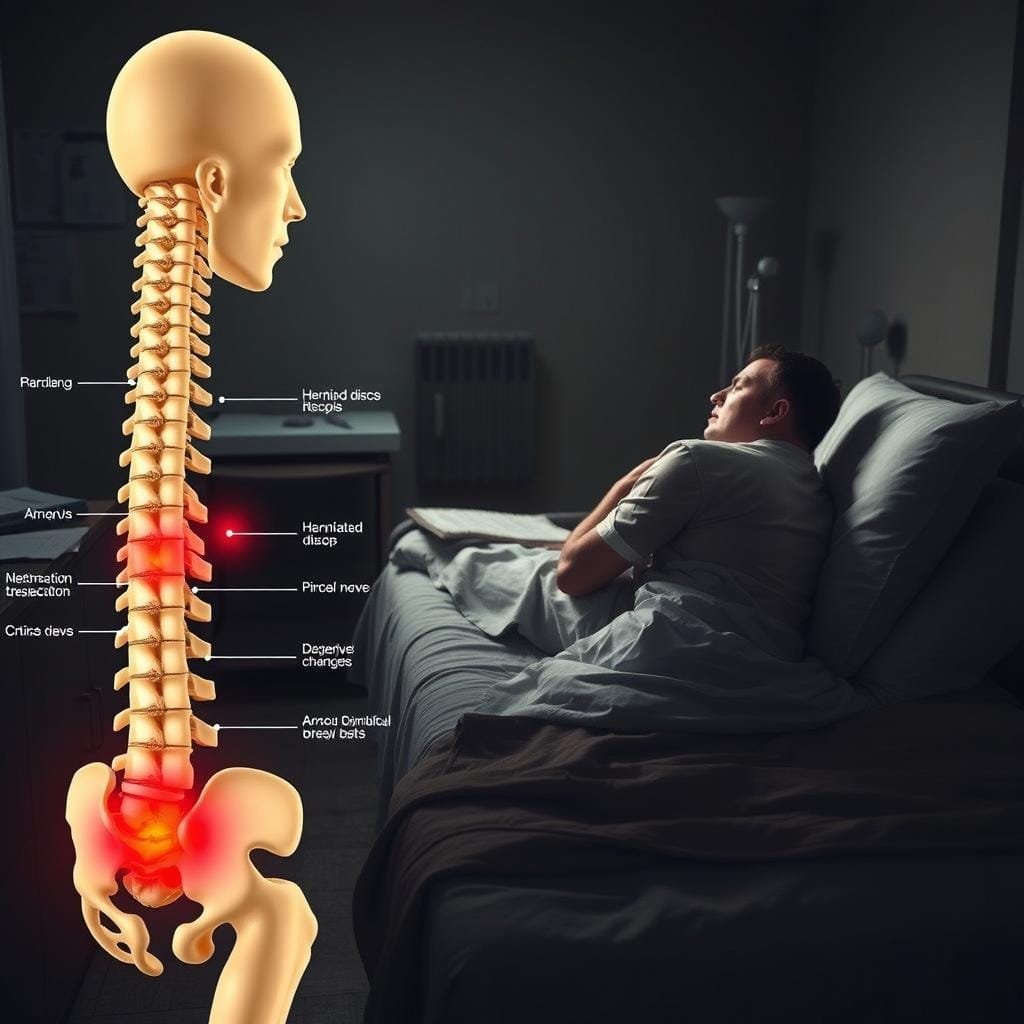
Knowing when to get help for back pain is key. Many people suffer in silence, but most problems can be fixed with the right care. Don’t suffer through sleepless nights when help is available.
Many people wait too long to see a doctor, hoping the pain will go away. But some signs mean you need to see a doctor, not just keep trying to manage it yourself. Spotting these signs early can help you get better faster.
Warning Signs That Require Attention
Some back pain signs are serious and need a doctor right away. If your back hurts and you have a fever, it might mean you have an infection. Also, if you hurt your back and it doesn’t feel right, you should see a doctor to check for breaks or serious damage.
Pain that goes down your legs and makes you feel numb or weak is called sciatica. It needs a doctor to figure out and treat. And if you can’t control your bladder or bowel, it’s a big emergency.
Also, if your back pain gets worse even when you rest and take over-the-counter meds, see a doctor. If it keeps you up at night for more than two weeks, or if it stops you from doing daily things, you need help.
Treatment Options from Medical Professionals
When you talk to a doctor about back pain, they’ll make a plan just for you. They start with simple things and then try more serious options if needed. They might use a mix of methods to help you feel better.
Physical Therapy Approaches
Physical therapy is a big part of treating back pain. Therapists create special exercises to make your muscles stronger and your posture better. These exercises help your spine when you’re awake and when you sleep.
They also teach you how to move your body right, like lifting and sitting. They might use special techniques like ultrasound to help you heal. Going to physical therapy regularly can really help you sleep better.
Medical Interventions
If simple things don’t work, doctors might suggest stronger treatments. They might give you medicine to relax your muscles or to help with pain. These medicines are only for a short time to avoid getting too used to them.
For some back pain, doctors might suggest injections to reduce swelling. These injections go right to the pain spot and can help for a long time. If all else fails, they might suggest surgery.
Getting help early usually means you’ll get better faster. A mix of medicine, physical therapy, and taking care of your sleep is usually the best way to feel better. Don’t be afraid to talk to your doctor about all your options.
Putting It All Together: Your Personalized Back Pain Sleep Plan
Start by understanding your back pain. Keep a sleep journal to see which positions help and which hurt. This helps you find the right solutions for you.
Choose the right mattress and pillow for your pain. Side sleepers might need a pillow between their knees. Back sleepers might like support under their knees or lower back. Studies show that proper sleep ergonomics can help a lot.
Make a sleep routine with gentle stretches or yoga before bed. Use heat or cold therapy to ease pain. Change your plan as you learn what works.
Improving sleep takes time. Wait at least a week to see if changes help. Small changes can make a big difference.
By tackling back pain at night, you get lasting relief. Your sleep plan is a key to better health.