
Finding the right sleeping position is a big quest. Many sleep on their side or back. But, about 16% sleep on their stomach.
This choice has its own good and bad sides. If you sleep on your stomach, it might help with acid reflux and snoring. But, you might wake up with a stiff neck or back pain.
But, you don’t have to change how you sleep. The right mattress, pillow, and body position can make a big difference. You can sleep better and stay comfortable in your natural way.
In this guide, we’ll share tips for stomach sleepers. We’ll talk about the best pillow loft and mattress firmness. These changes can help you sleep better without losing comfort.
Key Takeaways
- About 16% of adults prefer sleeping on their stomach despite it being less common
- Stomach sleeping can reduce acid reflux and decrease snoring
- The position may contribute to neck and back pain without proper support
- Medium to firm mattresses provide optimal spinal alignment for front sleepers
- Low-loft pillows with customizable filling help maintain proper neck position
- Strategic body positioning can minimize possible discomfort
- Breathable materials can prevent overheating common in this position
The Stomach Sleeper’s Dilemma
Sleeping on your stomach is comfy but might not be the best for your health. Only 16% of adults sleep on their stomachs. They face a tough choice between the good and the bad.
Knowing the pros and cons is key for those who love sleeping on their stomach. They want to sleep better without changing how they sleep.
Why People Choose to Sleep on Their Stomach
Many people stick to stomach sleeping because it feels right. It’s great for those who snore a lot. Sleeping face down keeps airways open, which helps snore less.
It also helps with sleep apnea. The tongue doesn’t block the airway as much. This means fewer stops in breathing at night.
Another stomach sleeping benefit is less acid reflux. Lying face down might stop stomach acid from going up into the esophagus. This is better than sleeping on your back.
Common Challenges Faced by Stomach Sleepers
Stomach sleepers face big sleep challenges. The biggest one is a bad back. Sleeping on your stomach arches your spine wrong. This can hurt your back muscles and cause pain.
Neck pain is another big problem. You have to turn your head to breathe. This puts your neck in a bad spot for a long time. It can make your neck stiff and sore in the morning.
Internal organs also get squished. Your lungs, ribcage, and stomach work harder. This can make breathing harder and hurt. Plus, your face might get wrinkles from pressing against a pillow.
Knowing these issues helps stomach sleepers. They don’t have to give up their favorite sleep position. The next parts will show ways to make stomach sleeping better.
Understanding the Impact of Stomach Sleeping on Your Body
Stomach sleeping affects your body in many ways. It can change how your spine and breathing work. Knowing these effects can help you choose better sleep habits.
Effects on Spine Alignment
Stomach sleeping puts your spine in a bad position. The Mayo Clinic says it strains your back and spine. This is because your weight is mostly in the middle.
Your midsection goes deeper into the mattress than the rest. This makes your lower back curve too much. This can:
- Put too much pressure on your spinal discs
- Make your spine’s natural curve worse
- Lead to long-term back pain
Neck and Back Strain Considerations
When you sleep on your stomach, you must turn your head. This twists your neck and spine.
This twisted neck can cause problems:
- More neck strain from the twist
- Pressure on nerves in your neck
- Muscle stiffness and soreness when you wake up
This strain can lead to long-term neck problems. It can also wear down your neck vertebrae faster.
Breathing and Circulation Issues
Stomach sleeping puts pressure on your chest and belly. This can make it hard to breathe well at night.
This pressure also affects your blood flow. It can make it hard for blood to reach your body’s ends. This can cause circulation problems.
Also, the stress on your spine can cause pain in other parts of your body. This is why some people wake up with numbness or tingling in places that don’t seem related.
Optimal Positioning for Stomach Sleepers
Stomach sleepers can get better sleep with the right body positioning. Even though experts say to avoid it, small changes can help. Keeping your body aligned is key to feeling better.
The Quarter-Turn Technique
The quarter-turn technique is a good middle ground. It involves turning your body a bit off your stomach. This helps your spine and keeps you comfortable.
Proper Head Positioning
When you use the quarter-turn, turn your head a little. This helps your neck. Use a thin pillow or none at all to keep your neck right.
Torso Alignment
The quarter-turn helps your spine stay straight. This small change can really help with back pain and comfort.
Arm and Leg Placement
Stomach sleepers often pull a knee up. But this can hurt your spine. Instead, keep your legs straight and even. Your arms should be at your sides or slightly bent.
Don’t sleep like a sprinter with one leg bent. This can hurt your hips and back. Keeping your legs the same helps your spine stay right.
Using Pillows for Strategic Support
Pillows can make stomach sleeping better. Use a thin pillow under your hips to help your back. This keeps your spine’s natural curve.
Some people use a firm pillow under their ankles. This helps your feet and legs. If you use a head pillow, make sure it’s thin and firm. Try different pillow setups to find what works for you.
By making these small changes, you can sleep better without giving up your favorite way. It’s all about making small adjustments, not changing everything.
Choosing the Right Mattress for Stomach Sleepers
Choosing the right mattress is key for stomach sleepers. It helps prevent pain and keeps your spine straight. Without it, you might wake up with aches.
Firmness Levels That Work Best
Stomach sleepers do best with medium-firm to firm mattresses. They should feel firm but not too hard. This keeps your hips from sinking too much.
Your weight affects the best mattress firmness. Heavier people need firmer support. Lighter sleepers might prefer something softer.
If your mattress is too firm, try a topper. It can make it just right for you.
Materials and Construction to Look For
The inside of your mattress matters a lot. Look for ones with extra support in the middle. This helps your body stay in line.
Traditional memory foam mattresses can be too soft. They might make your spine hurt. But, some newer memory foams are better for stomach sleepers.
Innerspring mattresses are often too firm. They might not be soft enough for your shoulders and legs. But, they do support your body well.
Hybrid mattresses are often the best choice. They mix coils for support with soft layers. This gives you the best of both worlds.
Cooling Technologies for Comfort
Stomach sleeping can make you hot. That’s why cooling features are important. They help you stay cool and comfortable.
Look for mattresses with:
- Gel-infused foams that keep you cool
- Phase-change materials that keep temperatures steady
- Breathable covers that let air flow
- Open-cell foams that don’t trap heat
Top Mattress Recommendations for Stomach Sleepers
When looking for a mattress for stomach sleepers, think about these things:
Zoned support helps your hips and keeps your spine straight. It’s designed to support your body in the right places.
Many brands now make mattresses just for stomach sleepers. They have strong coils and soft layers. This keeps you from sinking too much.
For staying cool, look for mattresses with good support and cooling mattress features. The right mix can make a big difference in your sleep.
Pillow Selection and Placement Guide
Stomach sleepers need the right pillow to avoid neck pain. The wrong pillow can cause discomfort and alignment problems. You want a pillow that’s not too thick or too firm.
Low-Profile Pillow Options
The best pillow for stomach sleepers is low and supportive. Low-profile pillows help keep your neck straight and improve sleep.
Thin and Soft Pillows
Stomach sleepers need pillows that are less than 3 inches high. Thin pillows (1-2 inches) are best for keeping your head right on the mattress. Down or down alternative pillows are soft and mold to your head.
Memory foam pillows can work, but only if they’re low profile. Look for a pillow that’s soft but supports your head.
Adjustable Fill Pillows
Adjustable pillows are great for stomach sleepers. They can be changed to fit your needs. You can add or remove filling to get the right height.
Adjusting the pillow’s loft helps you find the perfect comfort. Many stomach sleepers like to remove half the filling for the best support.
Strategic Pillow Placement for Body Support
Good pillow placement is more than just for your head. A thin pillow under your pelvis helps your spine stay straight. It stops your midsection from sinking too far into the mattress.
Some stomach sleepers also use pillows under their shoulders or ankles. This helps support your body better and eases back pain.
When to Consider Sleeping Without a Head Pillow
Experts say sleeping without a pillow might be best for stomach sleepers. It helps keep your neck in its natural position. This works best on soft mattresses.
If you’re thinking about sleeping without a pillow, start small. Use a thin pillow and then try without one. Some people find it helps with neck pain and improves sleep.
Health Concerns and Solutions for Stomach Sleepers

Stomach sleepers face health issues that can be fixed with the right steps. This sleeping position might feel good but can cause problems. Knowing these issues helps find ways to sleep well without hurting your health.
Managing Neck and Back Pain
Neck and back pain is common for stomach sleepers. This pain comes from sleeping face-down, which twists your neck. Doing neck stretches before bed can help a lot.
Try neck rotations and shoulder rolls before bed and when you wake up. Exercises like chin tucks and prone cobra poses help keep your neck straight. If back pain doesn’t go away, see a chiropractor for exercises just for you.
Reducing Pressure on Joints and Organs
Stomach sleeping puts a lot of joint pressure on your shoulders, elbows, and wrists. Putting a thin pillow under your pelvis helps your lower back and organs. This makes sleeping more comfortable.
Keep your arms close to your body to avoid shoulder pain. This stops your joints from getting too much pressure. A soft cushion under your body can also help during long sleeps.
Preventing Facial Wrinkles and Creases
Pressing your face on the bed for hours can cause facial wrinkles. Using silk or satin pillowcases helps because they don’t wrinkle your skin. These fabrics let your skin slide smoothly.
Moisturize your skin before bed to keep it hydrated. Some pillows have designs that don’t press on your face. These small changes can help prevent wrinkles.
Addressing Sleep Apnea and Breathing Issues
Stomach sleeping can be good for some with sleep apnea because it keeps airways open. But it can also cause breathing issues for others because it limits chest movement.
The quarter-turn technique is a good middle option. It keeps airways open but doesn’t squeeze your chest too much. Use sleep tracking devices to see if your position helps your breathing.
If you have sleep apnea, talk to your doctor about your sleeping position. They might suggest changes or devices that fit your sleep style.
Nighttime Habits That Improve Sleep Quality for Stomach Sleepers
Stomach sleepers can improve their sleep by changing their nighttime habits. Your mattress and pillow are important, but your bedtime routine and sleep area matter too. They help with the special challenges of sleeping on your stomach.
Pre-Sleep Stretching Routines
Doing pre-sleep stretching can help your body relax. A 10-15 minute stretch before bed can make you feel better. It gets your body ready for a good night’s sleep.
Neck and Shoulder Exercises
Stomach sleepers often have neck pain. Neck exercises can help:
- Gentle neck rotations (5 slow circles in each direction)
- Shoulder rolls to release upper back tension
- Wall angels to improve posture and strengthen supporting muscles
Back stretches are also key for stomach sleepers. They help your spine relax before bed:
- Cat-cow poses to mobilize the entire spine
- Child’s pose to lengthen the back and release tension
- Gentle spinal twists to improve rotation and flexibility
Bedroom Environment Optimization
Stomach sleepers get hotter because they touch more of the mattress. A good bedroom environment is key for sleep:
- Maintain a cool room temperature (65-68°F)
- Use breathable, moisture-wicking bedding materials
- Ensure proper room darkening with blackout curtains
- Minimize noise disruptions with white noise or earplugs if needed
Sleep Hygiene Practices
Good sleep hygiene helps stomach sleepers a lot. It helps them sleep better despite any discomfort:
| Practice | Benefit for Stomach Sleepers | Implementation Tips |
|---|---|---|
| Consistent sleep schedule | Ensures adequate rest despite possible discomfort | Go to bed and wake up at the same time daily |
| Limited screen time | Reduces neck strain from looking down at devices | Avoid screens 1 hour before bedtime |
| Light evening meals | Prevents abdominal discomfort in prone position | Finish eating 2-3 hours before bedtime |
| Relaxation techniques | Eases muscle tension before sleep | Try deep breathing or progressive muscle relaxation |
A calming pre-sleep routine can help a lot. It tells your body it’s time to sleep. This can make you fall asleep faster and sleep better.
Transitioning to Healthier Sleep Positions
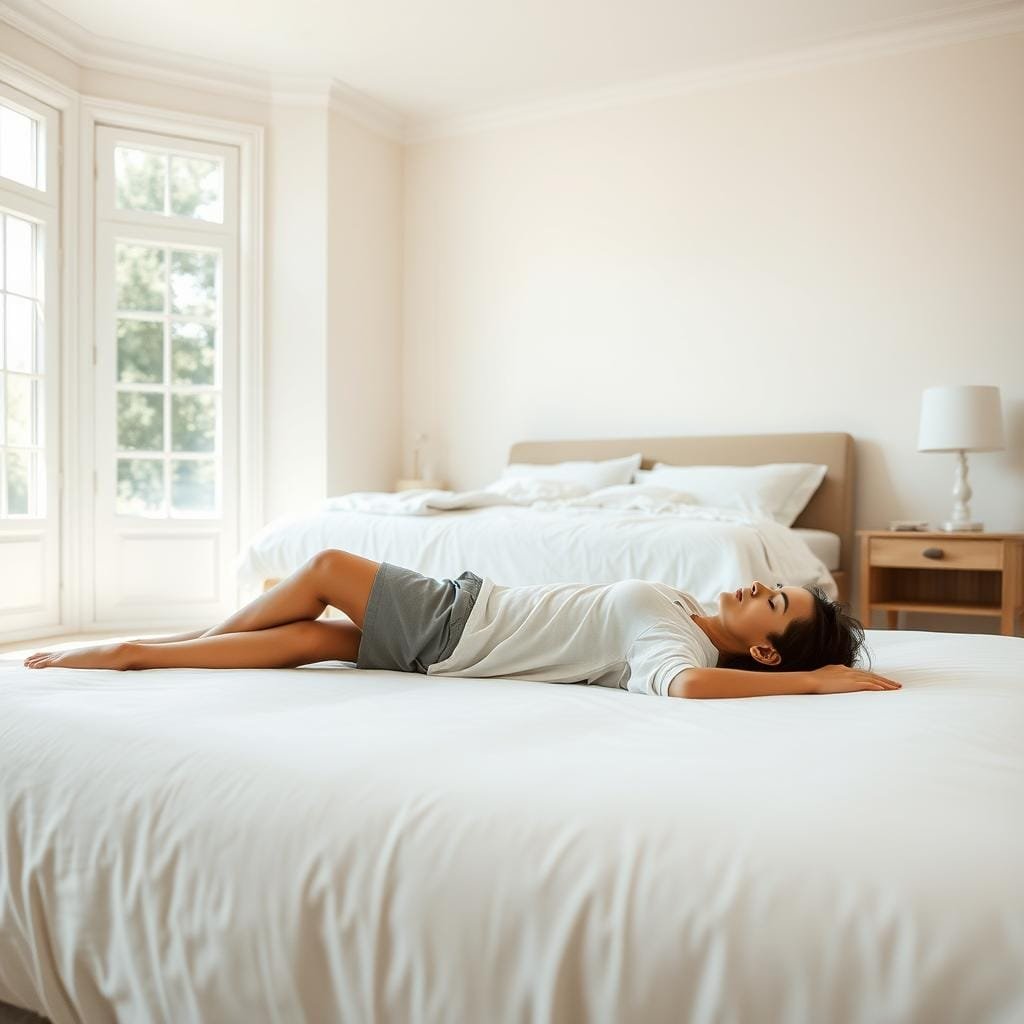
Stomach sleeping feels natural to many. But, learning healthier sleep positions can greatly improve your sleep and comfort. Moving to side or back sleeping can reduce strain on your spine, neck, and joints.
Gradual Adjustment Techniques
Changing sleep habits takes patience and consistency. Don’t try to change everything at once. Start with small steps to avoid frustration and poor sleep.
- Start with the quarter-turn method – Begin by sleeping at a slight angle. Gradually increase the angle over weeks.
- Practice new positions when awake – Lie in your target position for 10-15 minutes before bed. This builds muscle memory.
- Set position reminders – If you wake, shift from stomach to side or back.
Using Sleep Aids and Positioners
Sleep accessories can help the transition. Stomach sleepers miss the full-body contact with the mattress. Different sleeping positions need different support systems.
Body pillows offer the contact sensation stomach sleepers want. Wedge pillows keep you from rolling onto your stomach. Memory foam pillows support your neck for back sleeping.
Setting Realistic Expectations
Knowing how long it takes to change sleep habits is key. Most experts say it takes 3-4 weeks of effort. You might feel uncomfortable or have trouble sleeping at first.
| Transition Phase | Common Experiences | Helpful Strategies | Expected Timeline |
|---|---|---|---|
| Initial Adjustment | Difficulty falling asleep, frequent position changes | Start with 2-3 nights per week in new position | 1-2 weeks |
| Adaptation Period | Waking in original position, mild discomfort | Use positioners, track progress in sleep journal | 2-3 weeks |
| Habit Formation | Increasing comfort in new position | Maintain consistency, even during travel | 3-4 weeks |
| Maintenance | Occasional reversion during stress/illness | Return to transition techniques as needed | Ongoing |
It’s okay if you don’t give up stomach sleeping completely. Many people learn to sleep comfortably in different ways. This reduces strain and lets you enjoy stomach sleeping sometimes.
Products Designed Specific for Stomach Sleepers
For those who sleep on their stomachs, new products can help. These items make sleeping more comfortable and reduce body strain. If changing how you sleep doesn’t work, these products might help.
Specialized Pillows and Cushions
The right pillow is key for stomach sleepers. Ultra-thin pillows are just 1-2 inches high. They help keep your spine straight.
These pillows also have cooling gel to stop you from getting too hot. Some have special features like:
- Face cutout sections to ease pressure on your face
- Breathing channels for comfortable face-down sleep
- Adjustable filling for the perfect support
Mattress Toppers and Pads
Mattress toppers are a budget-friendly way to improve your mattress. They have firmer support in the middle. This helps prevent your hips from sinking too much.
Memory foam toppers keep you cool and hug your body. If your mattress is too hard, a softer topper can make it just right.
Some toppers even have a slight slope. This helps keep your spine aligned while you sleep on your stomach.
Sleep Tracking Devices and Apps
New sleep tech gives insights for stomach sleepers. It shows where you might be putting too much pressure.
Smart trackers watch how you move at night. They help you see how these movements might cause morning pain. This info lets you adjust your sleep space better.
Some apps guide you to change your sleep position or improve your setup. With smart beds, these apps can adjust the bed’s firmness for you.
Using products made for stomach sleepers can make your sleep better. These tools help avoid the downsides of stomach sleeping. They offer more comfort and support.
Your Path to Better Sleep as a Stomach Sleeper
Sleeping on your stomach doesn’t mean bad sleep. You can make it better with the right steps. The secret is to support your spine and neck with the right mattress and pillow.
Choose a pressure-relieving mattress that supports stomach sleepers well. It keeps your spine straight all night. Use a thin pillow under your head or sleep without one to avoid neck pain.
Small changes can make a big difference in how you sleep. Try a thin pillow under your belly to ease back pressure. The quarter-turn trick, how you place your limbs, and stretching before bed can improve your sleep. These tips can make you feel better and even help you stop snoring.
Improving your sleep takes time. You don’t have to change everything at once. Start with one or two changes tonight. With time and effort, you’ll find sleep habits that are good for you. Your journey to better sleep begins with these small but important changes.